Bolivian Rams are often recommended as a “gentle cichlid,” and that reputation is mostly deserved. They have personality, color, and intelligence without the constant aggression many people associate with cichlids. In the right setup, they are calm, interactive, and surprisingly easy to live with.
Where people go wrong is assuming “peaceful” also means “beginner-proof.” Bolivian Rams tolerate mistakes better than many dwarf cichlids, but they still struggle in rushed or unstable tanks. Most problems happen early, when tanks are newly set up or stocked too quickly.
This guide focuses on keeping Bolivian Rams healthy long-term. You’ll learn how to set up the tank properly, why they fail in new aquariums, how to feed them without competition issues, and how to avoid the most common beginner mistakes.
Bolivian Ram Species Profile
| Feature | Bolivian Ram | German Blue Ram |
|---|---|---|
| Adult Size | ~3.5 inches | ~2.5 inches |
| Temperature | 72–78°F | 78–82°F |
| Aggression | Very low | Can be territorial |
| Hardiness | High | Sensitive |
| Beginner Friendly | With stable tank | No |
| Lifespan | 4–6 years | 2–4 years |
Species Overview
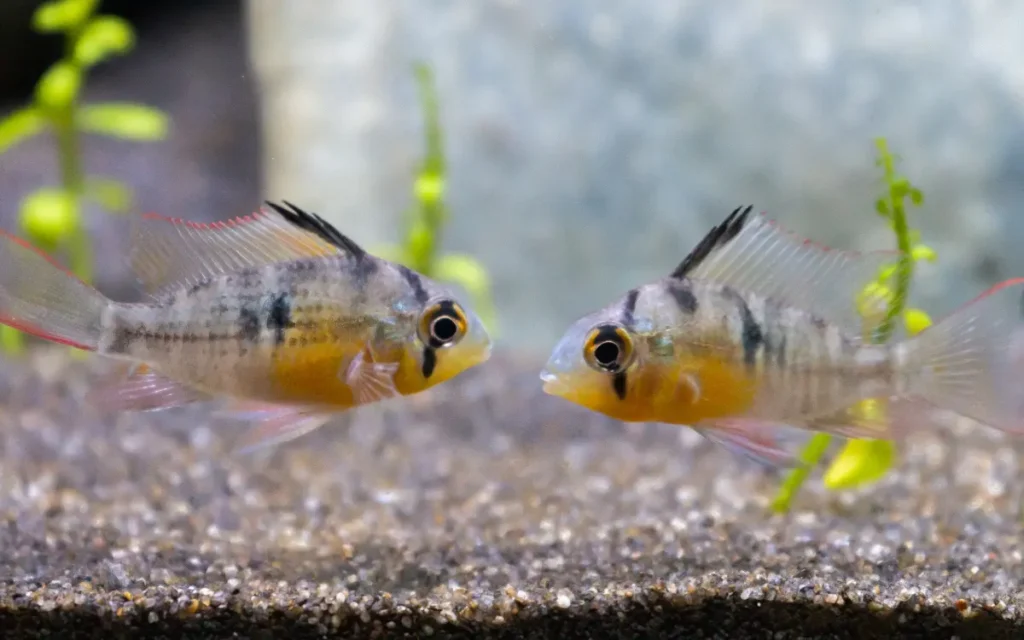
Bolivian Rams are South American dwarf cichlids that come from slow-moving rivers and floodplain areas. These environments are calmer and more mixed than the habitats of many aggressive cichlids, which explains their relaxed behavior in aquariums.
They are often compared to German Blue Rams, but the care difficulty is very different. Bolivian Rams tolerate cooler temperatures, handle mild parameter swings better, and show far less territorial behavior. That makes them a safer choice for aquarists who want a cichlid experience without constant tank management.
Appearance
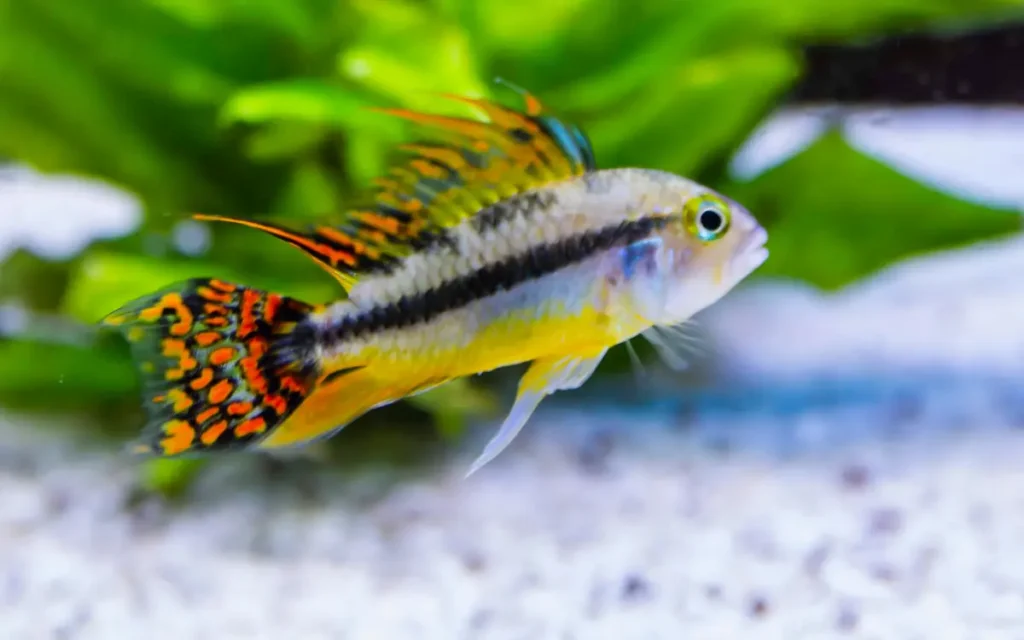
Bolivian Rams have a soft golden base color with subtle blue or pink highlights and orange edging on the dorsal fin. Dark shoulder markings become more visible when the fish is relaxed and healthy.
They spend most of their time in the lower half of the tank, gently sifting sand in search of food. This is normal behavior and a good sign. Unlike aggressive cichlids, Bolivian Rams move slowly and deliberately, even during feeding.
From long-term keeping, one thing stands out: their calmness is consistent. They don’t suddenly turn aggressive as they mature, and they rarely harass tank mates unless spawning conditions are triggered.
Bolivian Ram vs German Blue Ram (Beginner Reality Check)
| Feature | Bolivian Ram | German Blue Ram |
| Adult Size | ~3.5 inches | ~2.5 inches |
| Temperature | 72–78°F | 78–82°F |
| Aggression | Very low | Can be territorial |
| Hardiness | High | Sensitive |
| Beginner Friendly | With stable tank | No |
| Lifespan | 4–6 years | 2–4 years |
Bottom line: Bolivian Rams are far more forgiving, but they still need a stable, cycled aquarium.
Ideal Tank Setup for Bolivian Rams
Tank Size and Layout
A 20-gallon tank is the minimum for a pair, but a 30-gallon tank produces noticeably better behavior and health. Extra space reduces stress and prevents subtle territorial pressure.
Bolivian Rams value floor space, not height. Long tanks with open substrate areas work best.
Substrate Choice
Fine sand is ideal. Smooth gravel can work, but sharp substrate should be avoided. Rams constantly sift through the bottom, and rough materials can damage their mouths over time.
Plants and Decor
Bolivian Rams do best in lightly planted tanks with shaded areas.
Good plant choices:
- Java fern
- Anubias
- Amazon sword
Add driftwood, smooth stones, caves, and leaf litter to break up sightlines. A tank that looks “busy” helps them feel secure.
Practical tip: Coconut shells and leaf litter noticeably reduce hiding behavior.
Water Parameters and Stability
Bolivian Rams tolerate a wider range than many cichlids, but stability still matters more than numbers.
- Temperature: 72–78°F
- pH: 6.5–7.5
- Hardness: 5–12 dGH
Weekly water changes of 20–25% are ideal. Large, infrequent water changes often cause more harm than good.
Why Bolivian Rams Fail in New Tanks
This is where most beginner losses happen.
Bolivian Rams don’t usually die suddenly. Instead, stress slowly weakens them until disease takes hold. Common causes include:
- Tanks that are recently cycled but not yet stable
- Daily parameter swings after feeding or cleaning
- Substrate trapping waste in small tanks
- Adding Rams too early in the stocking process
Even if test kits look fine, young tanks fluctuate more than beginners realize. Bolivian Rams handle this better than German Blue Rams, but they still struggle if added too soon.
If your tank is under a month old, patience matters more than perfect parameters.
Feeding and Diet
Bolivian Rams are omnivores, but they strongly prefer meaty foods.
Staple Foods
- High-quality cichlid pellets
- Sinking micro pellets
Supplemental Foods
- Frozen bloodworms
- Brine shrimp
- Daphnia
- Blanched zucchini or spinach
Feed twice daily in small portions. They eat slowly, so fast fish often outcompete them. Target feeding near the substrate helps ensure they get enough food.
Compatible Tank Mates
Bolivian Rams are excellent community fish when paired with calm species.
Good Tank Mates
- Neon Tetras
- Ember Tetras
- Corydoras catfish
- Harlequin Rasboras
- Hatchetfish
- Amano or Cherry Shrimp (with cover)
- Mystery snails
Fish to Avoid
- Tiger Barbs
- Bettas
- Aggressive cichlids
- Large Plecos
In long-term setups, Bolivian Rams coexist best with schooling fish that stay mid-water and bottom dwellers that ignore territory.
Common Behavior Issues (And Fixes)
Hiding Constantly
Usually caused by:
- Bright lighting
- Lack of cover
- Pushy tank mates
Add plants, reduce lighting intensity, and check stocking balance.
Excessive Digging
Normal behavior, especially during feeding or spawning. This is not a problem unless plants are uprooted repeatedly.
Chasing Tank Mates
Rare. Most often linked to spawning or cramped tanks. Increasing space usually resolves it.
Breeding Bolivian Rams
Breeding is possible even in community tanks, though a dedicated setup improves survival.
How to Encourage Spawning
- Start with a group of 4–6 juveniles
- Allow pairs to form naturally
- Provide flat stones or broad leaves
- Slightly raise temperature to 78–80°F
Spawning Behavior
Parents guard eggs and fry briefly, then return to peaceful behavior once fry are free-swimming.
They are among the better dwarf cichlid parents and often succeed without intervention.
Raising Fry
- Eggs hatch in 48–72 hours
- Feed infusoria or powdered fry food
- Gradually introduce micro pellets
- Perform frequent small water changes
Common Health Issues
Bolivian Rams are hardy, but poor conditions still cause problems.
- Ich: Often triggered by stress or temperature drops
- Bacterial infections: Linked to injuries or poor water quality
- Internal parasites: Seen as weight loss despite eating
Clean water and a varied diet prevent most issues.
Are Bolivian Rams Good for Beginners?
Yes — for aquarists with a stable, cycled tank.
They are ideal if you:
- Want a peaceful cichlid
- Keep calm community tanks
- Maintain regular water changes
They are not suitable for rushed setups, overcrowded tanks, or neglected maintenance.
Final Thoughts
Bolivian Rams give you everything people love about cichlids without constant aggression. They are calm, intelligent, and rewarding fish that fit well into peaceful community aquariums.
Most problems come from adding them too early or underestimating the need for stability. Get the tank right first, and Bolivian Rams often become one of the most enjoyable fish you’ll ever keep.
 **2. Platy** Platies are hardy and easygoing. They enjoy swimming in groups and come in a variety of bright colors. Great for peaceful community tanks. ➡️ [Platy Fish Guide →](#) **3. Zebra Danio** Known for their energy and toughness, zebra danios are perfect for cycling new tanks. They tolerate a wide range of conditions and like to dart around in groups. ➡️ [Zebra Danio Guide →](#) **4. Corydoras Catfish** Peaceful bottom-dwellers that help keep your tank clean. Keep them in groups of 3 or more and give them soft substrate. ➡️ [Cory Catfish Care →](#) **5. Molly** Adaptable to various water conditions (even brackish), mollies are lively and great for community aquariums. ➡️ [Molly Fish Care Guide →](#) **6. Swordtail** Easy to care for and great in peaceful groups. Males have a signature sword-like tail and love swimming space. ➡️ [Swordtail Fish Guide →](#) **7. Betta Fish** Low-maintenance and visually stunning. Best kept alone or with very peaceful tank mates like snails or Corydoras. ➡️ [Full Betta Fish Care Guide →](#) **8. Neon Tetra** Small and peaceful, neon tetras love to school and light up a planted tank. Keep them in groups of 6 or more. ➡️ [Neon Tetra Care Guide →](https://oceanbitez.com/neon-tetras/) **9. Harlequin Rasbora** A calm and schooling species that fits right into community setups. Easy to feed and care for. ➡️ [Harlequin Rasbora Guide →](#) **10. Dwarf Gourami** A gentle and colorful addition to a beginner’s tank. Likes planted environments and peaceful neighbors. ➡️ [Dwarf Gourami Guide →](#) **11. White Cloud Mountain Minnow** Can live in cooler temperatures and is perfect for unheated tanks. Small, peaceful, and easy to care for. ➡️ [White Cloud Minnow Guide →](#) **12. Cherry Barb** Peaceful and social, cherry barbs do well in planted tanks and enjoy being in small groups. ➡️ [Cherry Barb Care →](#) --- ### Sample Beginner Tank Combos **Combo 1: 10–15 Gallon Easy Starter** * 4–6 Guppies * 3 Corydoras Catfish * 1 Nerite Snail **Combo 2: 20 Gallon Planted Community** * 6 Harlequin Rasboras * 6 Neon Tetras * 1 Dwarf Gourami * 3 Otocinclus (optional if algae control is needed) --- ### Beginner Tips for a Successful Aquarium * Cycle your tank before adding fish (ammonia → nitrite → nitrate) * Start with hardy species before delicate ones * Feed small amounts once or twice daily * Do weekly partial water changes (20–30%) * Don’t mix aggressive or fin-nipping species * Use a heater for tropical fish (75–80°F) --- ### Final Thoughts These beginner fish are ideal for getting started in the hobby without frustration. They're low-maintenance, compatible, and fun to watch. Once you’re comfortable, you can explore more advanced species and community combinations. ➡️ Check out our full guide to [Freshwater Aquarium Fish →](https://oceanbitez.com/freshwater-fish/)](https://oceanbitez.com/wp-content/uploads/2024/06/Best-Freshwater-Fish-for-Your-Aquarium-1024x640.webp)