A 10 gallon tank is where fishkeeping starts to feel real. It’s small enough to fit on a desk or apartment shelf, but big enough to create a balanced, peaceful community. If you’ve been looking at tiny setups and wondering when you can finally keep a small group of fish together, this is the size that opens that door.
Many beginners start with very small tanks and quickly run into problems with unstable water or limited stocking choices. A 10 gallon aquarium gives you more flexibility, better water stability, and more room for natural behavior. If you want a broader overview of different tank sizes before deciding, you can check our complete Aquarium Fish by Tank Size guide to compare options side by side.
Why a 10 Gallon Tank Is a Great Beginner Choice
Compared to nano tanks, a 10 gallon setup is far more forgiving. Water parameters shift more slowly, which gives beginners time to correct mistakes. It’s also large enough to support:
- A small centerpiece fish
- A proper schooling group
- Light bottom activity
You still need regular maintenance, but the tank won’t swing wildly from a small feeding mistake.
If you’re upgrading from something smaller, you’ll immediately notice the difference in stability compared to tanks discussed in our fish for a 5 gallon tank guide.
How Many Fish Can You Keep in a 10 Gallon Tank?
You’ve probably heard the “one inch per gallon” rule. It’s simple — and often misleading.
Fish produce waste at different rates. Some are heavy feeders. Others stay slim and active. A better approach for 10 gallons is thinking in terms of structure:
- One small centerpiece fish
- One group of 6–8 schooling fish
- Optional small bottom dwellers
Overcrowding is the fastest way to ruin water quality. Always stock gradually, not all at once.
Best Centerpiece Fish for a 10 Gallon Tank
A centerpiece fish is the main personality of the tank — the one that draws attention.
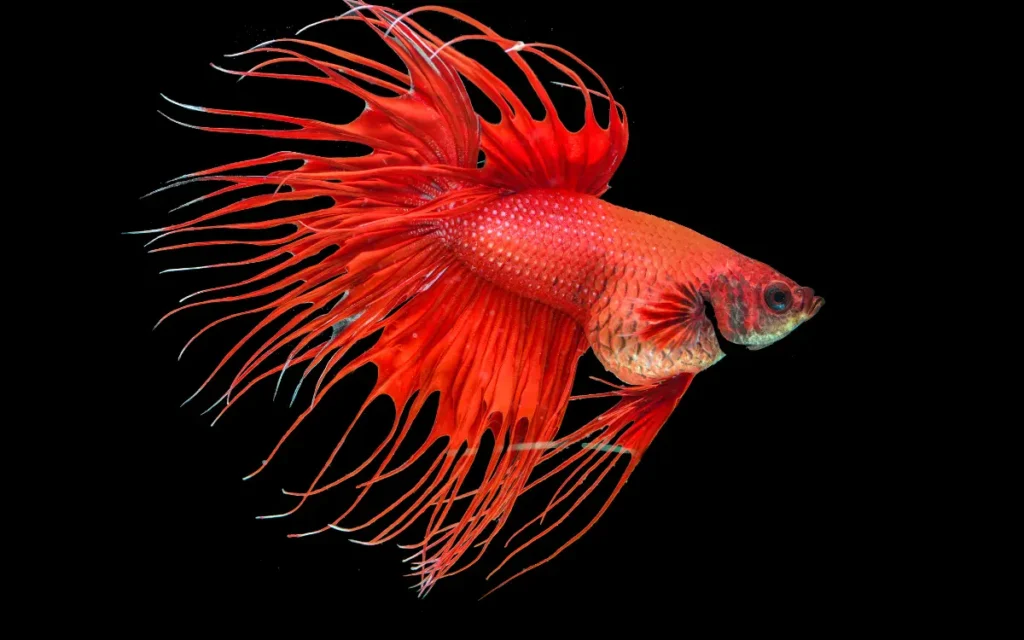
Betta splendens
A single male betta works beautifully in a 10 gallon tank. You get room for tank mates and plants without crowding him. Avoid aggressive or fin-nipping species.
Honey Gourami
Peaceful, colorful, and ideal for community setups. They stay small and generally get along with tetras and rasboras.
Sparkling Gourami
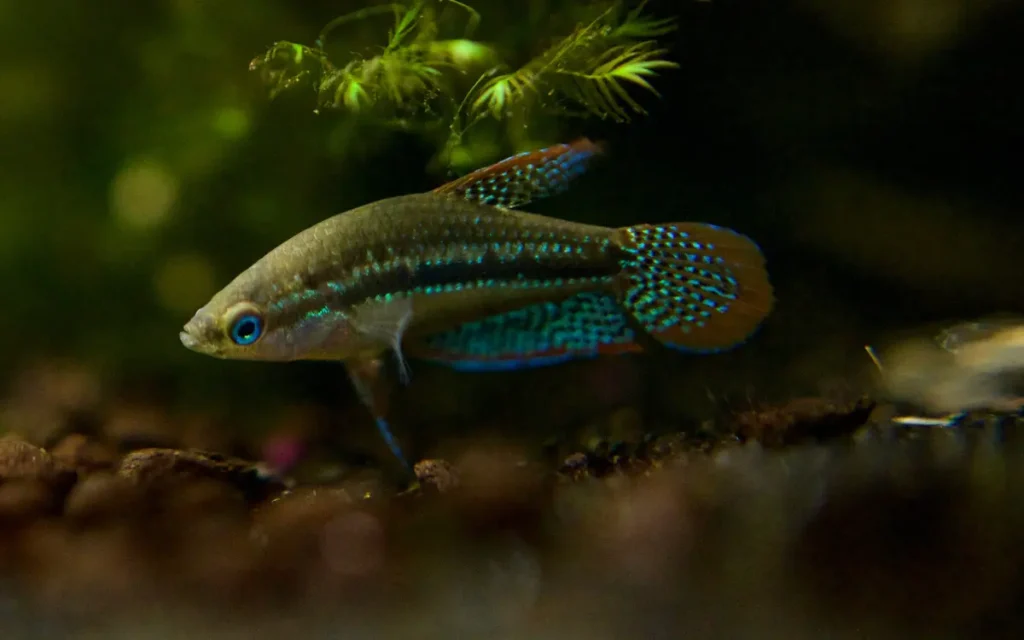
Tiny but full of character. Best kept in planted tanks with calm tank mates.
Best Schooling Fish for a 10 Gallon Tank
This is where a 10 gallon tank shines. You can finally keep proper schools.
Neon Tetra
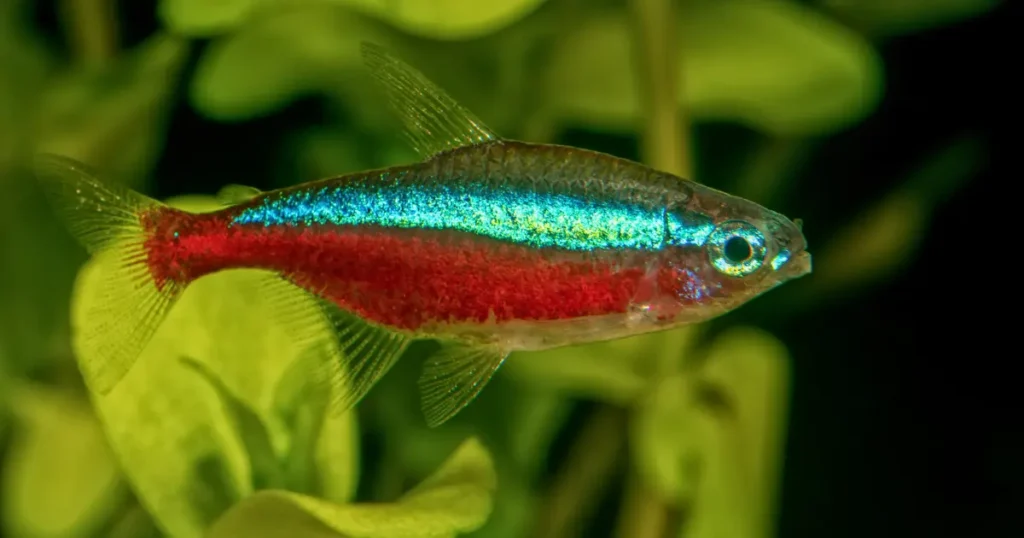
A group of 6–8 adds movement and color. Keep water stable and avoid aggressive species.
Ember Tetra
Small, bright, and perfect for planted tanks.
Harlequin Rasbora
Hardy and beginner friendly. They prefer swimming space in the middle level.
White Cloud Mountain Minnow
Great for cooler water setups without heaters.
Bottom Dwellers for a 10 Gallon Tank
Even a small tank benefits from activity near the substrate.
Pygmy Corydoras
Unlike larger cory species, pygmy varieties stay small enough for 10 gallons. Keep at least 4–6 together.
Otocinclus
Peaceful algae eaters, but only add them once the tank is mature and stable.
Kuhli Loach
Only suitable if the tank is well planted and stocked lightly. They need hiding spots.
Fish to Avoid in a 10 Gallon Tank
Just because a fish looks small at the store doesn’t mean it stays that way.
Angelfish
They grow tall and need vertical space.
Common Goldfish
Produce heavy waste and outgrow small tanks quickly.
Oscar
A large cichlid that needs a tank several times bigger.
Avoiding these saves you money and prevents unnecessary stress on the fish.
Sample 10 Gallon Stocking Ideas
Here are balanced combinations that actually work:
Option 1 (Peaceful Community): 1 Honey Gourami 6 Ember Tetras 4 Pygmy Corydoras
Option 2 (Betta Community): 1 Betta 6 Neon Tetras 2 Otocinclus
Option 3 (Single Species School): 8 Harlequin Rasboras
Keep filtration appropriate and don’t rush the cycle.
Planted vs Non-Planted 10 Gallon Tanks
A 10 gallon tank is ideal for beginner planted setups. Live plants help with:
- Nitrate control
- Oxygen balance
- Natural hiding spots
Even simple plants like Anubias or Java Fern make a big difference.
If you’re still deciding whether to start small or go bigger, review our broader fish by tank size guide to see how 10 gallons compares with 20 and 40 gallon setups.
Maintenance Tips for Long-Term Success
- Perform 20–30% weekly water changes
- Avoid overfeeding
- Clean the filter media gently (don’t replace it constantly)
- Test ammonia and nitrites during cycling
Consistency matters more than fancy equipment.
FAQ’s
Can I keep 10 fish in a 10 gallon tank?
It depends on species and size. Ten small tetras may work. Ten mixed fish likely won’t.
Is 10 gallons enough for a community tank?
Yes, for small peaceful species. It’s often considered the smallest true community size.
Do I need a heater?
Most tropical fish require one. Exceptions include White Cloud Mountain Minnows in cooler climates.
Can I keep two bettas?
No. Male bettas will fight. Even females require careful sorority setups and larger tanks.
Should beginners start with 10 gallons instead of 5?
In my opinion, yes. It’s far more stable and gives you more options than very small tanks like those covered in our fish for a 3 gallon tank guide.
Final Thoughts
A 10 gallon tank gives you flexibility without overwhelming maintenance. It’s big enough to create a peaceful, balanced community — but small enough to manage comfortably.
If you stock carefully and focus on compatibility, this size can stay healthy for years.
And once you master 10 gallons, moving to a 20 gallon setup becomes much easier.
 **2. Platy** Platies are hardy and easygoing. They enjoy swimming in groups and come in a variety of bright colors. Great for peaceful community tanks. ➡️ [Platy Fish Guide →](#) **3. Zebra Danio** Known for their energy and toughness, zebra danios are perfect for cycling new tanks. They tolerate a wide range of conditions and like to dart around in groups. ➡️ [Zebra Danio Guide →](#) **4. Corydoras Catfish** Peaceful bottom-dwellers that help keep your tank clean. Keep them in groups of 3 or more and give them soft substrate. ➡️ [Cory Catfish Care →](#) **5. Molly** Adaptable to various water conditions (even brackish), mollies are lively and great for community aquariums. ➡️ [Molly Fish Care Guide →](#) **6. Swordtail** Easy to care for and great in peaceful groups. Males have a signature sword-like tail and love swimming space. ➡️ [Swordtail Fish Guide →](#) **7. Betta Fish** Low-maintenance and visually stunning. Best kept alone or with very peaceful tank mates like snails or Corydoras. ➡️ [Full Betta Fish Care Guide →](#) **8. Neon Tetra** Small and peaceful, neon tetras love to school and light up a planted tank. Keep them in groups of 6 or more. ➡️ [Neon Tetra Care Guide →](https://oceanbitez.com/neon-tetras/) **9. Harlequin Rasbora** A calm and schooling species that fits right into community setups. Easy to feed and care for. ➡️ [Harlequin Rasbora Guide →](#) **10. Dwarf Gourami** A gentle and colorful addition to a beginner’s tank. Likes planted environments and peaceful neighbors. ➡️ [Dwarf Gourami Guide →](#) **11. White Cloud Mountain Minnow** Can live in cooler temperatures and is perfect for unheated tanks. Small, peaceful, and easy to care for. ➡️ [White Cloud Minnow Guide →](#) **12. Cherry Barb** Peaceful and social, cherry barbs do well in planted tanks and enjoy being in small groups. ➡️ [Cherry Barb Care →](#) --- ### Sample Beginner Tank Combos **Combo 1: 10–15 Gallon Easy Starter** * 4–6 Guppies * 3 Corydoras Catfish * 1 Nerite Snail **Combo 2: 20 Gallon Planted Community** * 6 Harlequin Rasboras * 6 Neon Tetras * 1 Dwarf Gourami * 3 Otocinclus (optional if algae control is needed) --- ### Beginner Tips for a Successful Aquarium * Cycle your tank before adding fish (ammonia → nitrite → nitrate) * Start with hardy species before delicate ones * Feed small amounts once or twice daily * Do weekly partial water changes (20–30%) * Don’t mix aggressive or fin-nipping species * Use a heater for tropical fish (75–80°F) --- ### Final Thoughts These beginner fish are ideal for getting started in the hobby without frustration. They're low-maintenance, compatible, and fun to watch. Once you’re comfortable, you can explore more advanced species and community combinations. ➡️ Check out our full guide to [Freshwater Aquarium Fish →](https://oceanbitez.com/freshwater-fish/)](https://oceanbitez.com/wp-content/uploads/2024/06/Best-Freshwater-Fish-for-Your-Aquarium-1024x640.webp)