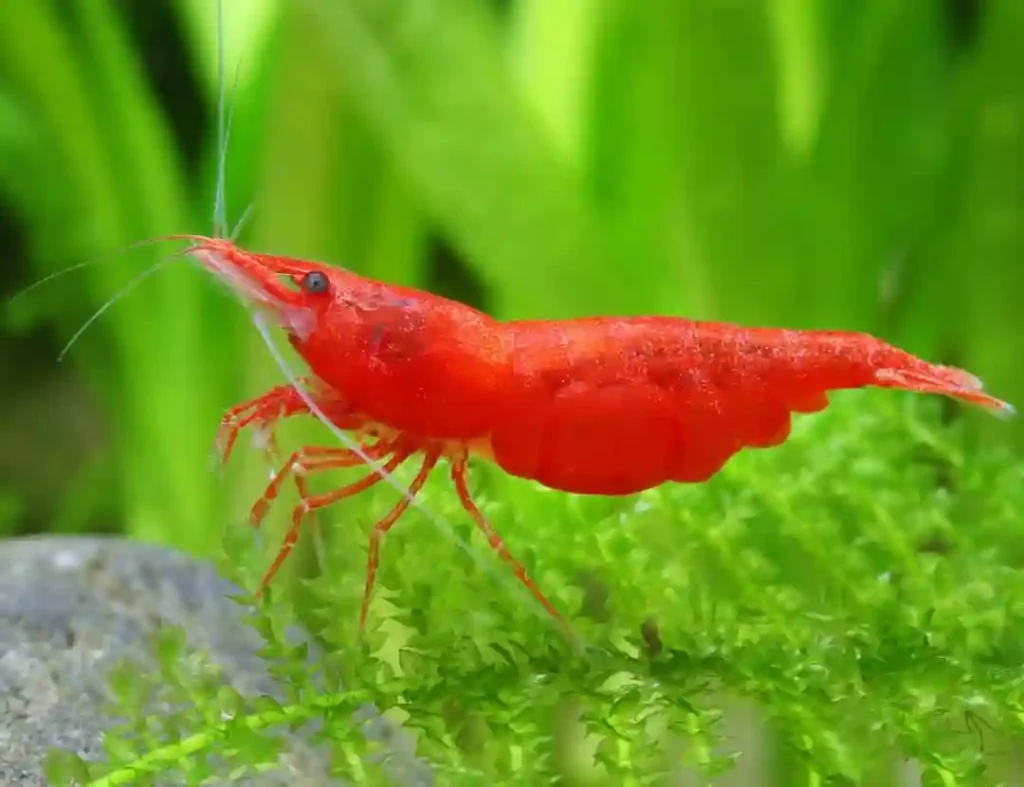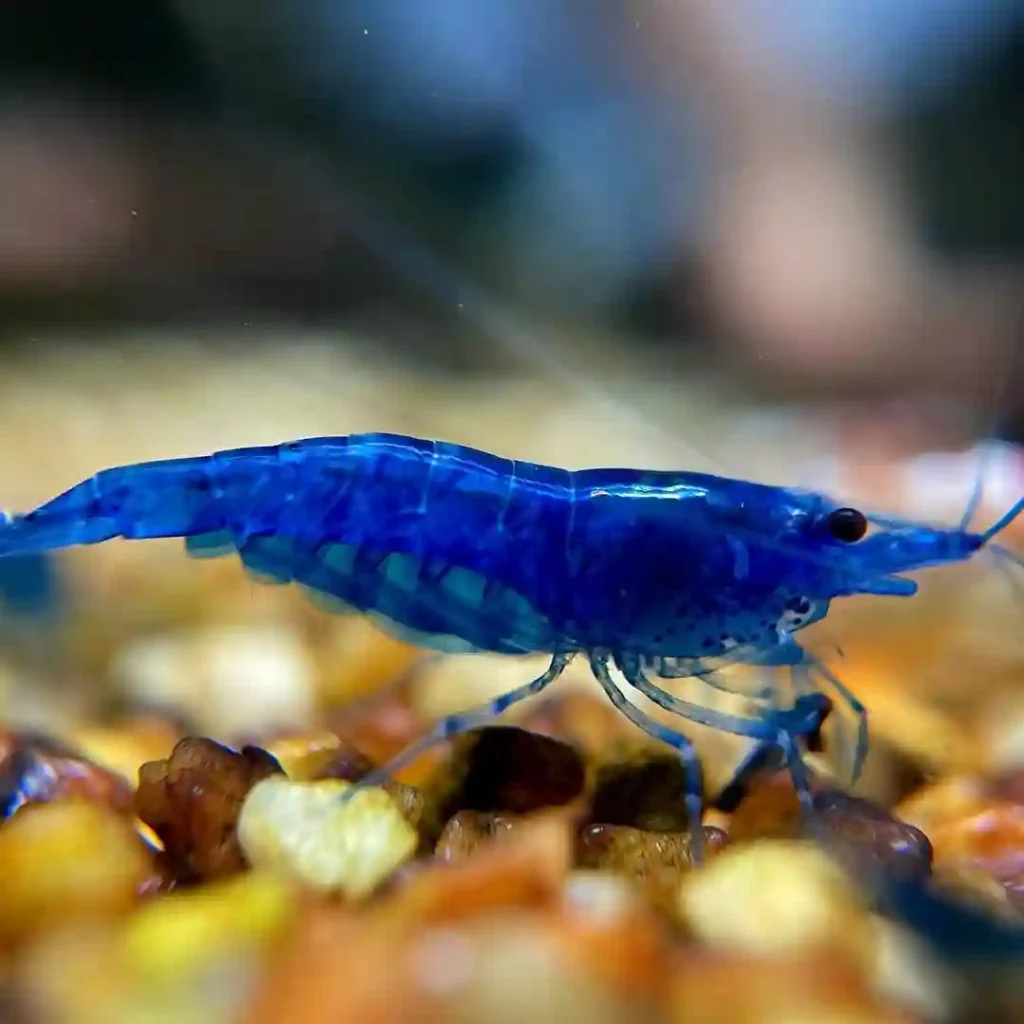
Shrimp should be fed 2–3 times a week in a well-established, planted aquarium. If you’re keeping beginner-friendly species like cherry shrimp or Amano shrimp, feed small amounts and remove uneaten food after a few hours to avoid water quality issues. In tanks with biofilm and algae, less frequent feeding is often better.
How Often Should You Feed Shrimp?
What Do Freshwater Shrimp Eat Naturally?
In the wild, shrimp are scavengers. They nibble on biofilm, decaying plants, algae, and tiny organisms found on rocks and leaves. In an aquarium, especially a planted one, they continue to graze this way. This natural behavior helps clean your tank, but it also means they don’t always need extra food every day.
Why Overfeeding Is a Common Problem
Most beginner shrimp keepers overestimate how much food their shrimp actually need. Unlike fish, shrimp eat slowly and in small amounts. Extra food that sits uneaten can quickly break down, pollute the water, and attract unwanted pests like planaria or hydra.
How Biofilm, Algae, and Plants Supplement Feeding
If your tank is established and full of live plants, there’s probably more food than you think. Algae growing on surfaces, biofilm forming naturally, and leftover plant material all provide constant snacking opportunities for shrimp—especially for cherry and Amano shrimp.
Feeding Frequency by Shrimp Type
How Often to Feed Cherry Shrimp
Cherry shrimp are hardy and self-sufficient in a well-balanced tank. In most setups, feeding them 2 to 3 times per week is enough. You can offer a small pellet or a tiny pinch of powdered shrimp food, especially if your tank already has algae and plants.
If you have a new tank with little biofilm or algae, you might need to feed them a bit more frequently—but always in small amounts.
Amano Shrimp Feeding Schedule
Amano shrimp are larger and more active than cherry shrimp. They’re also known for their impressive appetite for algae. Still, they benefit from being fed every other day with a sinking pellet, blanched veggie, or algae wafer.
Watch them closely—if they snatch food quickly and swarm the feeding area, that’s a sign they’re hungry and the tank might not be providing enough natural food.
Feeding Schedule for Other Popular Shrimp
Ghost shrimp and bamboo shrimp also follow similar feeding needs, though bamboo shrimp filter food from the water column. For ghost shrimp, 2–3 times a week works well, while bamboo shrimp may need powdered food or crushed flakes near their favorite filter zones to avoid starvation.
Daily vs. Weekly Feeding: What’s Best?
Why 2–3 Times a Week Works for Most Tanks
If your tank is mature and planted, feeding shrimp two or three times per week works just fine. This gives them a boost without polluting the water, and it encourages them to keep scavenging and cleaning the tank naturally.
When Daily Feeding Is Necessary
Daily feeding becomes important when:
- The tank is new and lacks algae or biofilm.
- You have many shrimp and few plants.
- You’re raising baby shrimp (who need tiny, constant food sources).
In those cases, feed small amounts daily—think a dusting of powdered food or a small bit of blanched spinach or algae wafer.
Shrimp Feeding Chart
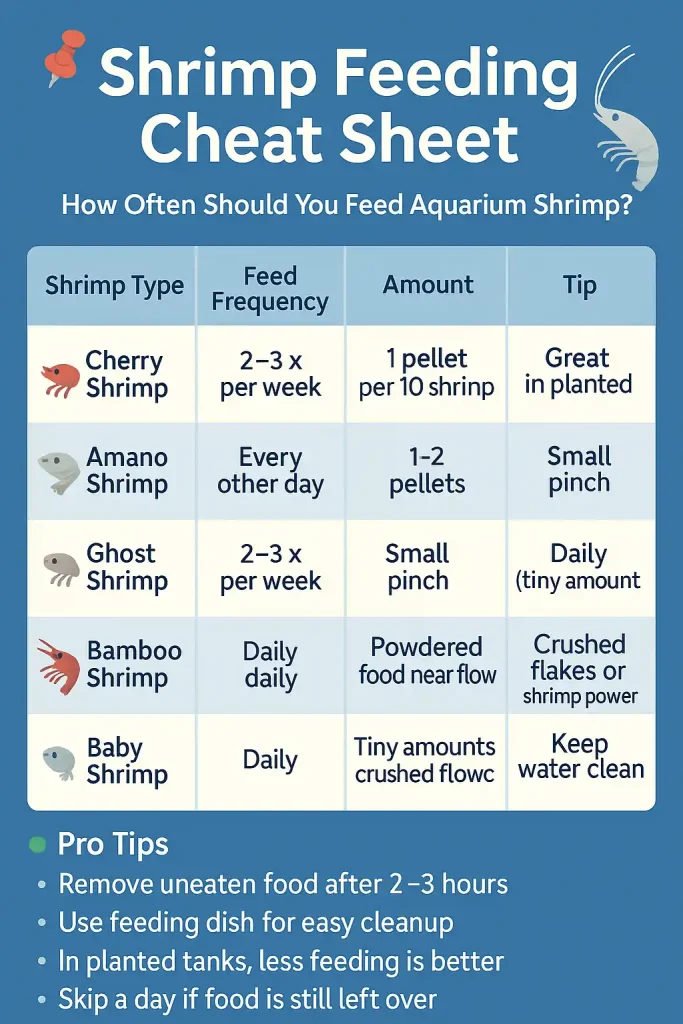
Here’s a simple chart to guide your feeding routine based on shrimp type and tank conditions:
| Shrimp Type | Feed Frequency | Pellet Amount | Notes |
| Cherry Shrimp | 2–3x per week | 1 pellet per 10 shrimp | Supplement with biofilm & algae |
| Amano Shrimp | Every other day | 1–2 pellets per feeding | Active scavengers; algae-heavy diet |
| Ghost Shrimp | 2–3x per week | Small pinch of food | Watch for overfeeding |
| Bamboo Shrimp | Daily (light feed) | Crushed or powdered food | Place near water flow for filter feeding |
| Breeding Tanks | Daily (tiny feed) | Powdered baby shrimp food | Feed lightly, multiple times if needed |
How Much Food Should You Give?
How Many Pellets to Feed Shrimp
Here’s a quick guide: One pellet for every 10 shrimp is a safe starting point. You can break a pellet into smaller pieces and spread it around to make sure all shrimp get a chance to eat.
Shrimp will swarm the food quickly if they’re hungry. If they ignore it, it might mean the tank is already providing enough through biofilm and algae.
Feeding Amount Based on Shrimp Colony Size
A small colony of 5–10 shrimp needs very little. But if you have a larger group—say, 30 or more—you’ll need to feed a bit more, or offer food in multiple spots. Just don’t get carried away; it’s always safer to underfeed than overfeed.
Signs You’re Feeding Too Much or Too Little
Too much:
- Uneaten food after 3–4 hours
- Cloudy water or algae spikes
- Snails and pests multiplying quickly
Too little:
- Shrimp swarming new food instantly
- Shrimp constantly grazing with no breaks
- Slow or stunted growth
Read also: What to Feed Aquarium Shrimp: Best Foods & Feeding Tips
Feeding Shrimp in Different Tank Setups
Do You Need to Feed Shrimp in a Planted Tank?
If your aquarium is filled with live plants, driftwood, and rocks, your shrimp might already have plenty to munch on. Planted tanks naturally grow biofilm and soft algae—both of which are shrimp favorites.
In a setup like this, you may only need to feed once or twice a week. Keep an eye on your shrimp: if they’re constantly grazing and ignoring added food, that’s a good sign they’re finding enough to eat on their own.
However, planted tanks with high light and CO₂ might grow algae too quickly, which can throw off the balance. In that case, a little feeding can help ensure your shrimp still get a nutritious, stable diet.
Feeding in New vs. Mature Tanks
New tanks often lack the microbial life and biofilm shrimp rely on. If your tank is newly set up, you’ll need to feed more often—ideally every day in very small portions.
Mature tanks, on the other hand, usually have a stable ecosystem. These environments support a more hands-off feeding approach. If your tank is older than 2–3 months and has visible algae, moss, or leaf litter, you can reduce feeding to 2–3 times a week.
Feeding in Breeding Tanks
Breeding shrimp need more consistent feeding—especially the babies.
Baby shrimp feed on powdered foods like crushed flakes, baby shrimp food, and biofilm. In breeding setups, it’s helpful to feed lightly every day to ensure that baby shrimp (which often hide) have access to food around the clock.
You don’t need to dump in a lot—just enough that there’s a light dusting of food reaching the substrate and hiding places.
Pro Tips
- Remove uneaten food after 2–3 hours
- Use feeding dish for easy cleanup
- In planted tanks, less feeding is better
- Skip a day if food is still left over
Best Types of Shrimp Food
Algae Wafers, Blanched Veggies, and Commercial Shrimp Pellets
Shrimp will happily eat a variety of foods, but not all are equal. Here are the most common (and safe) options:
- Algae wafers are a solid staple, especially for tanks with fewer natural algae.
- Blanched vegetables like spinach, zucchini, and cucumber are shrimp favorites. Just boil them briefly until soft, then cool and add to the tank in small pieces.
- Commercial shrimp pellets or sticks are specifically designed with the right nutrients and sinking ability. These are excellent for building a routine.
Mixing these types of foods keeps your shrimp diet varied, which is important for healthy molts and breeding.
Treats and Supplements: How Often to Use Them
It’s fine to offer the occasional treat, but don’t overdo it.
Treats like bloodworms or fish flakes can be exciting to watch, but they break down quickly and attract unwanted guests. Once a week—or even less—is usually enough. Think of these as dessert, not dinner.
For supplements like mineral wafers or calcium sticks, once every week or two is often enough. These help with molting, especially in soft water.
What Foods to Avoid for Healthy Shrimp
Some foods just don’t belong in your shrimp tank. Avoid anything with:
- Garlic or preservatives
- Artificial coloring or flavor enhancers
- Protein-heavy foods meant for large fish
Too much protein can cause bloating and molting issues. Stick to shrimp-specific products or veggie-based items when in doubt.
Read also: Cherry Shrimp Tank Mates: 15 Best Friends
Tips to Avoid Overfeeding Shrimp
How Long to Leave Food in the Tank
One of the easiest ways to keep your tank clean is to remove any uneaten food after 2 to 3 hours. Shrimp eat slowly, so don’t panic if they don’t rush to the food. But if the pellet or veggie is still sitting untouched after a few hours, it’s better to take it out.
Leaving food in too long encourages bacterial growth and ammonia spikes—both of which can be deadly to shrimp.
Using Feeding Dishes
A small feeding dish can help you keep the food in one place and make cleanup easier. It also stops the food from sinking into the substrate, where it breaks down unnoticed. Clear glass dishes are popular because they don’t disrupt the look of your tank.
When using a dish, place it in a spot you can see easily. This helps you monitor how much your shrimp are eating and whether they’re coming to feed.
Monitoring Water Parameters
If you’re unsure whether you’re feeding too much, test your water regularly. High ammonia or nitrite levels usually point to excess waste—and uneaten food is often the culprit.
Clear water, stable parameters, and active shrimp are signs you’ve got the balance right. If you notice planaria, hydra, or other unwanted guests, it might be time to cut back feeding and vacuum the substrate.
FAQ’S
Can Shrimp Survive Without Daily Feeding?
Yes, most shrimp can go several days without added food—especially in planted or established tanks. They graze all day on biofilm, algae, and even decaying plant matter. That’s why feeding 2 to 3 times per week works well for most hobbyists. Daily feeding is only necessary in bare tanks or when raising baby shrimp.
What Happens If You Overfeed Shrimp?
Overfeeding doesn’t just dirty the tank—it can lead to serious problems. Uneaten food rots quickly, causing ammonia spikes and attracting planaria, hydra, and even pest snails. In some cases, shrimp may die due to poor water quality or molting problems triggered by stress. Less is definitely more when feeding shrimp.
Do Baby Shrimp Need Special Feeding?
Yes. Baby shrimp are tiny and often hide in moss or under decorations. They need powdered foods like crushed flakes, baby shrimp food, or infusoria. In a breeding tank, light daily feeding is recommended so food reaches all areas, even where babies hide. Make sure the water stays clean by feeding tiny amounts at a time.
What’s the Best Time of Day to Feed Shrimp?
There’s no strict rule, but many shrimp keepers feed in the evening when lights are still on. Shrimp are more active at night, so feeding late helps ensure they come out and eat. If you feed during the day, just make sure the lighting and water flow allow food to settle where shrimp can reach it.
How to Tell If Shrimp Are Hungry?
Hungry shrimp tend to swarm food quickly, often in groups. If they graze nonstop, even on bare surfaces, they might be searching for food. However, shrimp are natural grazers, so some constant picking is normal. If they ignore added food, it likely means they’re getting enough from their surroundings.
Final Tips on Building a Feeding Routine
Feeding shrimp isn’t about sticking to a strict schedule—it’s about watching your shrimp and your tank.
If your shrimp are active, growing, and molting regularly with clean water, you’re doing it right. A planted tank might only need feeding twice a week. A bare or breeding tank may need a little food daily.
Start slow. Feed a small amount and observe. Adjust based on their behavior, leftover food, and water clarity. When in doubt, it’s safer to underfeed than overfeed.
A consistent routine and good observation skills will help your shrimp thrive without the risk of dirty water or stress.