The Pearl Gourami (Trichopodus leerii) is one of the most beautiful freshwater fish you can add to a peaceful community tank. With its shimmering pearl-like spots, long fins, and calm personality, it’s a favorite among aquarists who want something elegant and low-maintenance. This care guide covers everything you need to know from ideal tank setup and feeding habits to behavior, tank mates, and health tips.
What Is a Pearl Gourami?
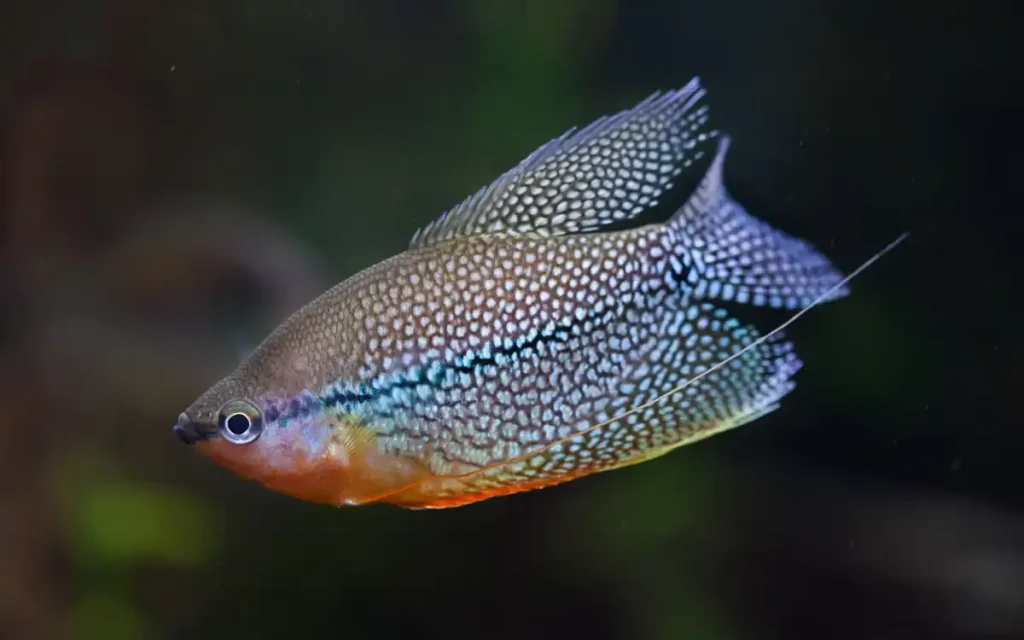
Pearl Gouramis are native to Southeast Asia, found in slow-moving waters in Thailand, Malaysia, and Borneo. They thrive in warm, slightly acidic waters with lots of vegetation and surface plants. Their name comes from the pearly white spots that cover their entire body, giving them a sparkling appearance under aquarium lights.
They belong to the labyrinth fish family, meaning they can breathe atmospheric air a useful trait in low-oxygen waters.
Quick Profile
| Feature | Details |
| Scientific Name | Trichopodus leerii |
| Size | 4–5 inches |
| Lifespan | 4–6 years |
| Tank Size | 30 gallons minimum |
| Temperature | 75–82°F |
| pH Range | 6.0–7.5 |
| Temperament | Peaceful, social |
Ideal Tank Setup for Pearl Gouramis
Pearl Gouramis enjoy tanks with gentle flow and lots of cover. Live plants, especially floating types, help mimic their natural habitat and make them feel secure. They prefer the mid-to-top levels of the tank, often gliding gracefully through leaves and driftwood.
Tank Setup Tips:
- Tank size: Minimum 30 gallons for a pair or trio
- Substrate: Sand or smooth gravel
- Plants: Java fern, Amazon swords, Anubias, hornwort, and duckweed
- Decor: Driftwood, rocks, and caves for hiding
- Lighting: Moderate (not too bright)
- Filtration: Sponge filter or gentle flow HOB filter
Make sure the tank is covered while they aren’t frequent jumpers, they can leap if startled.
Feeding Your Pearl Gourami
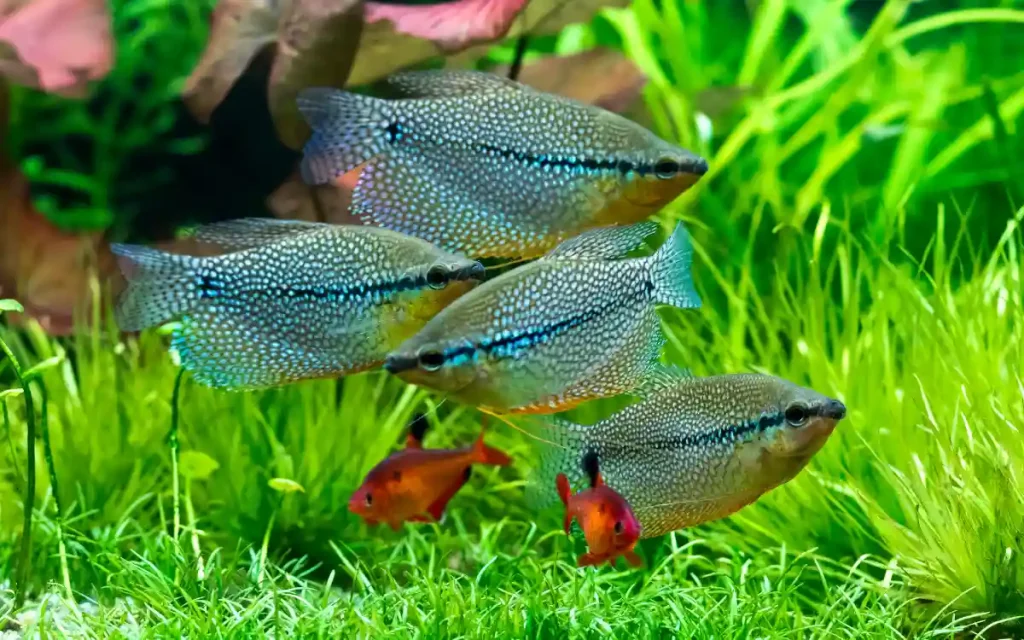
Pearl Gouramis are omnivores and not fussy eaters. In the wild, they consume insects, larvae, and plant matter. In aquariums, they thrive on a mix of dry, frozen, and live foods.
Best Foods:
- High-quality flakes or pellets
- Frozen bloodworms or brine shrimp
- Live daphnia or mosquito larvae
- Blanched veggies like spinach or zucchini
Feeding frequency: 1–2 times daily. They tend to feed calmly, so avoid housing them with aggressive eaters.
You may read also: Dwarf Gourami Care Guide
Pearl Gourami Behavior & Temperament
Pearl Gouramis are peaceful and social, making them excellent additions to community tanks. Males can become a bit territorial during breeding, but they rarely act aggressively.
You’ll usually see them swimming slowly in the mid to upper levels or hanging out near floating plants. They also use their long ventral fins to “feel” their environment, which is a charming behavior to watch.
Best Tank Mates for Pearl Gouramis
Pearl Gouramis get along well with most non-aggressive species. Avoid fin-nippers or fast swimmers that might stress them out.
Compatible Tank Mates:
Avoid:
- Tiger Barbs
- Bettas
- Large cichlids
Breeding Pearl Gouramis
Males build bubble nests at the surface when they’re ready to breed. You’ll see courtship behavior like flaring fins and gentle nudging.
Breeding Tips:
- Use a separate breeding tank (20–30 gallons)
- Increase water temperature to ~80°F
- Add floating plants or plastic breeding rafts
- Condition the pair with high-protein foods
- Remove the female after spawning; the male will guard the nest
Eggs hatch in about 1–2 days. Once fry become free-swimming, remove the male to prevent them from being eaten.
Health Tips for Pearl Gouramis
Pearl Gouramis are generally hardy but sensitive to poor water conditions and aggressive tank mates.
Watch For:
- Fin rot (caused by stress or poor water)
- Ich (white spots)
- Loss of appetite or dull color (often due to bullying)
Keep your water clean, provide hiding spaces, and avoid overcrowding to reduce stress.
FAQs
Are Pearl Gouramis easy to keep?
Yes. They’re hardy, peaceful, and great for beginner-to-intermediate aquarists.
Do Pearl Gouramis need a heater?
Yes, they’re tropical fish and prefer temperatures around 75–82°F.
Can I keep multiple Pearl Gouramis?
Yes, a trio (1 male, 2 females) works well in a planted 30-gallon or larger tank.
Are they aggressive?
They’re typically peaceful but may become mildly territorial when breeding.
Do Pearl Gouramis need floating plants?
They do better with floating plants as it mimics their natural habitat and supports bubble nesting.
 **2. Platy** Platies are hardy and easygoing. They enjoy swimming in groups and come in a variety of bright colors. Great for peaceful community tanks. ➡️ [Platy Fish Guide →](#) **3. Zebra Danio** Known for their energy and toughness, zebra danios are perfect for cycling new tanks. They tolerate a wide range of conditions and like to dart around in groups. ➡️ [Zebra Danio Guide →](#) **4. Corydoras Catfish** Peaceful bottom-dwellers that help keep your tank clean. Keep them in groups of 3 or more and give them soft substrate. ➡️ [Cory Catfish Care →](#) **5. Molly** Adaptable to various water conditions (even brackish), mollies are lively and great for community aquariums. ➡️ [Molly Fish Care Guide →](#) **6. Swordtail** Easy to care for and great in peaceful groups. Males have a signature sword-like tail and love swimming space. ➡️ [Swordtail Fish Guide →](#) **7. Betta Fish** Low-maintenance and visually stunning. Best kept alone or with very peaceful tank mates like snails or Corydoras. ➡️ [Full Betta Fish Care Guide →](#) **8. Neon Tetra** Small and peaceful, neon tetras love to school and light up a planted tank. Keep them in groups of 6 or more. ➡️ [Neon Tetra Care Guide →](https://oceanbitez.com/neon-tetras/) **9. Harlequin Rasbora** A calm and schooling species that fits right into community setups. Easy to feed and care for. ➡️ [Harlequin Rasbora Guide →](#) **10. Dwarf Gourami** A gentle and colorful addition to a beginner’s tank. Likes planted environments and peaceful neighbors. ➡️ [Dwarf Gourami Guide →](#) **11. White Cloud Mountain Minnow** Can live in cooler temperatures and is perfect for unheated tanks. Small, peaceful, and easy to care for. ➡️ [White Cloud Minnow Guide →](#) **12. Cherry Barb** Peaceful and social, cherry barbs do well in planted tanks and enjoy being in small groups. ➡️ [Cherry Barb Care →](#) --- ### Sample Beginner Tank Combos **Combo 1: 10–15 Gallon Easy Starter** * 4–6 Guppies * 3 Corydoras Catfish * 1 Nerite Snail **Combo 2: 20 Gallon Planted Community** * 6 Harlequin Rasboras * 6 Neon Tetras * 1 Dwarf Gourami * 3 Otocinclus (optional if algae control is needed) --- ### Beginner Tips for a Successful Aquarium * Cycle your tank before adding fish (ammonia → nitrite → nitrate) * Start with hardy species before delicate ones * Feed small amounts once or twice daily * Do weekly partial water changes (20–30%) * Don’t mix aggressive or fin-nipping species * Use a heater for tropical fish (75–80°F) --- ### Final Thoughts These beginner fish are ideal for getting started in the hobby without frustration. They're low-maintenance, compatible, and fun to watch. Once you’re comfortable, you can explore more advanced species and community combinations. ➡️ Check out our full guide to [Freshwater Aquarium Fish →](https://oceanbitez.com/freshwater-fish/)](https://oceanbitez.com/wp-content/uploads/2024/06/Best-Freshwater-Fish-for-Your-Aquarium-1024x640.webp)