
Scarlet Badis Care Guide: Tank Setup, Food, and Tank Mates

Scarlet Badis are tiny freshwater fish that do best in a quiet, fully cycled, heavily planted aquarium. I recommend at least a 10-gallon tank with gentle water flow, soft lighting, and many hiding places.
The hardest part of Scarlet Badis care is feeding them. These fish hunt tiny animals and often ignore flakes and pellets. You should be ready to offer baby brine shrimp, daphnia, microworms, or other small live and frozen foods.
They can live with a few peaceful tank mates, but feeding becomes harder when faster fish steal their food. For this reason, I think a species-only aquarium is the safest choice for a new Scarlet Badis keeper.
Scarlet Badis Quick Care Summary
| Care detail | Recommended range |
| Scientific name | Dario dario |
| Common name | Scarlet Badis |
| Adult size | Usually under 1 inch |
| Minimum tank size | 10 gallons |
| Temperature | 72–79°F |
| pH | 6.5–7.5 |
| Water hardness | Soft to moderately hard |
| Temperament | Shy, with territorial males |
| Diet | Tiny live and frozen foods |
| Swimming area | Lower and middle areas |
| Care level | Intermediate |
| Best tank type | Planted species-only tank |
What Do Scarlet Badis Look Like?
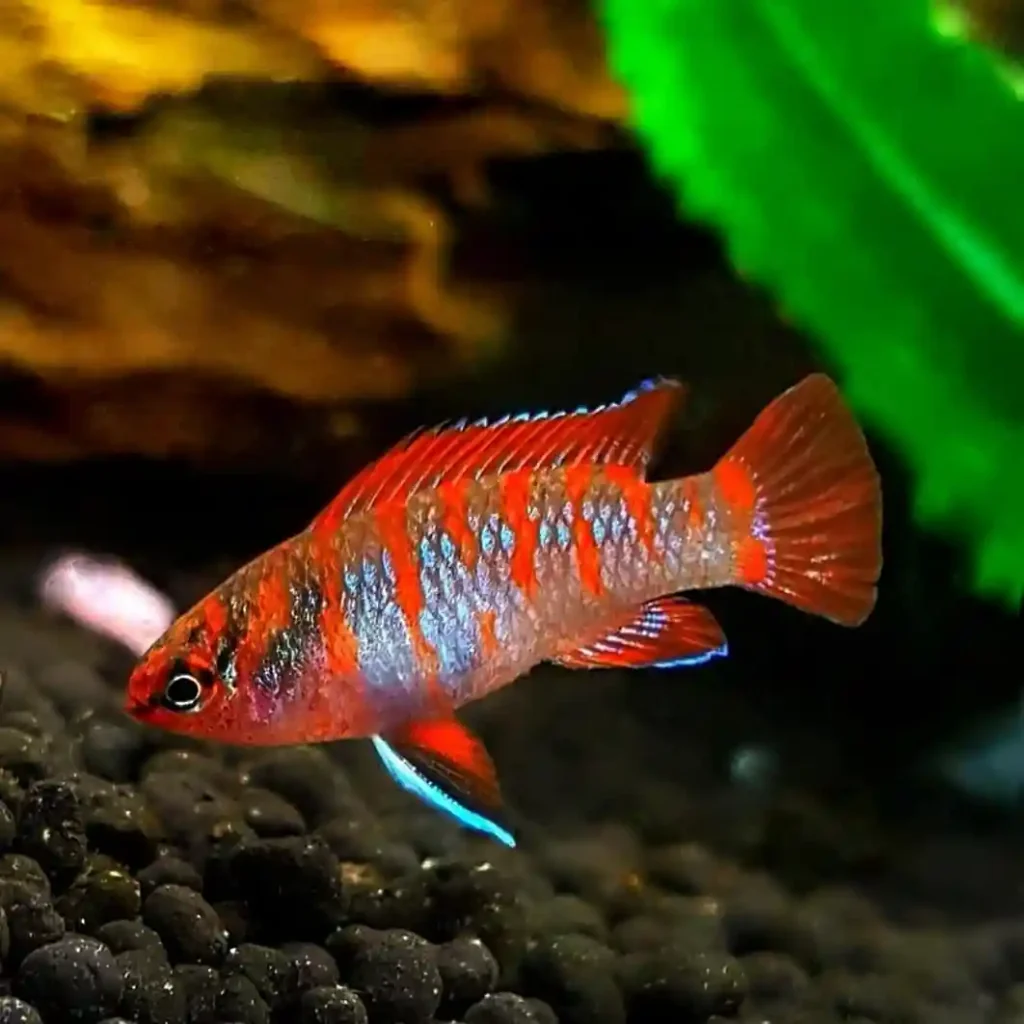
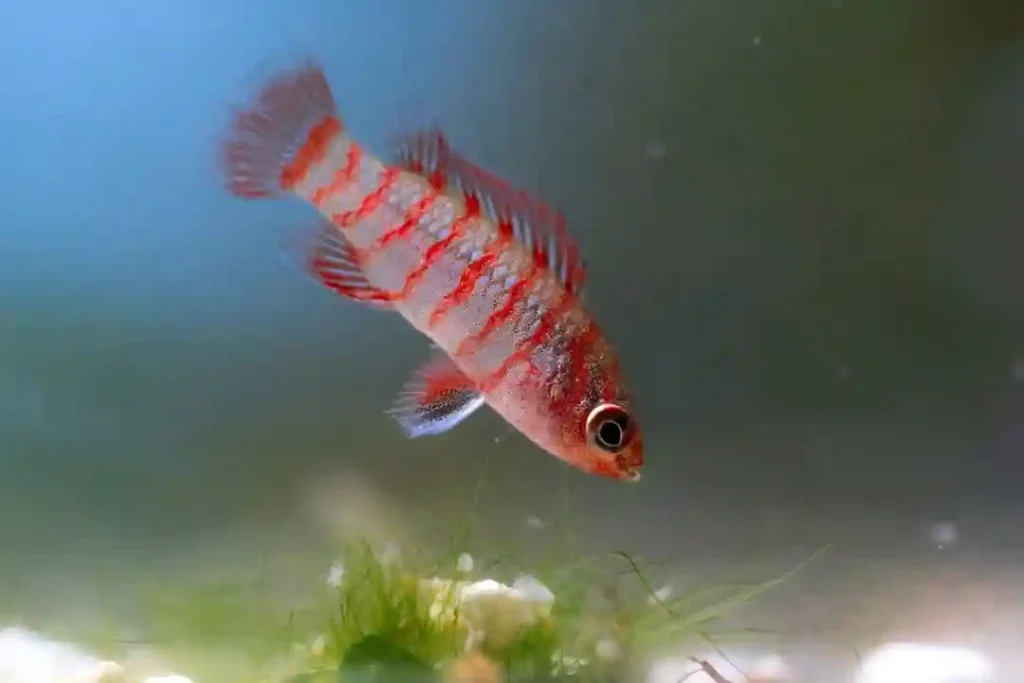
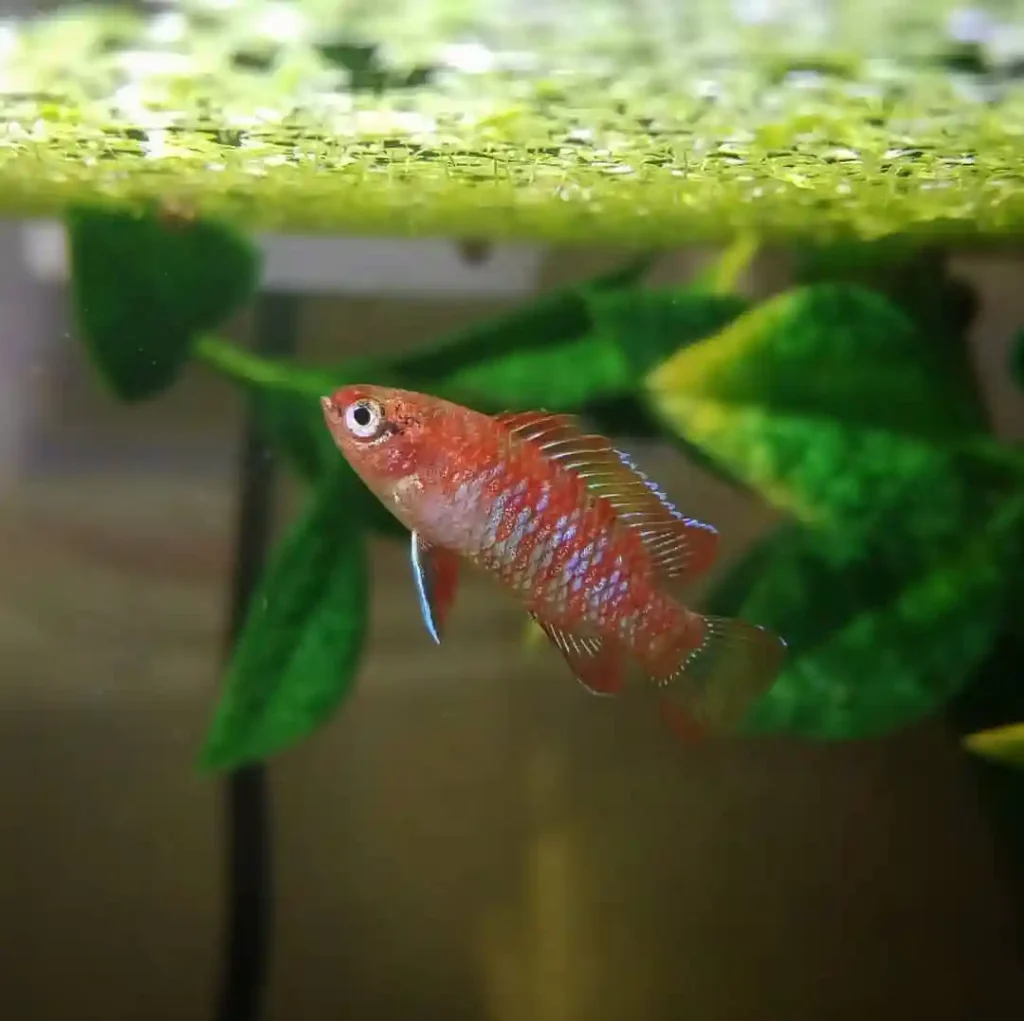
A male Scarlet Badis is easy to notice once he feels safe. His body develops red vertical bands mixed with pale blue or silver markings.
His fins may also show red, blue, and dark edging. When he sees another male or tries to attract a female, his colors can become much stronger.
Females look very different. They are usually smaller and have a pale gray, tan, or light brown body. Their plain color helps them stay hidden among plants.
Young males may look like females before their colors develop. This can make it hard to tell the sexes apart at a fish store.
Females are also less common in stores because bright males are easier to sell. If every fish in a shop has red markings, the group may contain only males.
How Big Do Scarlet Badis Get?
Scarlet Badis are among the smallest freshwater fish kept in home aquariums. Most males stay around 0.75 to 1 inch long, while females are often smaller.
Their small body does not mean they should live in a bowl or tiny jar. A larger tank gives them cleaner water, more hiding places, and room to escape from other fish.
Their natural habitat includes shallow, clear streams with sand, fine gravel, and thick plant growth.
Are Scarlet Badis Good for Beginners?
I would not call Scarlet Badis a good first fish.
Their tank setup is not very hard, but feeding can be a problem. Some fish refuse dry food even when they are hungry. A beginner may not notice that the fish is slowly losing weight.
They are also slow and careful eaters. They may watch food for several seconds before moving toward it. By that time, a tetra or rasbora may have eaten everything.
Scarlet Badis can be a good choice if you already know how to keep aquarium water stable and are willing to raise or buy live food.
If you want a fish that eats flakes, swims in the open, and fits easily into a busy community tank, I would choose another species.
Scarlet Badis Tank Size
I recommend a 10-gallon tank as the practical minimum for Scarlet Badis.
A smaller tank may hold enough water for one fish, but it gives you less room for plants and separate territories. Its water temperature and waste levels can also change faster.
A 10-gallon aquarium can work for one male or a carefully planned small group. A 15- or 20-gallon tank gives you more room if you want to keep several males.
The tank’s shape matters too. Scarlet Badis spend much of their time hunting close to plants, wood, rocks, and the bottom.
A long tank gives them more usable territory than a tall tank with the same water volume.
Can One Scarlet Badis Live Alone?
Yes, one Scarlet Badis can live alone.
They are not schooling fish, so one fish does not need a group to feel safe. A single male can become a bright and active display fish when he has plants and enough tiny food to hunt.
Keeping one fish also makes feeding easier. You can watch it closely and learn which foods it accepts.
How Many Scarlet Badis Can Live in a 10-Gallon Tank?
There is no safe number that works for every tank.
For a beginner, I would keep one male in a 10-gallon aquarium. An experienced keeper may try one male with two or three females if true females are available.
Keeping several males in ten gallons is risky. Males form territories and may chase each other even though they are very small.
If you try more than one male, use a larger tank with thick plants and solid objects that block their view. Each male should have a place where he cannot see the others.
How to Set Up a Scarlet Badis Tank
Start With a Cycled Aquarium
Never add Scarlet Badis to a tank that was filled only a few days ago.
A new aquarium may develop dangerous ammonia or nitrite. These chemicals can hurt a fish before the water looks dirty.
Cycle the aquarium first and test the water before buying fish. Our fish tank cycling guide explains how this process works.
If you are building your first tank, use our freshwater aquarium setup guide to plan the filter, heater, substrate, and other basic equipment.
Use a Gentle Filter
Scarlet Badis do not need strong water movement.
I like sponge filters for this type of aquarium. They create gentle movement and provide a surface where tiny living foods may grow.
A small hang-on-back filter can also work. Reduce its flow or place a sponge over the intake so the fish cannot be pulled toward it.
Watch the fish after you turn on the filter. If it spends all day hiding behind wood or fighting the current, the flow may be too strong.
Add Plenty of Plants
Plants help Scarlet Badis feel safe.
I would place plants along the back, sides, and lower parts of the aquarium. Leave a few small open spaces where you can see the fish and place food.
Good choices include:
- Java moss
- Java fern
- Anubias
- Cryptocoryne
- Water sprite
- Rotala
- Guppy grass
- Floating plants
Java moss and other fine plants are especially useful in a breeding tank. Eggs and tiny fry can stay hidden inside them.
Floating plants soften the light and give the tank a calmer look. If you need plants for a shaded setup, see our guide to low-light aquarium plants.
Create Several Small Territories
A bare tank can lead to constant chasing because each fish can see every other fish.
Use small pieces of wood, smooth rocks, caves, and thick plants to break the tank into sections. I try to make each section look like its own small room.
A chased fish should be able to move behind a plant or rock and disappear from view. If the stronger fish can follow it across the whole tank, the barriers are not doing enough.
Choose a Safe Substrate
Sand or fine gravel both work well.
Dark substrate can make the fish feel less exposed. It may also help a male’s red color look stronger.
Leaf litter can give the bottom a more natural look. It also creates small hiding areas where tiny animals may live.
Do not let rotting leaves cover the whole bottom. Remove any material that begins to smell bad or traps too much waste.
Keep the Light Soft
Bright light in an open tank may cause Scarlet Badis to hide.
You do not always need to buy a weaker light. Tall plants, floating plants, and shaded areas under wood can give the fish a choice.
A fish that has safe hiding places may spend more time in the open because it knows it can quickly escape.
Scarlet Badis Water Parameters
Keep the water between about 72 and 79°F. A small adjustable heater helps prevent sudden temperature changes.
A pH around 6.5 to 7.5 works for most captive fish. Soft to moderately hard water is normally suitable.
Ammonia and nitrite should always remain at 0 ppm. Keep nitrate low through regular water changes, careful feeding, and tank cleaning.
Do not make large chemical changes just to reach a number you saw online. A stable pH of 7.4 is safer than moving the water between 6.8 and 7.4 every few days.
Ask the fish store about the water used for the fish. If your water is very different, introduce the fish slowly.
Scarlet Badis Diet and Feeding
Scarlet Badis are micropredators. This means they hunt very small animals rather than eating plant matter or large pieces of normal fish food.
Wild Dario species eat small crustaceans, worms, insect larvae, and zooplankton. Seriously Fish describes the genus as feeding on these tiny animal foods.
This feeding habit is the part I would plan before bringing the fish home.
What Do Scarlet Badis Eat?
Good foods include:
- Newly hatched baby brine shrimp
- Daphnia
- Moina
- Microworms
- Grindal worms
- Cyclops
- Small insect larvae
- Finely chopped frozen food
Make sure each piece can fit inside the fish’s tiny mouth. A food may be called “small” but still be too large for a Scarlet Badis.
I would rotate two or three foods instead of using only one. This gives the fish a wider diet and stops it from becoming fixed on a single food.Will Scarlet Badis Eat Flakes or Pellets?
Some Scarlet Badis learn to eat tiny pellets or crushed flakes. Many do not.
I would never buy one and hope that it will learn later. Ask the seller to show you the fish eating before you take it home.
Also ask what exact food they use. “It eats frozen food” is not clear enough. You need to know whether it eats frozen cyclops, baby brine shrimp, daphnia, or something else.
Bring home some of the same food if possible. You can add other foods after the fish settles in.
How Often Should I Feed Scarlet Badis?
Feed a small amount once or twice a day.
These fish have tiny stomachs. A few properly sized pieces may be enough for one meal.
Watch the fish eat instead of dropping food into the tank and walking away. Its belly should look gently rounded after a meal, not badly swollen.
Remove food that is still sitting in the tank after a few minutes. Leftover frozen food can quickly lower the water quality in a nano aquarium.
How Can I Feed a Shy Scarlet Badis?
Use a pipette or turkey baster to place food near the fish.
Turn off the filter for a few minutes if the flow pushes food away. Remember to turn it back on after feeding.
Do not shoot food directly at the fish’s face. Release it nearby and let the food move naturally. Scarlet Badis often react better when food looks alive.
Feed near plants or wood where the fish feels safe. A shy fish may refuse to cross an open tank, even when it can see the food.
Scarlet Badis Tank Mates
Scarlet Badis can live with other animals, but I think a species-only tank is easier.
The main problem is not always fighting. It is food competition.
A fast fish may eat every baby brine shrimp before the Scarlet Badis decides to leave its hiding place. The tank may look peaceful while the Scarlet Badis slowly becomes thin.
Our community fish guide explains the basic points you should check before mixing different fish.
Possible Scarlet Badis Tank Mates
Possible companions include small snails, adult dwarf shrimp, and carefully selected nano fish.
Some keepers try:
- Chili rasboras
- Ember tetras
- Pygmy Corydoras
- Adult cherry shrimp
- Amano shrimp
- Nerite snails
I would not call every fish on this list safe in every aquarium. Chili rasboras and ember tetras are peaceful, but they can still reach food faster.
If you want to try them, learn more about the Chili Rasbora and Ember Tetra before mixing the species.
A larger planted tank also gives you more room to feed in several places.
Tank Mates to Avoid
Avoid large fish, aggressive fish, and fin nippers.
I would also avoid active fish that rush toward every meal. A fish does not need to attack a Scarlet Badis to cause harm. It can simply stop the smaller fish from eating.
Poor choices include:
- Bettas
- Gouramis
- Barbs
- Large tetras
- Most cichlids
- Fast danios
- Pea puffers
- Large bottom feeders
Scarlet Badis should not be used as a colorful extra fish in a busy community tank. Build the aquarium around their needs.
Can Scarlet Badis Live With Shrimp?
Adult shrimp may live with Scarlet Badis, but baby shrimp are at risk.
Scarlet Badis hunt tiny moving animals. A new shrimplet is the right size to become food.
Dense moss and plants may help some baby shrimp survive, but you should still expect losses.
Larger Amano shrimp are less likely to be eaten. They may still take food meant for the fish, so watch feeding time.
Read our freshwater shrimp guide if you are planning a mixed fish and shrimp aquarium. Our guide to Cherry Shrimp tank mates also explains how small fish may act around shrimplets.
Keeping Multiple Scarlet Badis Together
Male Scarlet Badis are territorial.
A male may choose a plant, cave, or piece of wood and chase other males away from it. Short displays are normal, but one fish should not be chased all day.
Look for warning signs such as:
- Torn fins
- Faded color
- One fish staying in a corner
- A fish that cannot reach food
- Fast breathing
- A thin belly
- Constant chasing
If you see these signs, add more sight barriers or move the weaker fish.
Rearranging wood and plants may reset the territories for a short time. It will not fix a tank that is too small or too open.
Do not trust a male-to-female ratio unless you can sex the fish correctly. A group sold as one male and three females may contain several young males.
Male vs. Female Scarlet Badis
| Feature | Male | Female |
| Body color | Red bands with blue or silver areas | Gray, tan, or pale brown |
| Fins | Larger and more colorful | Smaller and mostly clear |
| Size | Usually larger | Usually smaller |
| Behavior | More territorial | Usually less territorial |
| Store availability | Common | Harder to find |
| Young fish | May have weak color | Can look similar to young males |
A clear adult male is easy to identify. Young fish are harder.
Do not use one faint red mark as proof that a fish is male or female. Watch how its color and fins change as it matures.
How to Breed Scarlet Badis
Scarlet Badis may breed when they have clean water, rich live food, and thick plant cover.
A ready male becomes brighter and guards a small area. He may display to a female and guide her toward moss or fine plants.
The pair may place eggs among the plants. The parents do not raise the young and may eat the eggs or fry.
If you want to save more fry, use a separate breeding tank or remove the adults after spawning.
Setting Up a Breeding Tank
A simple breeding tank can include:
- A gentle sponge filter
- Java moss
- Fine-leaved plants
- Soft lighting
- A mature tank environment
- A lid
- The same water conditions as the main tank
Avoid a strong filter intake. Tiny fry can be pulled into it.
Feeding Scarlet Badis Fry
Newly free-swimming fry are extremely small. Baby brine shrimp may be too large for their first meals.
Start with infusoria or another tiny living food. Once the fry grow, offer microworms and newly hatched baby brine shrimp.
Have the first food ready before the eggs hatch. Waiting until you see swimming fry may leave you without food when they need it.
Common Scarlet Badis Problems
My Scarlet Badis Is Not Eating
First, check the food.
The pieces may be too large, or the fish may not see them as prey. Try a small live food such as baby brine shrimp, microworms, or daphnia.
Next, watch the other fish. They may be eating the food before your Scarlet Badis reaches it.
Also test ammonia, nitrite, nitrate, and temperature. A sick or stressed fish often stops eating.
Look closely at the body. A sunken belly, white waste, swelling, sores, or fast breathing may point to a health problem.
Do not add medicine until you have a reason. Some treatments can place more stress on a tiny fish.
My Scarlet Badis Is Always Hiding
Hiding is normal during the first few days.
If it continues for weeks, check the lighting, water flow, tank mates, and amount of cover.
A bright, bare aquarium makes the fish feel exposed. Add plants and shaded areas while keeping a few open feeding spots.
Constant hiding may also mean another fish is guarding the best area. Watch the tank from a distance because chasing may stop when you walk near it.
My Scarlet Badis Looks Thin
A thin fish may be eating less than you think.
Watch whether it catches and swallows food. Do not count food added to the tank as food eaten by the fish.
Feed with a pipette and track the fish’s body shape over several days. Taking a clear photo from the same angle can help you see changes.
If the fish eats well but keeps losing weight, parasites or another health problem may be involved. A fish vet or an experienced aquatic professional can help you choose the next step.
My Scarlet Badis Is Losing Color
Color can fade because of stress, poor water, illness, bullying, or a weak diet.
A newly purchased male may look pale after shipping. Give it time to settle, but test the water and make sure it eats.
Remember that females and young males are naturally less colorful. A pale Scarlet Badis is not always sick.
The Males Keep Fighting
Add more plants, wood, and rocks to block their view.
If that does not stop the chasing, move one male to another tank. Do not wait for a badly injured fish.
A bigger tank may help, but only when the extra space contains real territories. An empty 20-gallon tank can still cause more trouble than a well-planted 15-gallon tank.
Weekly Scarlet Badis Tank Care
I would use a simple weekly routine.
Check the temperature and watch each fish before feeding. Look for torn fins, faded color, a thin belly, or strange breathing.
Change about 20% to 30% of the water when needed based on your tank’s nitrate level and waste load. Match the new water temperature closely.
Use a small siphon carefully. Scarlet Badis may hide near the bottom, and fry can be hard to see.
Rinse sponge-filter foam or other reusable media in removed tank water. Do not wash it under untreated tap water because this can harm helpful bacteria.
Trim plants when the tank becomes too crowded, but do not remove all the cover at once. Leave safe paths between hiding areas and feeding spots.
Is a Scarlet Badis Right for You?
Choose Scarlet Badis if you want to watch a tiny hunter in a quiet planted aquarium.
They are a good fit for someone who enjoys live food, close observation, and gentle tank care. Their small movements and territorial displays can be very interesting once they feel safe.
Do not choose them only because they fit inside a nano tank. Their feeding needs make them harder to keep than many larger fish.
My honest view is simple: if you cannot provide tiny live or frozen foods, pick another fish. A beautiful tank will not help a Scarlet Badis that cannot get enough to eat.
Frequently Asked Questions
How long do Scarlet Badis live?
Scarlet Badis are often reported to live for around three to six years with good care. Their true lifespan can change based on age at purchase, food, water quality, and health.
Do Scarlet Badis need a heater?
Most homes will need a heater to hold the tank between about 72 and 79°F. You may not need one if the room stays safely inside that range all year.
Do Scarlet Badis need live food?
Many Scarlet Badis need live food, especially when they first arrive. Some accept frozen food, and a smaller number may learn to eat tiny dry food.
I would have live food ready before buying the fish.
Can Scarlet Badis live with bettas?
I do not recommend this mix.
A betta is much larger and may chase or eat a Scarlet Badis. It may also take all the food before the smaller fish can eat.
Can Scarlet Badis live with cherry shrimp?
They may live with adult cherry shrimp, but they can hunt baby shrimp. Use thick moss if you want some shrimplets to survive.
Can I keep one male Scarlet Badis?
Yes. One male can live alone in a planted aquarium and does not need other Scarlet Badis for company.
Why does my Scarlet Badis stay near the bottom?
Scarlet Badis often hunt near plants, wood, and the lower half of the aquarium. This can be normal.
Test the water if the fish lies still, breathes quickly, refuses food, or loses balance.
Do Scarlet Badis jump?
Any small fish may jump when frightened. Keep a lid on the tank and cover gaps around cables and filter pipes.
Do Scarlet Badis need an air pump?
They need oxygen in the water, but they do not always need a separate air pump. A sponge filter uses an air pump and is a good choice because it adds gentle movement and surface action.
What is the best food for Scarlet Badis?
Newly hatched baby brine shrimp is one of the easiest foods for many Scarlet Badis to see and catch. Daphnia, microworms, moina, cyclops, and grindal worms can add variety.
