
15 Best Schooling Fish for Aquariums

If you want an aquarium that looks active, natural, and stress-free, schooling fish are one of the best choices. These fish naturally swim together in groups, creating a smooth, flowing movement that instantly makes your tank look more alive.
But choosing the right schooling fish is where most beginners go wrong. Some fish need larger tanks, some are sensitive, and others don’t mix well with certain species. On top of that, keeping too few fish can actually stress them instead of helping them.
In this guide, you’ll find 15 of the best schooling fish you can keep, along with simple advice on tank size, group numbers, and how to avoid common mistakes.
What Is a Schooling Fish?
Schooling fish are species that prefer to swim together in a group rather than alone. In nature, this helps them stay safe and reduces stress.
In an aquarium, this behavior becomes even more important. When kept in proper groups:
- fish feel secure
- they show better colors
- they swim more naturally
If you keep only 2–3 fish, they often hide more and may even become weak over time.
How Many Schooling Fish Should You Keep?
A common rule is to keep at least 6 fish of the same species, but more is always better if your tank allows it.
- Minimum group: 6
- Better group: 8–12
- Large tanks: even bigger schools
Your tank size plays a big role here. If you’re unsure, check: Aquarium fish By tank size
15 Best Schooling Fish for Aquariums
1.Neon Tetra
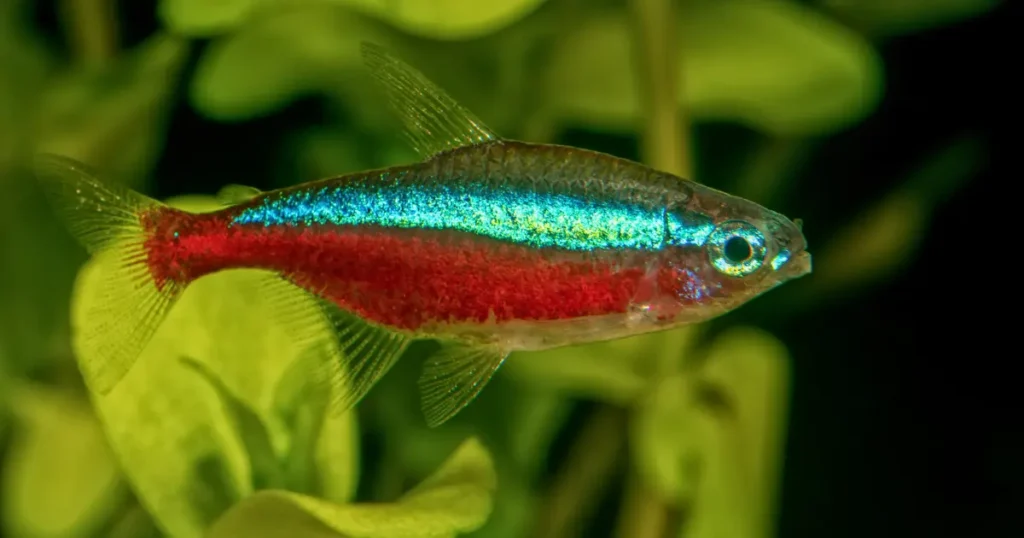
Neon Tetras are classic schooling fish that show their best colors and behavior when kept in groups. In a proper school, they move together in a smooth, flowing pattern across the tank. If kept in small numbers, they become shy and hide often. A larger group makes them feel safe, which brings out their bright colors and active swimming behavior in community aquariums.
- Group size: 6–12
- Tank guide: ~1 Neon Tetra per 1 gallon (small fish rule)
- Best tank: 10 gallons+
- Can live with: other peaceful fish like rasboras, corydoras
2.Cardinal Tetra
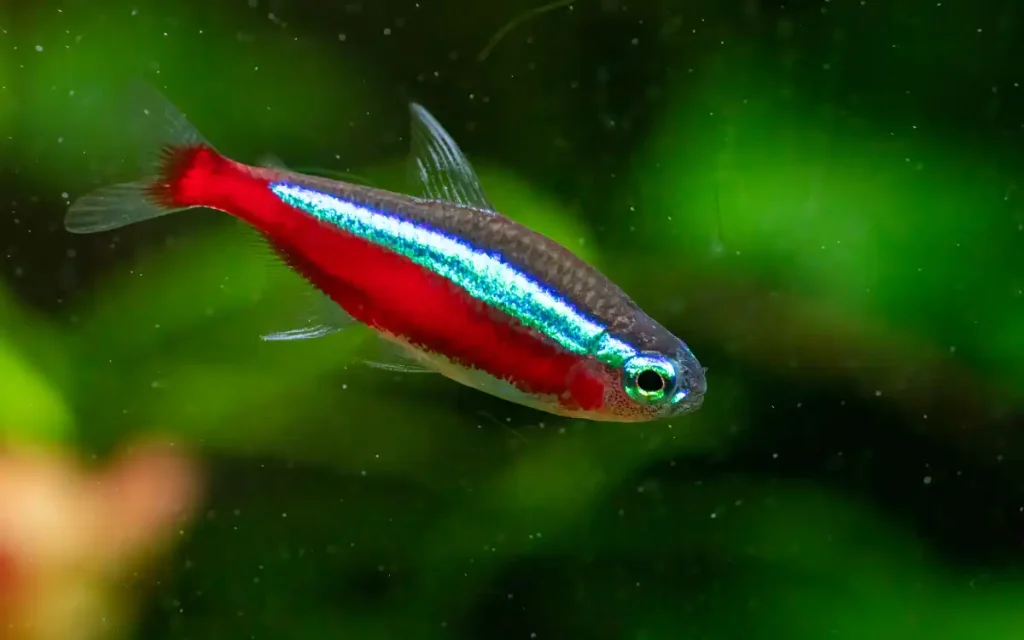
Cardinal Tetras are strong schooling fish that prefer larger groups and stable conditions. When kept in a proper school, they move together calmly and show deeper red coloration. Smaller groups make them nervous and less visible. They are slightly more sensitive than neon tetras, so stable water and group size are key for natural schooling behavior.
- Group size: 8–12
- Tank guide: ~1 fish per 1 gallon
- Best tank: 15 gallons+
- Can live with: peaceful tetras, rasboras
3.Rummy-Nose Tetra
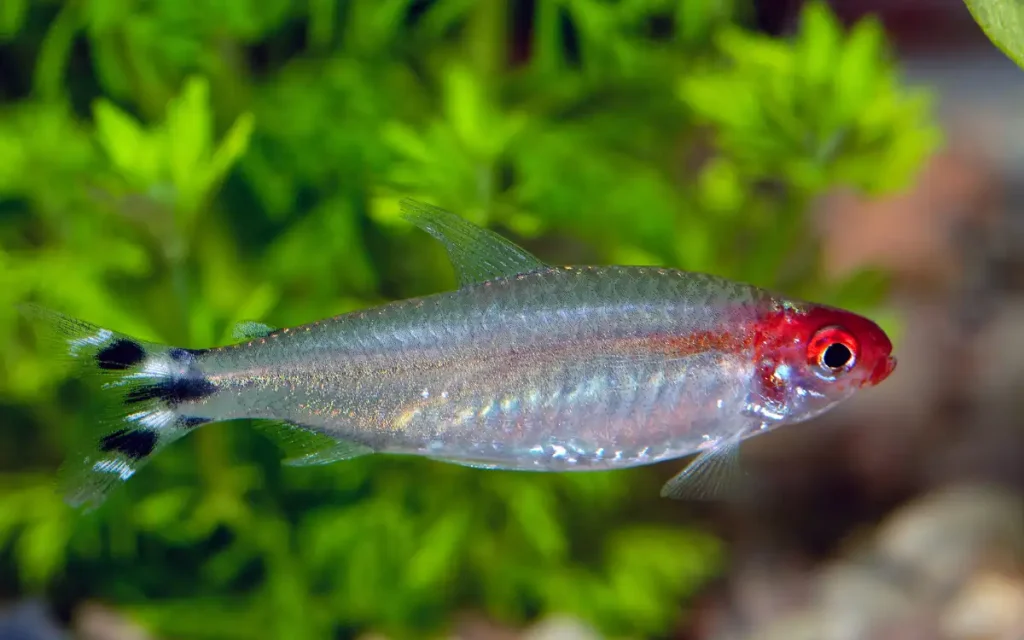
Rummy Nose Tetras are known for their tight schooling behavior. They swim in synchronized groups and react quickly to each other’s movement. This behavior only appears in larger schools. In small groups, they lose coordination and become stressed. They also indicate water quality, as their red nose fades in poor conditions.
- Group size: 8–12
- Tank guide: ~1 fish per 1 gallon
- Best tank: 20 gallons+
- Can live with: calm community fish
4.Ember Tetra
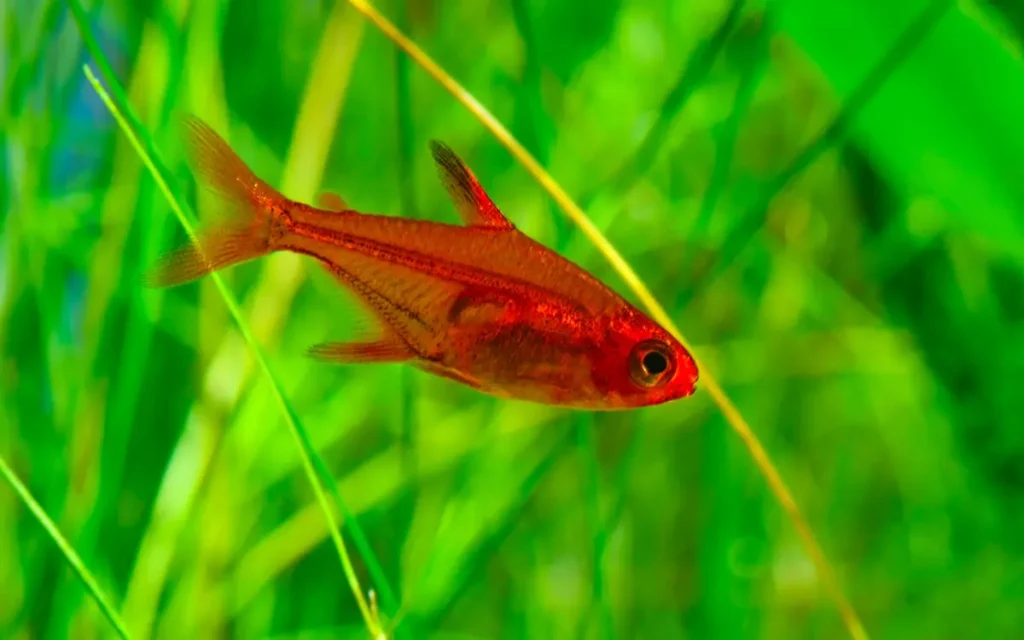
Ember Tetras are small schooling fish that work well in nano tanks. In proper groups, they spread out evenly and move gently through plants. When kept in low numbers, they hide more and lose color. A larger group makes them feel secure and keeps them visible.
- Group size: 8–12
- Tank guide: ~1 fish per 1 gallon
- Best tank: 5–10 gallons
- Can live with: chili rasboras, shrimp
5.Buenos Aires Tetra
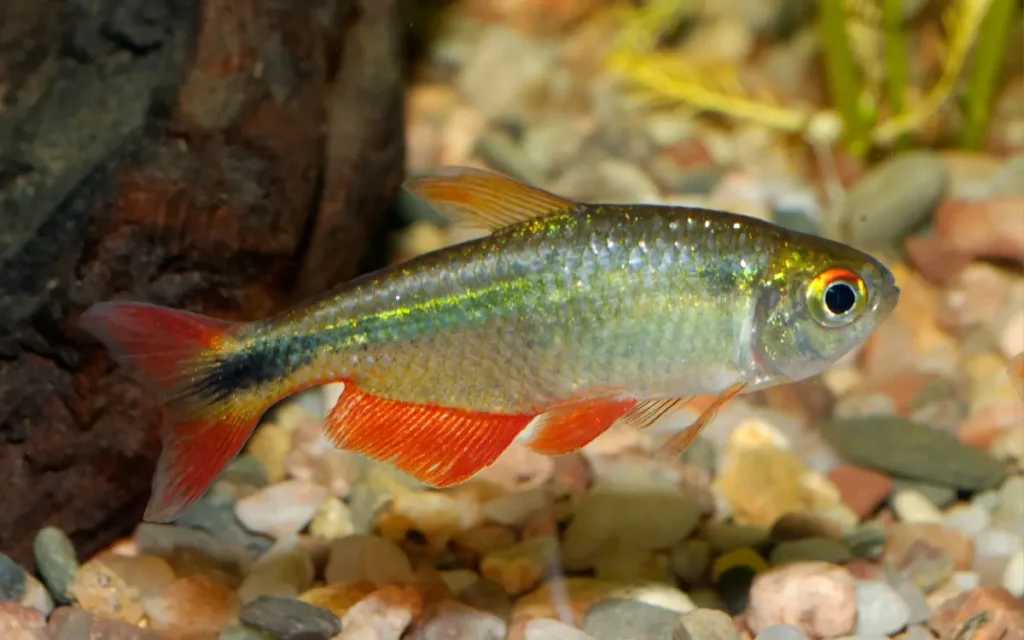
Buenos Aires Tetras are active schooling fish that spread their energy across the group. When kept in a proper school, they focus more on swimming together rather than bothering other fish. In small groups, they can become aggressive or start fin-nipping. A larger group helps balance their behavior and keeps them more stable in a community aquarium.
- Group size: 6–10
- Tank guide: ~1 fish per 2 gallons
- Best tank: 20 gallons+
- Can live with: larger peaceful fish (avoid delicate species)
6.Harlequin Rasbora
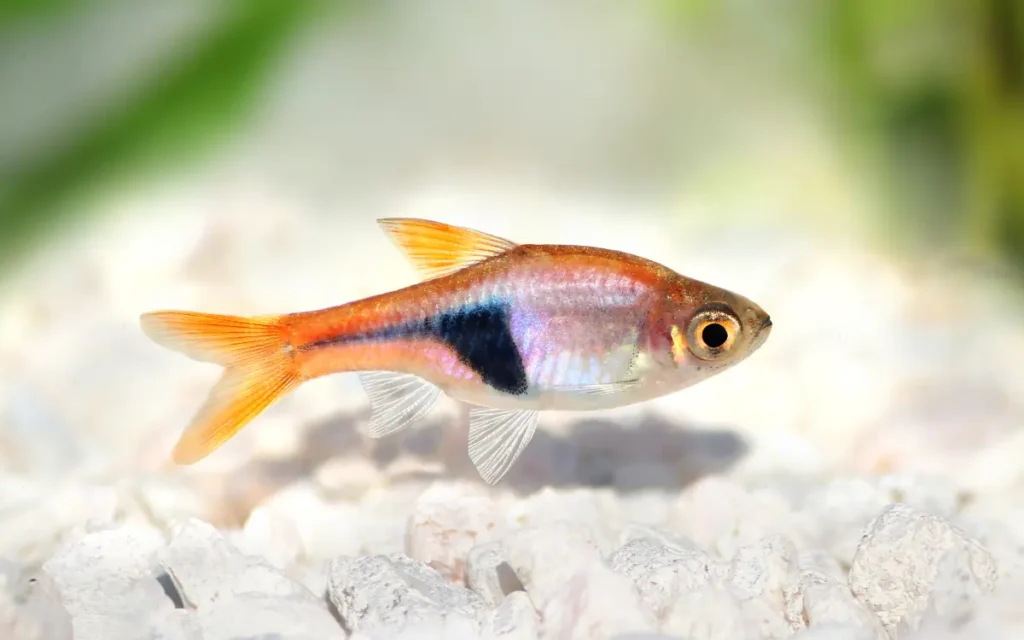
Harlequin Rasboras are beginner-friendly schooling fish that move in loose groups. They don’t form tight schools like tetras but still prefer group presence. A proper school makes them more active and confident in the tank.
- Group size: 6–10
- Tank guide: ~1 fish per 1–1.5 gallons
- Best tank: 10 gallons+
- Can live with: tetras, danios
7.Pearl Danio
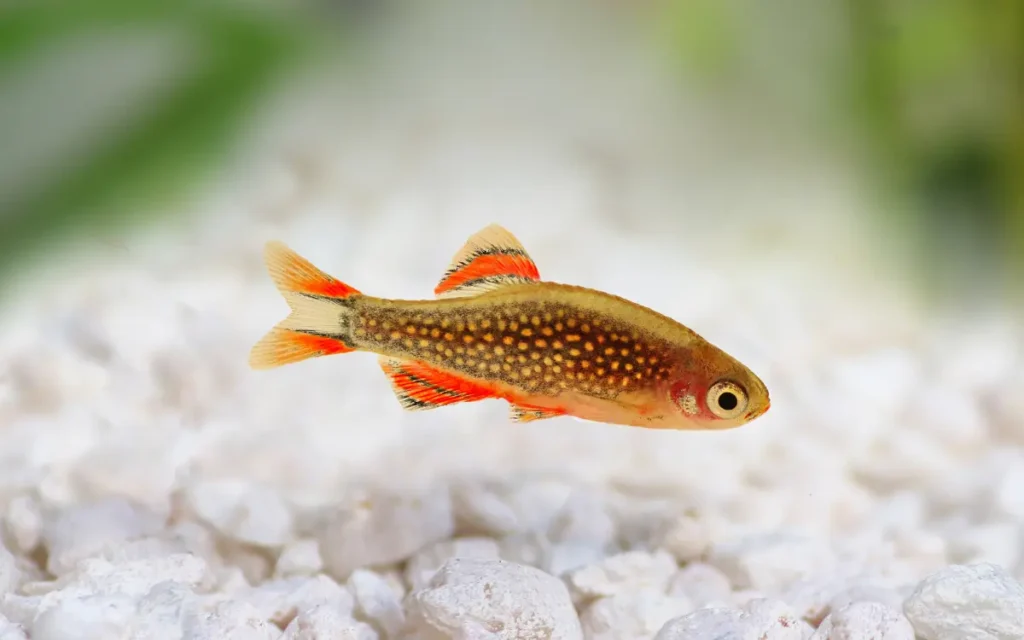
Pearl Danios are active schooling fish that move in loose formations. They require space and a proper group to show natural behavior. Smaller groups can make them overly active or restless.
- Group size: 6–10
- Tank guide: ~1 fish per 2 gallons
- Best tank: 10 gallons+
- Can live with: zebra danios
8.Zebra Danio
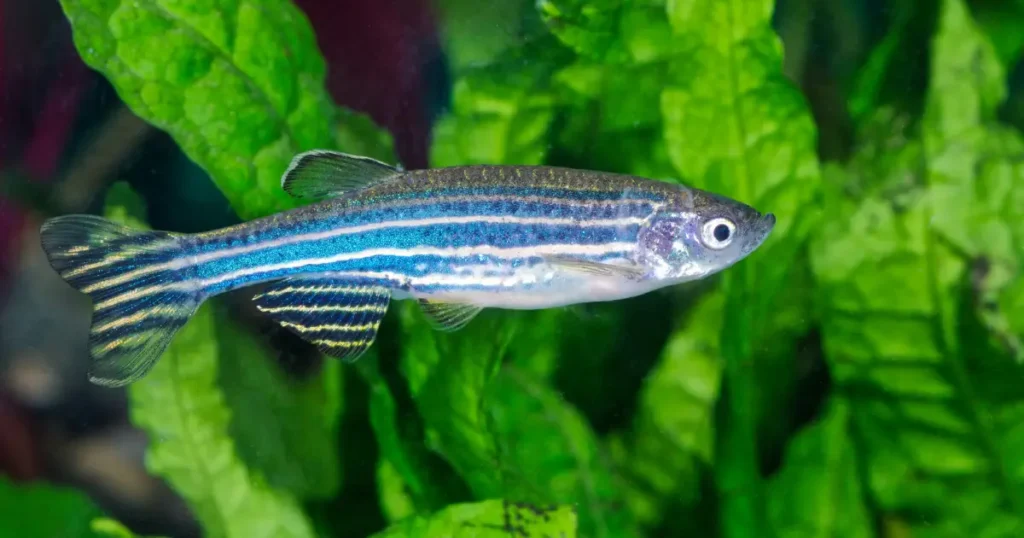
Zebra Danios are fast, energetic schooling fish that prefer group activity. They spread their energy across the group and stay active throughout the tank. Without a proper group, they may become aggressive or stressed.
- Group size: 6–10
- Tank guide: ~1 fish per 2 gallons (more active swimmer)
- Best tank: 10 gallons+
- Can live with: rasboras, minnows
9.Zebra Danio
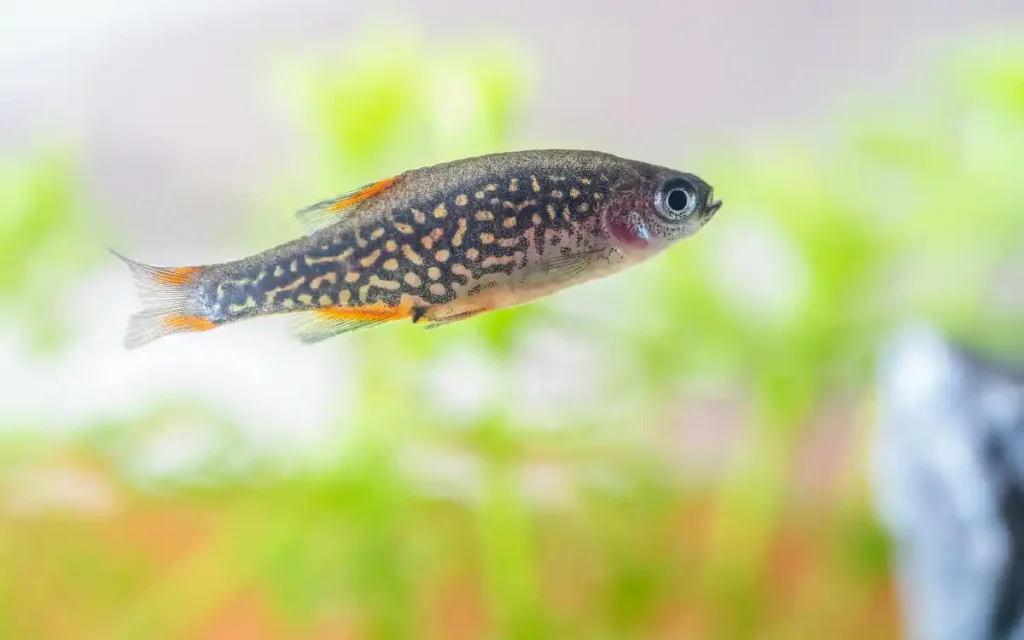
Zebra Danios are fast, energetic schooling fish that prefer group activity. They spread their energy across the group and stay active throughout the tank. Without a proper group, they may become aggressive or stressed.
- Group size: 6–10
- Tank guide: ~1 fish per 2 gallons (more active swimmer)
- Best tank: 10 gallons+
- Can live with: rasboras, minnows
10.Boraras Brigittae (Chili Rasbora)
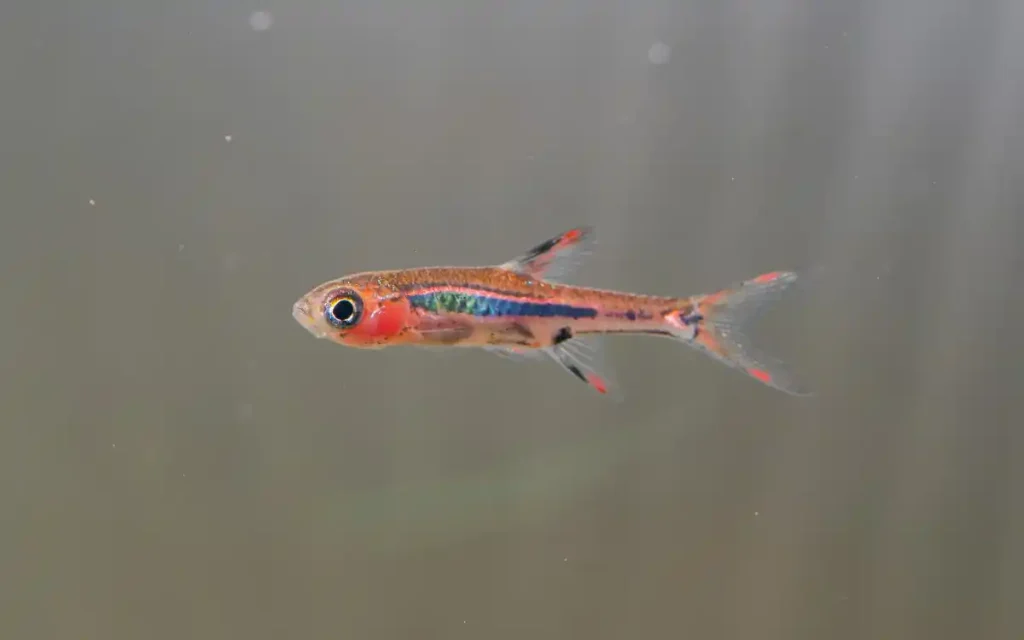
Chili Rasboras are tiny schooling fish that depend heavily on group size. In larger schools, they stay visible and active. In small numbers, they become extremely shy and hide constantly.
- Group size: 8–12
- Tank guide: ~1 fish per 1 gallon
- Best tank: 5 gallons+
- Can live with: ember tetras, shrimp
11.White Cloud Mountain Minnow
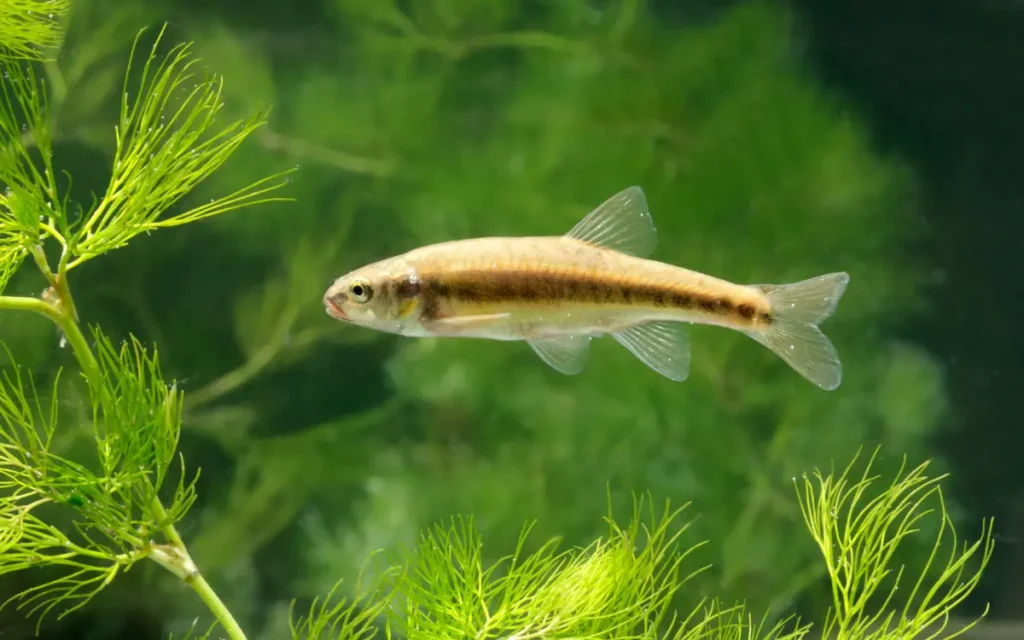
White Cloud Mountain Minnows are hardy schooling fish that prefer cooler water. They stay in groups and show gentle, coordinated swimming. They are perfect for beginners who want low-maintenance fish.
- Group size: 6–10
- Tank guide: ~1 fish per 1–2 gallons
- Best tank: 10 gallons+
- Can live with: danios, small peaceful fish
12.Tiger Barb
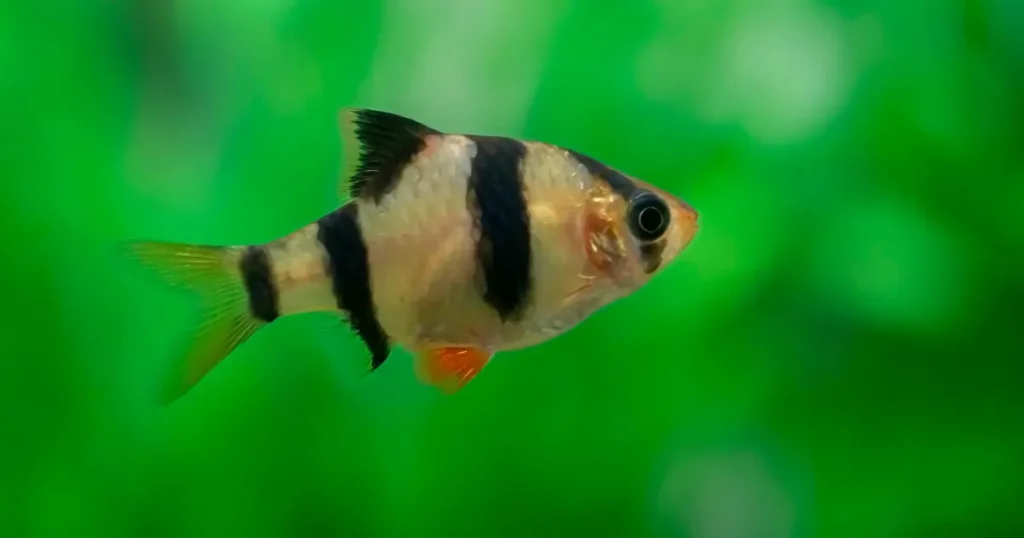
Tiger Barbs are active schooling fish, but they are very different from most peaceful species. They need to be kept in larger groups to control their aggressive and fin-nipping behavior. In a proper school, their attention stays within the group, reducing aggression toward other fish. When kept in small numbers, they become more aggressive and may harass tank mates.
- Group size: 8–12 (very important)
- Tank guide: ~1 fish per 2 gallons
- Best tank: 20 gallons+
- Can live with: fast-moving, semi-aggressive fish (avoid slow or long-fin fish)
13.Congo Tetra
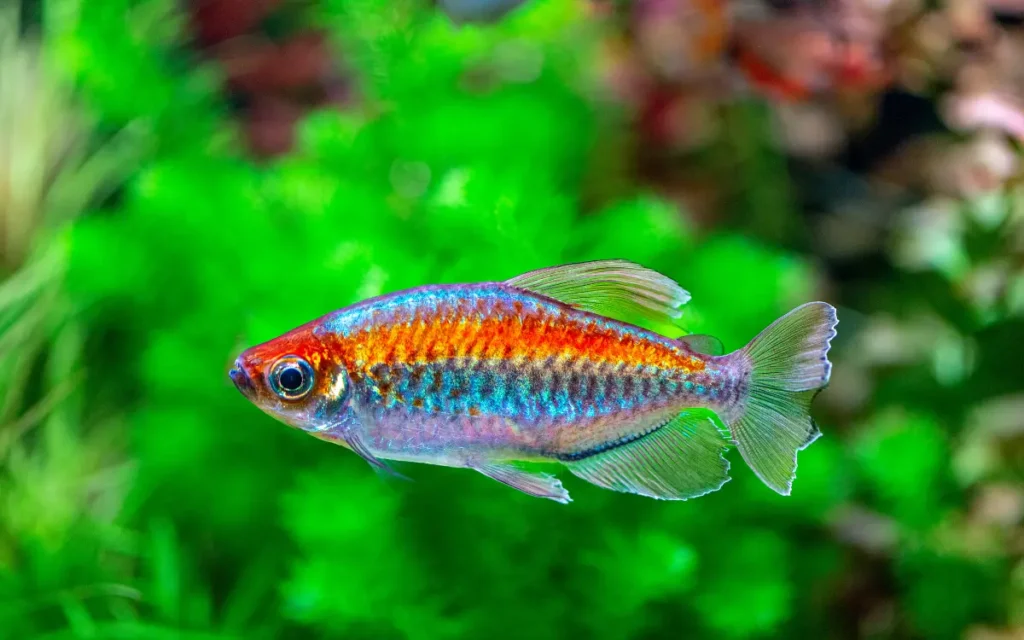
Congo Tetras are larger schooling fish that need space and proper grouping. In schools, they move gracefully and display strong coloration. Smaller groups make them shy.
- Group size: 6–8
- Tank guide: ~1 per 3 gallons
- Best tank: 30 gallons+
14.Bleeding Heart Tetra
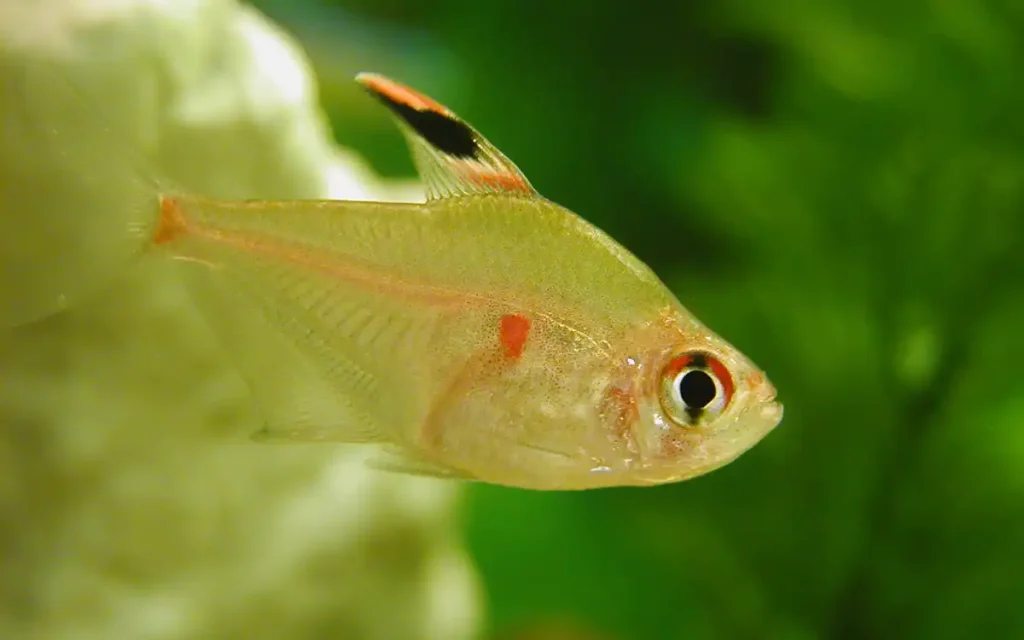
Bleeding Heart Tetras are peaceful schooling fish that do best when kept in stable groups. They don’t form extremely tight schools like Rummy Nose Tetras, but they still prefer to stay close together and move in loose formations. When kept in proper groups, they become more confident and display their signature red “heart” marking more clearly. In small numbers, they may become shy and less active.
- Group size: 6–10
- Tank guide: ~1 fish per 2 gallons
- Best tank: 20 gallons+
- Can live with: peaceful tetras, rasboras, corydoras
15.Corydoras
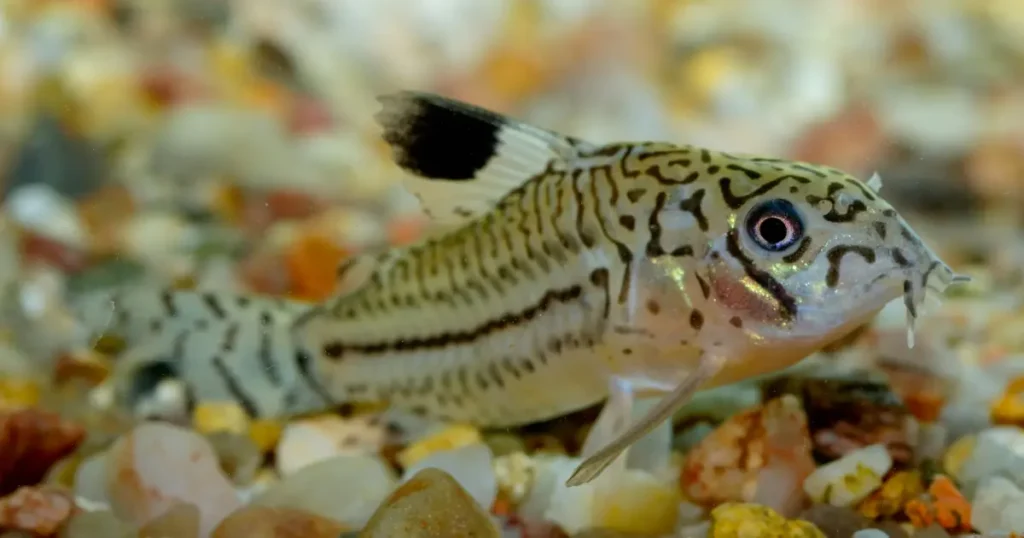
Corydoras are bottom-dwelling schooling fish that move together along the substrate. They feel safer in groups and become more active when kept properly. Alone, they often hide and stay inactive.
- Group size: 6+
- Tank guide: ~1 per 2 gallons
- Best tank: 10 gallons+
- Can live with: all peaceful fish
Read also: 11 Bottom Dwellers for Freshwater Tanks
FAQs
What is a schooling fish?
A schooling fish is a species that prefers to swim in a group rather than alone. In aquariums, these fish feel safer and behave more naturally when kept in groups. Schooling reduces stress, improves activity, and helps fish show their natural colors. Keeping them alone or in very small numbers can lead to hiding, weak health, and unusual behavior.
How many schooling fish should be kept together?
Most schooling fish should be kept in groups of at least 6. However, a group of 8–12 is much better if your tank size allows it. Larger groups make fish feel more secure, which improves their movement and reduces stress. The exact number depends on tank size and species, but keeping too few is one of the most common beginner mistakes.
Can schooling fish live alone?
No, most schooling fish should not live alone. When kept alone, they often become stressed, hide frequently, and may stop eating properly. Over time, this can lead to health problems. Some fish may survive alone, but they will not behave naturally or thrive. Keeping them in groups is always the better option.
Can different schooling fish school together?
No, different species do not form a true school together. Even if they swim near each other, they will not move in a synchronized way like a natural school. Each species prefers its own group. You can keep multiple schooling species in one tank, but each type should have its own group of at least 6 fish.
What is the easiest schooling fish for beginners?
Zebra Danios and Neon Tetras are two of the easiest schooling fish for beginners. They are hardy, adapt well to different water conditions, and are easy to feed. Harlequin Rasboras are also a great option because they are calm and low-maintenance.
How many schooling fish can I keep in a 10 gallon tank?
In a 10 gallon tank, you can usually keep 6–8 small schooling fish like Neon Tetras or Ember Tetras. It’s important not to overstock the tank. Smaller fish work best in limited space, and adding plants can help them feel more secure.
Related: Fish for 5 gallon tank
Do schooling fish need a planted tank?
Schooling fish don’t always require a planted tank, but plants help a lot. Plants provide hiding spots, reduce stress, and make fish feel safer. This leads to more natural schooling behavior and better overall activity. Even simple plants can improve the environment.
Why are my schooling fish not swimming together?
If your fish are not schooling, it could be due to:
- too few fish in the group
- stress or poor water conditions
- incompatible tank mates
- lack of hiding spaces
Increasing the group size and improving tank conditions usually helps restore natural schooling behavior.
Can schooling fish live with aggressive fish?
It’s not recommended. Schooling fish are usually peaceful and can get stressed or injured when kept with aggressive species. Fish like Buenos Aires Tetras may tolerate slightly stronger tank mates, but most schooling fish do best in calm community aquariums.
