
How to Care for Dwarf Baby Tears

Dwarf Baby Tears, often called DBT, is one of the most beautiful carpeting plants in the aquarium hobby. Its tiny bright green leaves create a dense carpet that gives aquascapes a clean, professional appearance.
But despite how popular it looks online, Dwarf Baby Tears is not the easiest carpeting plant for beginners. Many hobbyists buy it expecting quick results, only to struggle with melting, algae, or upward growth.
The truth is simple: Dwarf Baby Tears can grow beautifully, but it needs stable conditions, strong lighting, and usually CO2 to stay compact and healthy.
If you are willing to give it proper care, it can create one of the best-looking foreground carpets in a freshwater aquarium.
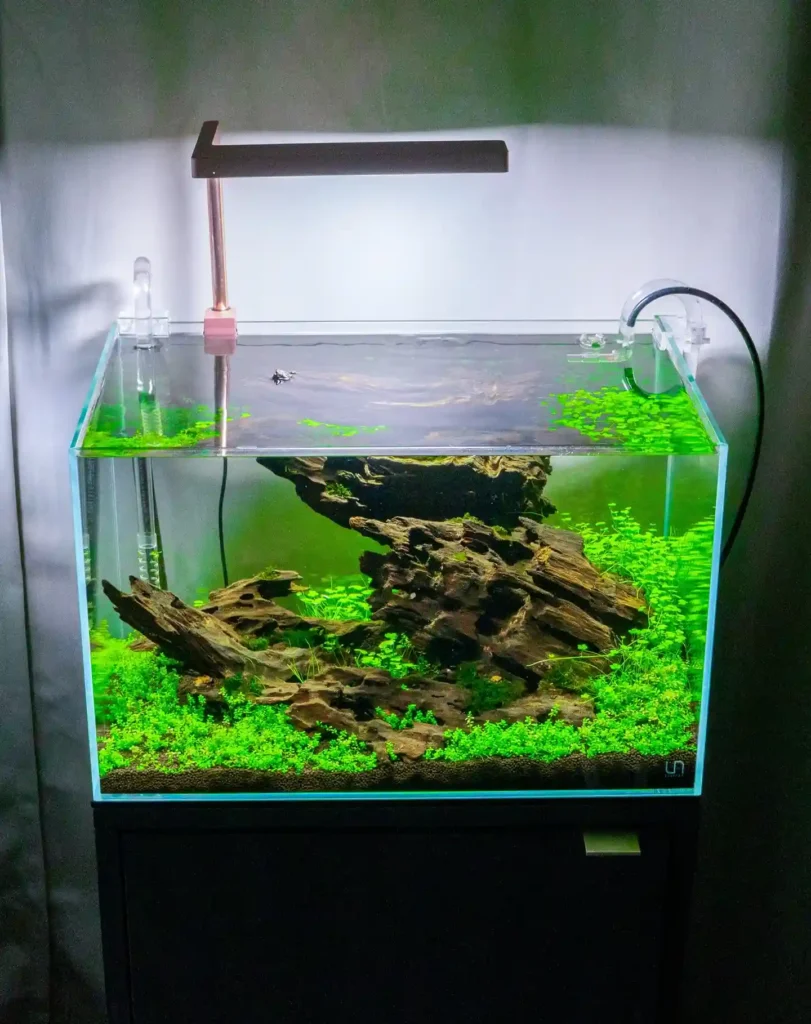
What Is Dwarf Baby Tears?
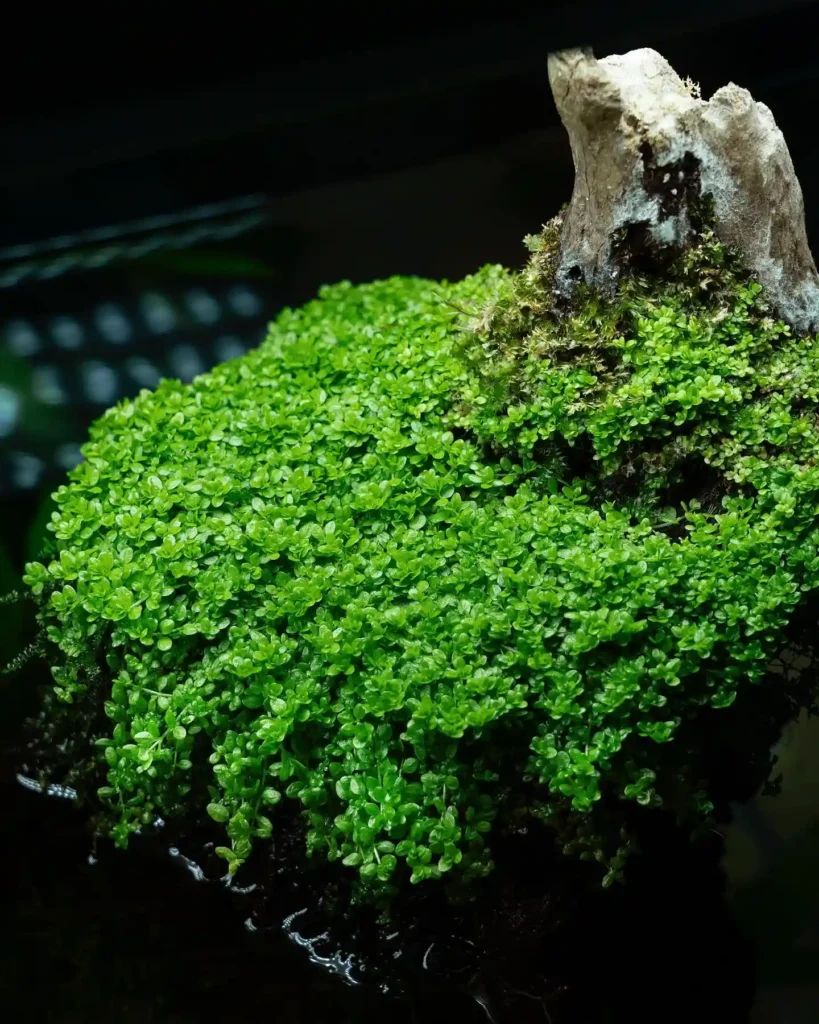
Dwarf Baby Tears is a small carpeting aquarium plant with tiny round leaves and creeping growth. It spreads across the substrate and forms a thick green carpet under good conditions.
It is commonly used in:
- Iwagumi aquascapes
- High-tech planted tanks
- Nano aquariums
- Nature-style layouts
- Foreground carpeting
Compared to easier carpet plants like Marsilea Minuta, Dwarf Baby Tears is more demanding but also creates a denser carpet.
Quick Dwarf Baby Tears Care Guide
| Feature | Details |
| Care Level | Moderate to difficult |
| Growth Rate | Moderate to fast |
| Lighting | High |
| CO2 Needed | Strongly recommended |
| Placement | Foreground |
| Temperature | 68–80°F |
| pH Range | 5.5–7.5 |
| Propagation | Runners and trimming |
Why Hobbyists Love Dwarf Baby Tears
Dwarf Baby Tears is famous because of how clean and lush it looks once fully carpeted.
Main reasons aquascapers love it:
- Dense green carpet appearance
- Tiny compact leaves
- Professional aquascape look
- Fast carpeting under good conditions
- Works beautifully in nano tanks
- Excellent foreground plant
When healthy, it creates one of the smoothest carpeting effects in freshwater aquariums.
Why Dwarf Baby Tears Is Difficult for Beginners
Many beginners struggle with DBT because it reacts quickly to unstable conditions.
Common beginner problems include:
- Weak lighting
- No CO2
- Poor circulation
- Algae outbreaks
- Melting after planting
- Carpet lifting from substrate
Honestly, this is not the plant I usually recommend for a first planted tank unless you already have stable equipment.
For beginners, Monte Carlo or Marsilea Minuta are usually safer starting points.
Best Tank Setup for Dwarf Baby Tears
Lighting
Strong lighting is very important.
Under weak light, Dwarf Baby Tears often grows upward instead of spreading tightly along the substrate.
A high-quality aquarium light usually gives the best results.
Water Flow
Good circulation helps prevent dead spots and algae buildup inside the carpet.
Poor flow often causes lower sections to weaken or rot.
Water Parameters
Dwarf Baby Tears prefers stable freshwater conditions.
| Parameter | Ideal Range |
| Temperature | 68–80°F |
| pH | 5.5–7.5 |
| GH | 2–8 |
| KH | 1–5 |
Stable water matters more than chasing perfect numbers.
Does Dwarf Baby Tears Need CO2?
Realistically, yes.
Some hobbyists grow DBT without CO2, but the carpet is usually thinner, slower, and less stable.
With CO2:
- Growth becomes much faster
- Carpet stays compact
- Leaves remain small
- Algae problems reduce
- Spreading improves dramatically
Without CO2, many beginners struggle to keep the carpet healthy long term.
If you want a thick professional-looking carpet, CO2 makes a huge difference.
Best Substrate for Dwarf Baby Tears
Nutrient-rich substrate is very important.
Good options include:
- Aquasoil
- Fine planted substrate
- Nutrient-rich gravel
- Sand with root tabs
Fine substrate also helps runners spread more naturally.
How to Plant Dwarf Baby Tears Properly
Never plant one large clump directly into the substrate.
Instead:
- Divide the plant into tiny portions
- Space them apart across the foreground
- Use tweezers carefully
- Plant roots gently into substrate
- Leave leaves exposed above the substrate
Spacing small portions apart helps the carpet spread more evenly.
Why Dwarf Baby Tears Melts
Some melting is common after planting, especially when transitioning from emersed growth to submerged growth.
Common Causes
- Weak lighting
- No CO2
- Poor nutrients
- Unstable water
- Weak circulation
What To Do
- Remove dead sections
- Keep lighting stable
- Maintain CO2 consistency
- Avoid disturbing the carpet
- Be patient
Healthy roots often recover over time.
Fertilizer Needs
Dwarf Baby Tears is nutrient-hungry compared to beginner plants like Anubias or Java Fern.
Important Nutrients
- Nitrogen
- Potassium
- Iron
- Phosphate
- Trace minerals
Balanced fertilization is important because carpeting plants consume nutrients quickly.
Signs of Nutrient Deficiency
| Problem | Possible Cause |
| Yellow carpet | Nitrogen deficiency |
| Pale leaves | Iron deficiency |
| Weak spreading | Poor substrate nutrients |
| Holes in leaves | Potassium deficiency |
How Fast Does Dwarf Baby Tears Grow?
Under high-tech conditions with strong lighting and CO2, DBT can carpet fairly quickly.
In weaker setups, growth becomes slow and uneven.
Compared to Monte Carlo:
- DBT carpets denser
- Monte Carlo is easier
- DBT needs stronger conditions
Trimming and Maintenance
Regular trimming is important.
If left too thick:
- Upper layers block light
- Lower carpet weakens
- Dead spots develop
- Carpet may lift from substrate
Trimming Tips
- Trim lightly but regularly
- Remove floating cuttings
- Avoid cutting too deep
- Maintain strong circulation afterward
Frequent maintenance keeps the carpet healthy and compact.
Best Tank Mates for Dwarf Baby Tears
Dwarf Baby Tears works best with small peaceful fish.
Good Tank Mates
- Tetras
- Rasboras
- Otocinclus
- Corydoras
- Shrimp
- Snails
Fish That May Damage It
- Goldfish
- Large cichlids
- Silver dollars
These fish may uproot or destroy the carpet. its Best Community Fish.
Dwarf Baby Tears in Aquascaping
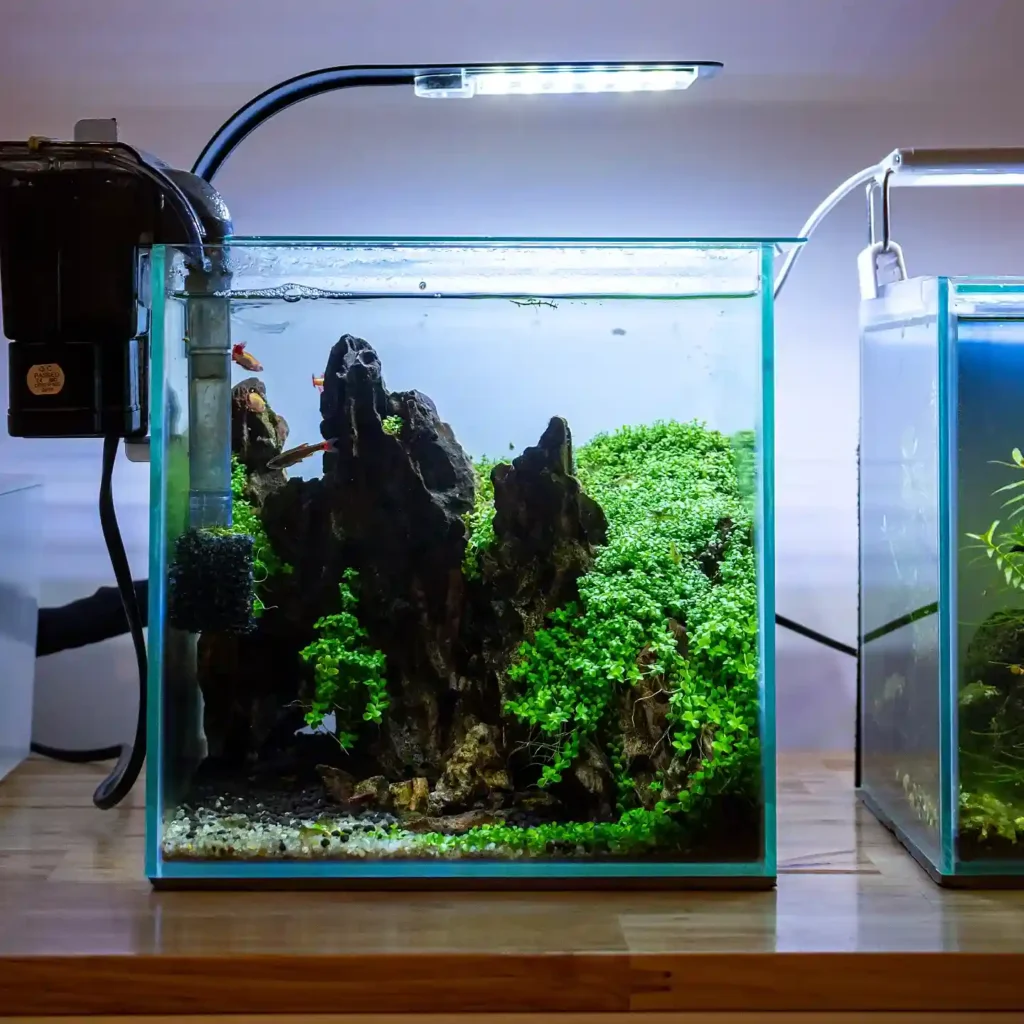
DBT is one of the most popular aquascaping plants because it creates an extremely smooth carpet.
It works especially well:
- In Iwagumi layouts
- Around rocks
- In minimalist aquascapes
- In nano tanks
- Along stone pathways
It pairs beautifully with:
- Anubias Nana Petite
- Monte Carlo
- Bucephalandra
- Cryptocoryne
More aquarium plants
- How to Take Care of Anubias Plants
- How To Care Cryptocoryne Plant
- How to Care for Monte Carlo Aquarium Plant
Common Dwarf Baby Tears Problems
Carpet Growing Upward
Usually caused by weak lighting or insufficient CO2.
Carpet Turning Yellow
Often nutrient-related.
Algae in Carpet
Usually caused by unstable nutrients or poor flow.
Carpet Lifting From Substrate
Can happen if roots fail to establish properly.
Dwarf Baby Tears vs Monte Carlo
| Feature | Dwarf Baby Tears | Monte Carlo |
| Difficulty | Harder | Easier |
| CO2 Need | High | Moderate |
| Carpet Density | Very dense | Moderate |
| Beginner Friendly | Less | More |
| Maintenance | Higher | Lower |
For most beginners, Monte Carlo is the easier option.
Frequently Asked Questions
Is Dwarf Baby Tears good for beginners?
It is possible, but many beginners find it challenging.
Does Dwarf Baby Tears need CO2?
For best results, yes.
Why is my Dwarf Baby Tears growing upward?
Usually because lighting is too weak or CO2 is insufficient.
Can Dwarf Baby Tears grow without CO2?
It can survive, but growth is usually weaker and less compact.
How long does Dwarf Baby Tears take to carpet?
In high-tech tanks, usually a few months.
Is Dwarf Baby Tears harder than Monte Carlo?
Yes. Monte Carlo is generally easier for beginners.
