GloFish Danio Care: Complete Guide
GloFish Danios are one of the most vibrant and beginner-friendly fish you can add to a freshwater aquarium. Their fluorescent colors make them stand out, while their active and peaceful nature makes them fun to watch. If you’re looking for an easy, eye-catching species that fits in well with other fish, GloFish Danios are a great choice.
In this guide, you’ll learn everything you need to know to care for GloFish Danios—from tank setup and feeding to behavior, tank mates, and breeding.
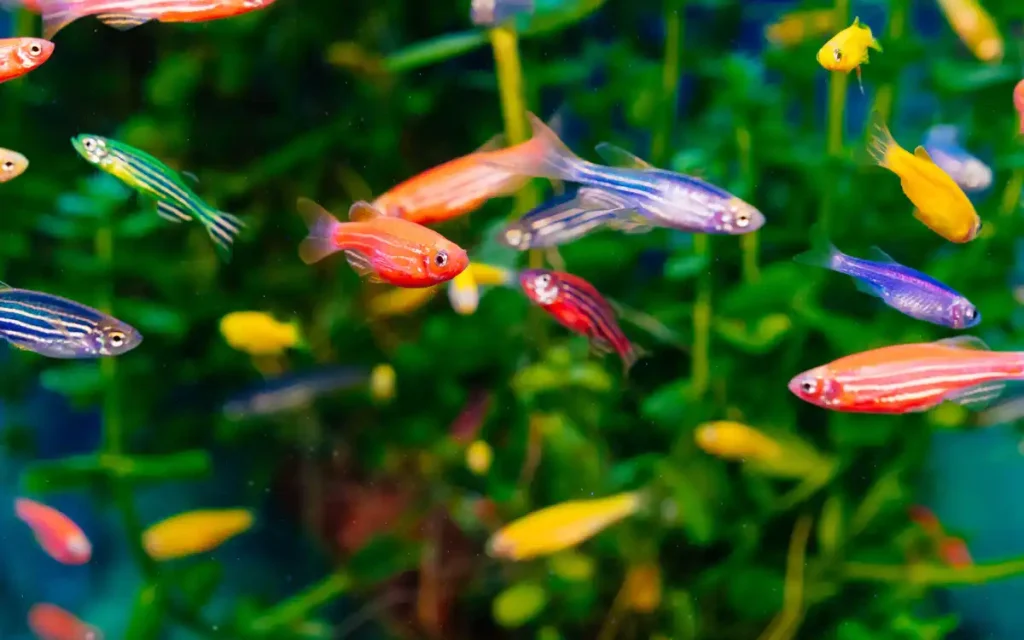
What Are GloFish Danios?
GloFish Danios are genetically modified versions of Zebra Danios (Danio rerio), engineered to glow under blue LED light. They’re not injected or dyed—scientists added fluorescent protein genes to their DNA, giving them bright hues like red, blue, green, purple, and orange.
These fish are just as hardy as standard Zebra Danios and need no special care. They’re patent-protected and sold only by authorized breeders and stores.
Are They Ethical to Keep?
GloFish are approved by regulatory bodies like the FDA and USDA. They are bred in captivity and not released into the wild, so they’re considered safe and ethical to keep by most standards. If you support responsible sourcing and ethical fishkeeping, GloFish Danios can still be a guilt-free choice.
Species Overview
| Feature | Details |
| Scientific Name | Danio rerio (modified) |
| Common Name | GloFish Danio |
| Adult Size | Up to 2 inches |
| Lifespan | 3–5 years |
| Temperament | Peaceful, social |
| Swimming Level | Top to middle |
| Care Level | Beginner-friendly |
Tank Setup for GloFish Danios
Minimum Tank Size
Though they’re small, GloFish Danios are energetic swimmers and need room to move. A 10-gallon tank is the bare minimum, but a 20-gallon long tank or larger is better for a group of six or more.
Water Parameters
- Temperature: 72–82°F (22–28°C)
- pH Level: 6.5–7.5
- Hardness: 5–15 dGH
Substrate, Lighting & Decor
Use a dark substrate to make their colors pop, especially under blue or actinic LED lighting. They appreciate space to swim, so avoid overcrowding with décor. Include soft plants (real or artificial) around the tank edges and use a filter that creates moderate water flow.
Behavior and Compatibility
GloFish Danios are highly social and do best in schools of at least 5 or 6. They’re fast, darting swimmers that love open space and light current.
Ideal Tank Mates
- Neon Tetras
- Guppies
- Platies
- Corydoras
- Harlequin Rasboras
- Mollies
- Mystery Snails
Avoid aggressive or slow-moving fish like Bettas, long-finned Goldfish, or Cichlids.
Feeding GloFish Danios
GloFish Danios are omnivores and not picky eaters. A mix of flakes, micro pellets, and occasional live or frozen foods like daphnia or bloodworms will keep them healthy and active.
Quick Tips:
- Feed 1–2 times daily in small amounts they can finish in 1–2 minutes
- Include protein-rich treats 2–3 times a week
Health and Disease
GloFish Danios are hardy, but like all fish, they’re prone to illness in poor conditions. Common issues include fin rot, ich, and stress-related behaviors.
Breeding GloFish Danios
GloFish Danios can breed like regular Zebra Danios, but note that breeding them for sale is not legally allowed due to trademark protection.
If you’re just observing natural spawning behavior:
- Use a separate breeding tank with fine plants or a marble substrate
- After spawning, remove adults to prevent them from eating the eggs
- Feed fry with infusoria or powdered food until they grow
While you may see fry appear, it’s best to enjoy these fish for their vibrant colors and schooling behavior, not for reproduction.
FAQs
Can GloFish live alone?
No. They are schooling fish and need companions to stay healthy and active.
Do GloFish Danios glow all the time?
Yes, but their glow is most visible under blue or actinic light.
Are GloFish Danios aggressive?
No, they’re peaceful, but they can get nippy if kept in too-small groups.
How many GloFish Danios should I get?
At least 5–6 to reduce stress and encourage natural behavior.
Can I mix GloFish with other GloFish types?
Yes, GloFish Tetras, Barbs, and other species can live together if tank conditions are compatible.
Final Thoughts
GloFish Danios offer color, energy, and low-maintenance care in one small, eye-catching package. With the right tank setup, peaceful tank mates, and a small group to swim with, they’ll stay healthy and vibrant for years to come.