
Plakat Betta Care: Traits, Tank Setup

Plakat Bettas are a short-finned form of Betta splendens bred to resemble their wild ancestors. Unlike long-finned Bettas that glide slowly, Plakats move with purpose fast turns, quick bursts, and constant exploration.
Because of their compact fins, Plakats are often marketed as “easier” Bettas. That’s partly true but only if you understand their energy level and territorial nature. They’re tougher than Veil Tails, but also more assertive.
This guide is for you if:
- You want an active, alert Betta
- You prefer function over flowing fins
- You’re okay managing mild aggression
This guide is NOT for you if:
- You want a peaceful centerpiece fish
- You plan to overcrowd a community tank
- You expect Betta behavior to be “hands-off”
What Is a Plakat Betta?
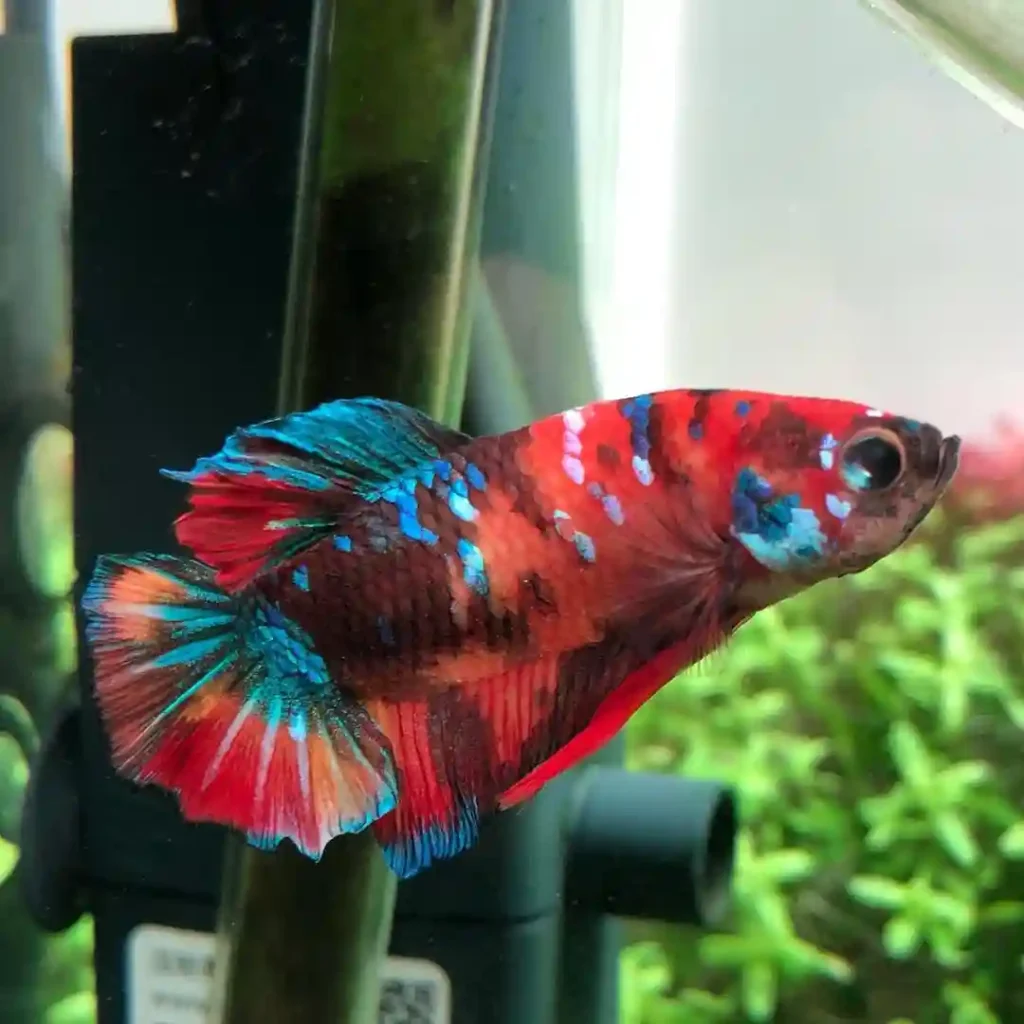
“Plakat” comes from the Thai word pla kat, meaning “biting fish.” These Bettas were originally bred in Thailand for strength and endurance rather than appearance.
Modern Plakats retain that athletic build but come in striking colors and patterns often more vivid than long-finned Bettas because less energy is spent maintaining large fins.
Key Characteristics
| Trait | Detail |
|---|---|
| Fin Type | Short, compact, rounded or pointed |
| Body Shape | Stocky, muscular |
| Activity Level | High |
| Temperament | Bold, territorial |
| Common Colors | Red, blue, koi, mustard gas, dragon scale |
Related: Types of Betta Fish
How to Identify a Plakat Betta (Without Guessing)
Plakats are easy to recognize once you know the signs:
- Short tail that doesn’t trail behind the body
- Controlled fin movement instead of flowing drag
- Broader body with strong lateral movement
- Frequent flaring even without mirrors
Males tend to have brighter colors and flare more often. Females are usually slightly smaller, with shorter ventral fins and visible egg spots.
Want to see how they compare? Check our guide to Veil Tail Bettas.
Personality & Behavior (What Owners Actually Notice)
Plakat Bettas are interactive. In most tanks, they patrol glass edges, inspect plants, and respond quickly to movement outside the aquarium.
Many owners notice:
- Faster feeding responses than long-finned Bettas
- More frequent flaring (especially during the first few weeks)
- Strong curiosity toward new objects or decor
Short fins do not mean a calmer fish. In fact, Plakats often show more confidence because they’re not weighed down by heavy fins.
Important: Short fins also mean better chasing ability. Tank mate selection matters more, not less.
Ideal Tank Setup for Plakat Bettas
Plakats tolerate slightly more flow than long-finned Bettas, but they still need a controlled environment.
Tank Setup Essentials
- Tank Size: 5 gallons minimum (10 gallons strongly recommended)
- Filter: Sponge or adjustable HOB; moderate flow is fine
- Heater: 78–80°F (stable, not fluctuating)
- Substrate: Sand or smooth gravel
- Plants: Java Fern, Anubias, Hornwort, floating plants
- Decor: Driftwood, caves, Indian almond leaves
- Lighting: Moderate
- Lid: Mandatory Plakats jump
In planted tanks, Plakats often use open swimming lanes between plants rather than hiding constantly like long-finned Bettas.
Setup help: Betta Fish Tank Setup Guide
Compatible Tank Mates (Read This Carefully)
Plakats can work in community tanks but only under the right conditions.
Tank Mates That Usually Work
- Nerite snails
- Pygmy Corydoras
- Harlequin Rasboras
- Ember Tetras (10+ gallons, heavy planting)
- Cherry shrimp (expect some losses)
Tank Mates to Avoid
- Long-finned fish (guppies, fancy tetras)
- Other male Bettas
- Fin nippers (Tiger Barbs, Serpae Tetras)
- Fast, dominant fish
Reality check: Short fins don’t prevent aggression. They increase chase success.
Full list: Best Betta Tank Mates
Feeding & Nutrition
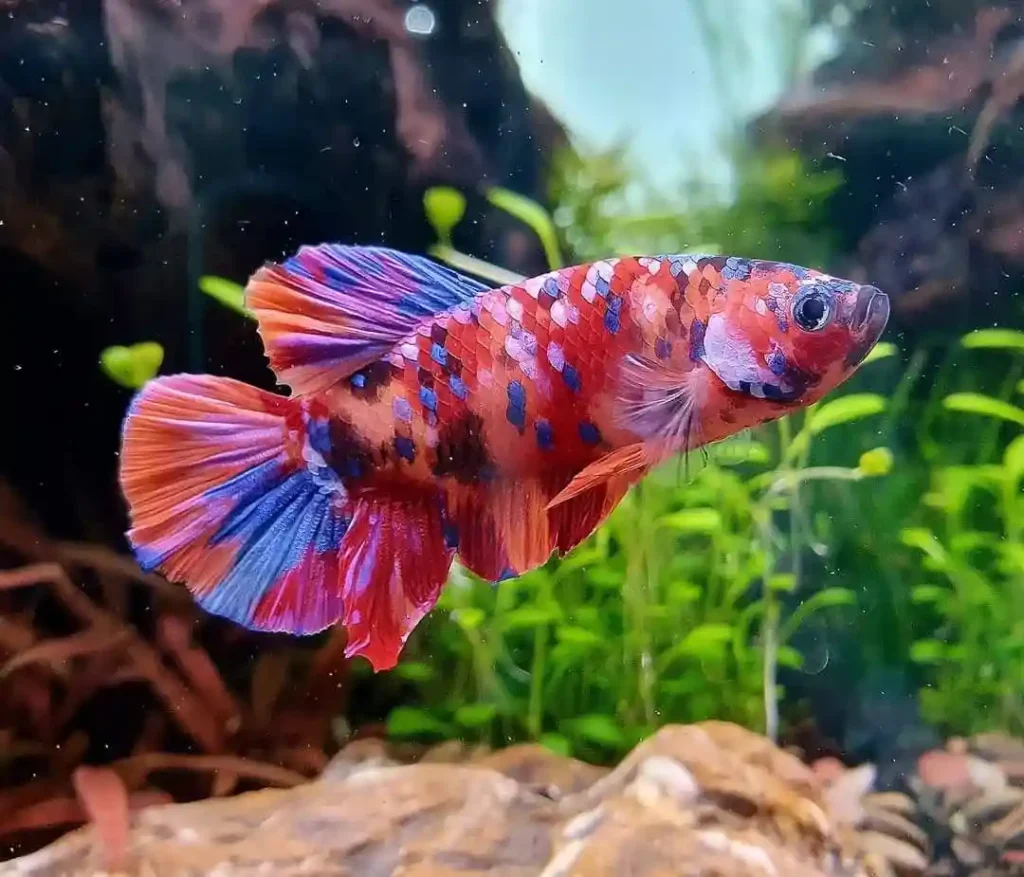
Plakat Bettas are aggressive eaters and will overeat if allowed.
Best Foods
- High-quality Betta pellets (floating)
- Frozen bloodworms or brine shrimp
- Live or frozen daphnia
- Blackworms (occasional)
Feeding Tips from Experience
- Feed twice daily, very small portions
- Skip one feeding per week to prevent bloating
- Watch belly size, not enthusiasm
Common Health Issues (And How to Avoid Them)
Plakats are hardier than long-finned Bettas, but poor conditions still cause problems.
IssueCausePreventionFin rotDirty waterWeekly water changesVelvetStress, poor lightingStable tank, low stressConstipationOverfeedingFasting + fiber foods
Ideal Water Parameters
- Temperature: 78–80°F
- pH: 6.5–7.5
- Ammonia/Nitrite: 0 ppm
- Nitrate: <20 ppm
Common Mistakes New Plakat Owners Make
This is where most problems start:
- Assuming short fins = peaceful fish
- Using strong filters without baffling flow
- Adding flashy or slow tank mates
- Overfeeding due to “enthusiastic” behavior
- Skipping lids (Plakats jump more than expected)
Avoid these and Plakats are extremely rewarding.
Breeding Plakat Bettas (Advanced Only)
Plakat Bettas breed like other Betta splendens, but aggression during spawning is common. Separate conditioning tanks and live fry food are essential.
If you’ve never bred Bettas before, start with research—not trial and error.
Where to Buy & What to Look For
Plakats are available in aquarium shops and online breeders.
Price range: $8–$25+
Choose fish with:
- Even coloration
- Clean, symmetrical fins
- Clear eyes
- Alert movement
Avoid lethargic fish or torn fins.
Is the Plakat Betta Right for You?
Great For
- Active aquariums
- Owners who enjoy interaction
- Hardy, low-fin-maintenance Bettas
Not Ideal For
- Peaceful community tanks
- Hands-off fishkeeping
- Fin-nipping environments
If you want, next I can:
- Add FAQ schema for this page
- Optimize it specifically for Pinterest → Google traffic
- Rewrite your Veil Tail Betta article to the same standard
Just say which one.
