
15 Best Plants for Guppies (Live Aquarium Plants for Healthy Tanks)

Guppies look small and easy to keep, but the way you set up their tank makes a big difference. One of the best things you can add is live plants. Plants don’t just make the aquarium look pretty they help your guppies feel safe, reduce stress, and even improve water quality. If you’re new to keeping guppies, you can start with our complete guppy care guide to understand their basic needs first.
Live plants also help baby guppies survive. Guppies breed often, and without hiding spots, adults may eat the fry. Thick plants like moss and floating greenery give babies a place to hide and grow safely. They also work great in peaceful community setups, especially if you’re keeping guppies with shrimp or other compatible tank mates.
In this guide, I’ll show you the best plants for guppies, including easy options for beginners and great choices for breeding tanks. Whether you have a small 10-gallon setup or a larger community aquarium, these plants will help you build a healthier and more natural environment.
Why Live Plants Are Important for Guppy Tanks
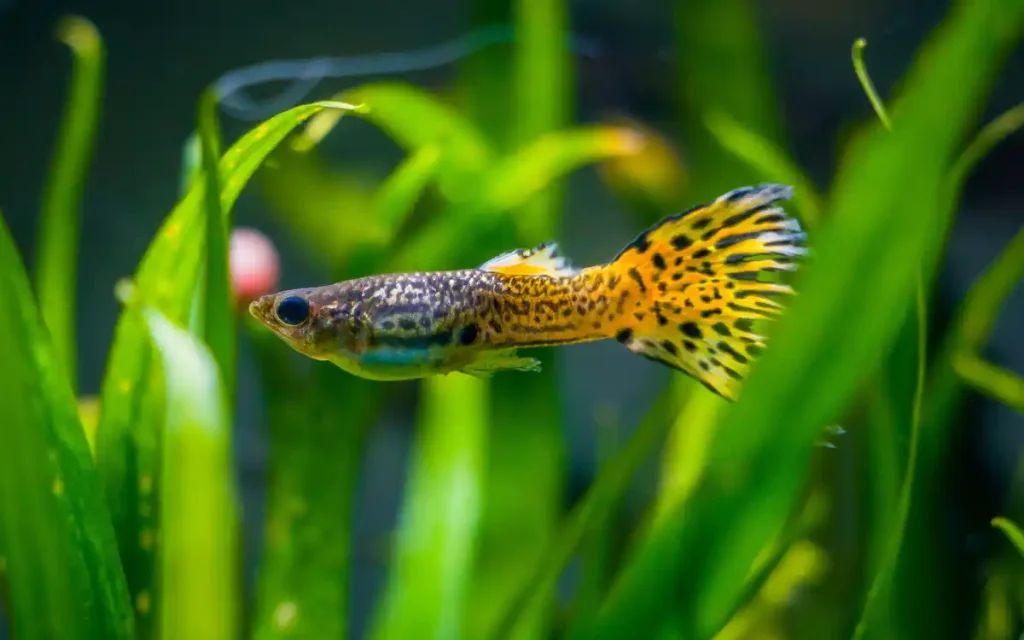
Live plants do much more than decorate a tank. They actively support the health and behavior of your guppies.
First, plants help maintain better water quality. Fast-growing species absorb excess nitrates and waste, which keeps the water more stable. While plants don’t replace water changes, they reduce sudden swings that can stress fish.
Second, plants create natural hiding areas. Guppies are peaceful but active fish. In a community tank with other species, they feel more secure when they can swim through leaves and rest behind stems. If you’re building a mixed setup, make sure you choose peaceful guppy tank mates that won’t disturb them.
Plants are even more important if you’re breeding guppies. Fry need dense cover immediately after birth. Thick moss and floating plants increase survival rates significantly. This is especially helpful in tanks where you’re keeping guppies with shrimp, since both species benefit from heavy plant coverage.
Finally, live plants enhance color. Guppies show brighter colors and more natural behavior in planted tanks compared to bare setups.
Now let’s look at the best plants you can add to your guppy aquarium.
15 Best Plants for Guppies
1. Java Moss
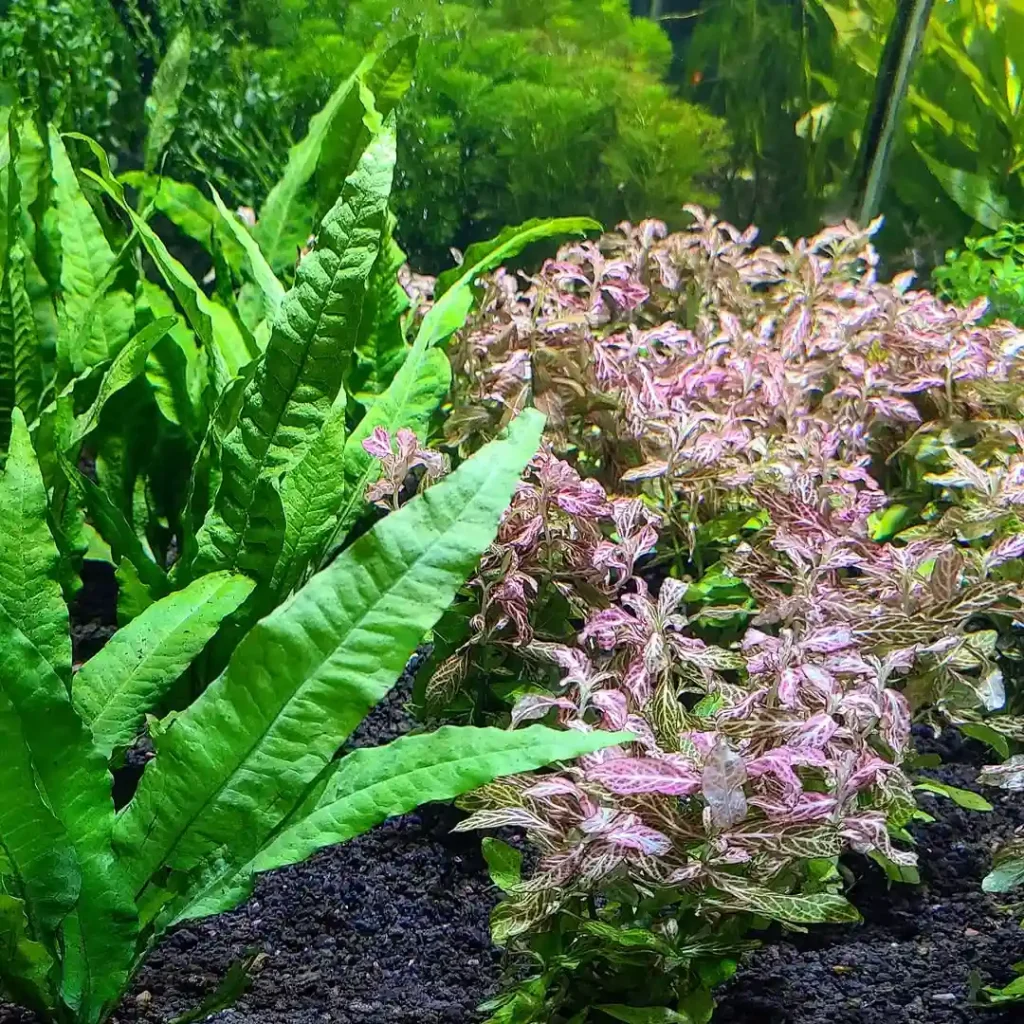
Java Moss is one of the best plants for guppies, especially in breeding tanks. It forms thick, soft mats where fry can hide immediately after birth. Adult guppies also enjoy swimming through it.
This plant grows in low light and does not require special care. You can attach it to rocks, driftwood, or let it spread naturally. It’s also ideal in tanks where you keep guppies with shrimp because both species use it as shelter.
Placement: Foreground or attached to decor
Care level: Very easy
Best for: Fry protection and nano tanks
2. Anubias
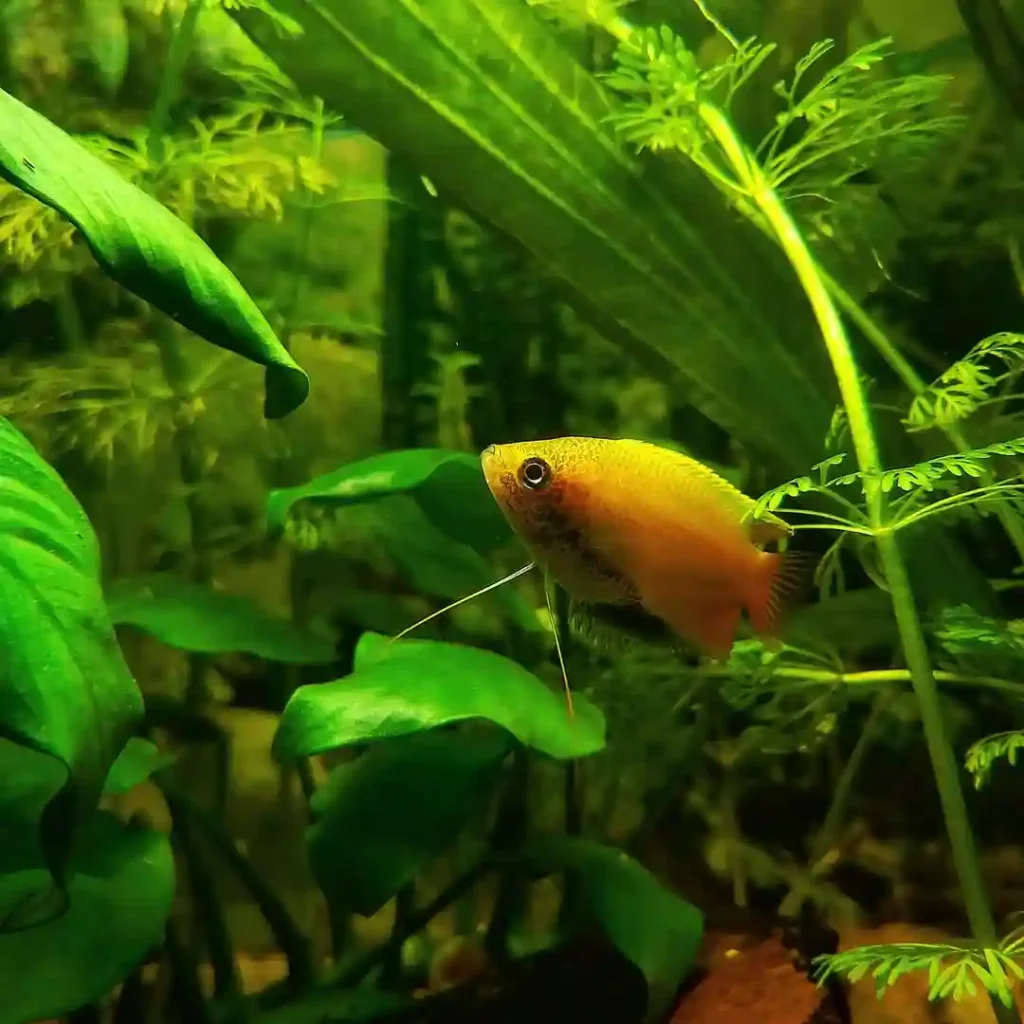
Anubias is perfect for beginners. It grows slowly and tolerates low light, which makes it low maintenance. Instead of planting it in substrate, attach it to wood or rocks.
Its broad leaves provide resting spots for guppies, and the sturdy structure holds up well in community tanks. If you’re keeping different types of guppies with long flowing fins, Anubias is gentle and won’t damage them.
Placement: Midground
Care level: Easy
Best for: Beginner-friendly planted tanks
3. Hornwort
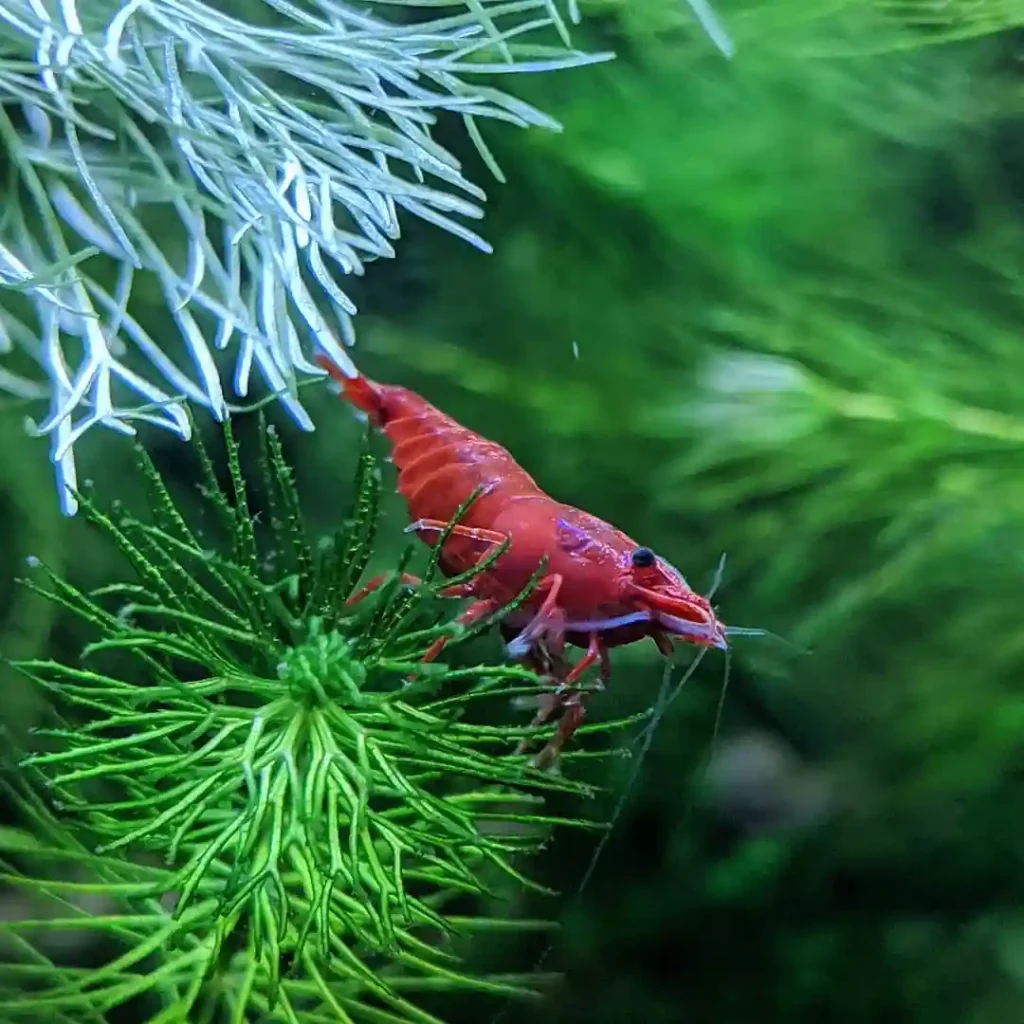
Hornwort is a fast-growing plant that improves water quality by absorbing nitrates. You can float it or plant it in the substrate.
Because it grows thick and bushy, it’s excellent for fry. Many guppy breeders use Hornwort to increase baby survival without separate breeding boxes.
Placement: Floating or background
Care level: Easy
Best for: Breeding tanks and water stability
4. Amazon Sword
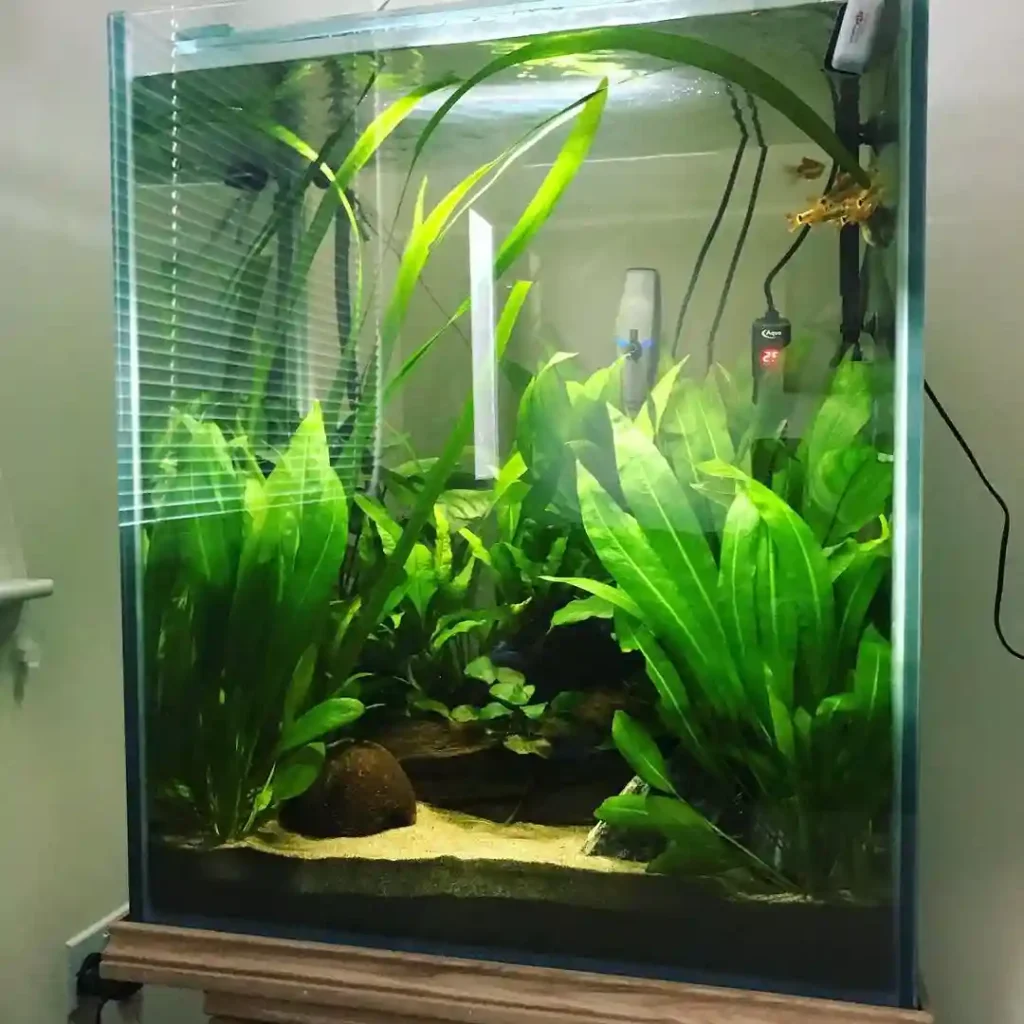
Amazon Sword is a classic background plant. It has long, wide leaves that create a natural jungle look.
This plant works better in medium to large tanks because it can grow tall. It pairs well with peaceful community setups and adds structure behind open swimming areas.
Placement: Background
Care level: Moderate
Best for: Larger guppy aquariums
5. Water Sprite
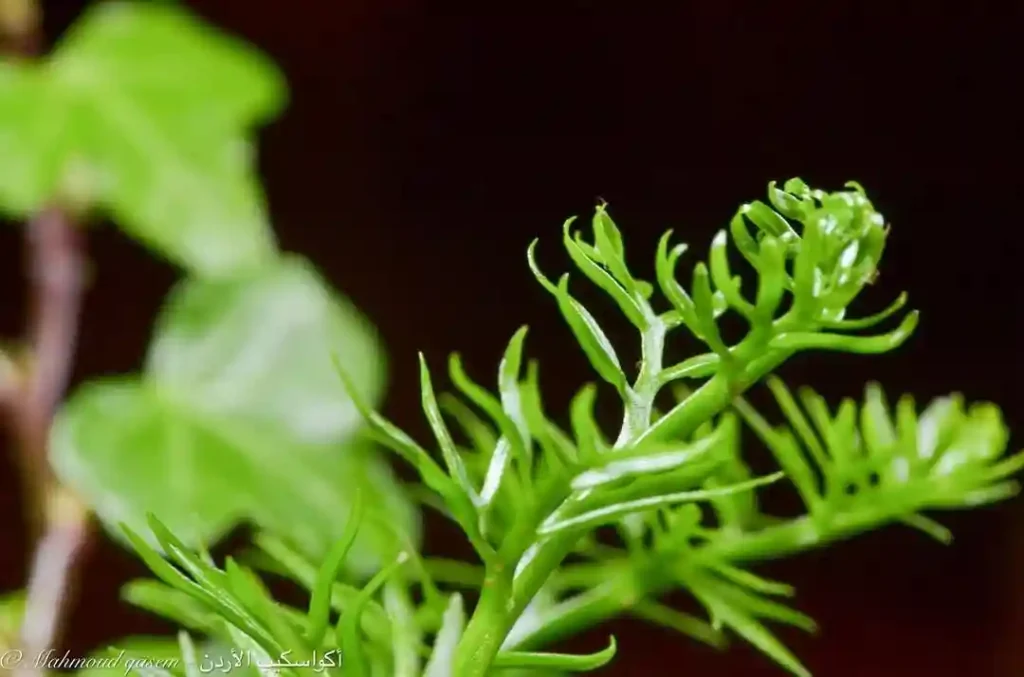
Water Sprite is versatile. You can plant it in the substrate or let it float. When floating, it creates shade and makes guppies feel safer.
It grows quickly and helps maintain clean water. In tanks with active guppies, the light cover it creates reduces stress and encourages natural movement.
Placement: Floating or background
Care level: Easy
Best for: Shade and fry cover
6. Guppy Grass (Najas guadalupensis)
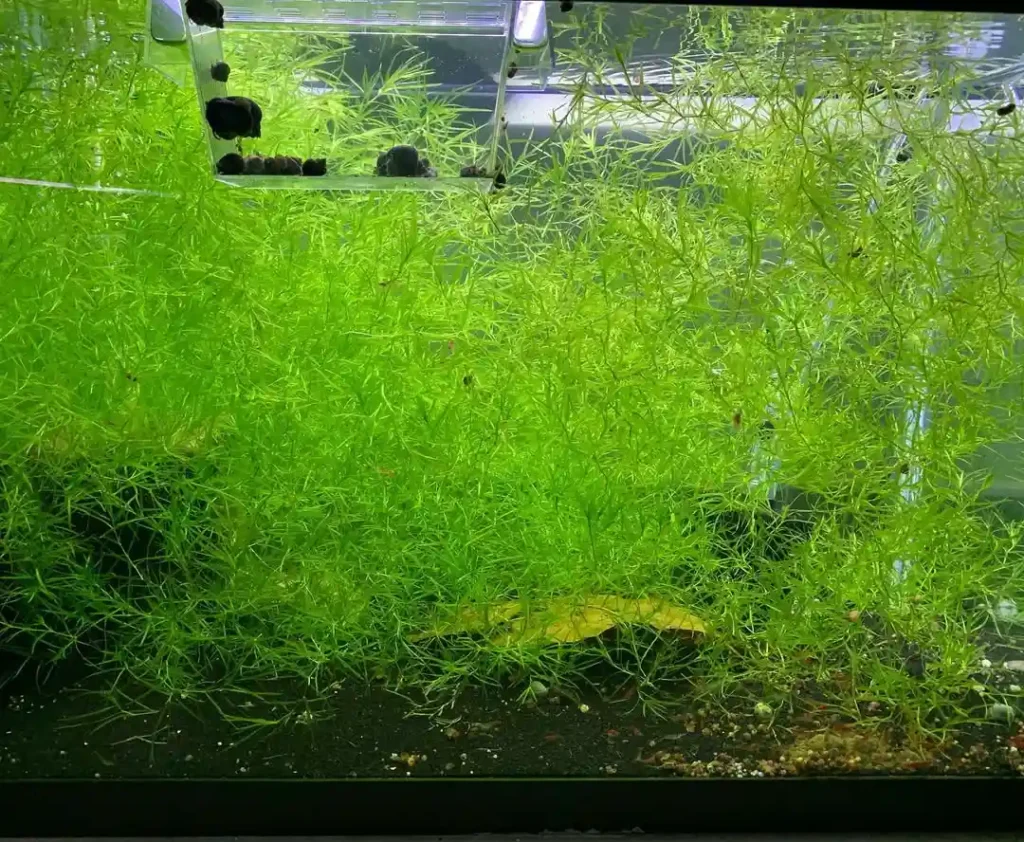
Guppy Grass is almost made for guppies. It grows fast, forms dense tangles, and gives fry instant hiding spots. Many breeders prefer it over artificial breeding traps because it feels more natural and reduces stress.
You can let it float freely or lightly anchor it in the substrate. It doesn’t demand strong lighting or special care, which makes it beginner-friendly. In heavily planted tanks, it also helps stabilize water conditions by absorbing waste.
Placement: Floating or loosely planted
Care level: Very easy
Best for: Fry survival and breeding tanks
7. Vallisneria
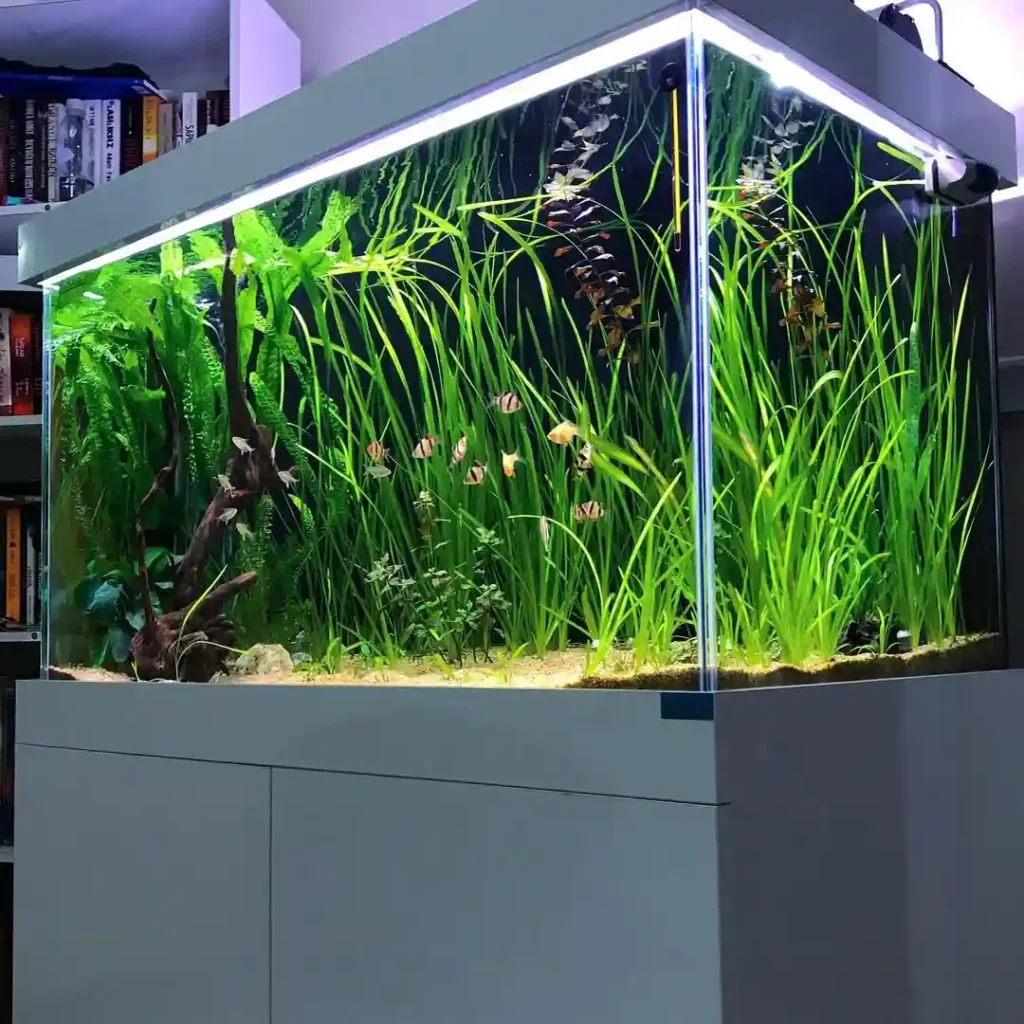
Vallisneria adds height and movement to a guppy tank. Its long ribbon-like leaves sway with water flow, creating a natural look.
This plant works best in medium to large aquariums where it can spread along the back wall. Guppies enjoy swimming between the leaves, and it provides light cover without blocking open swimming space.
Placement: Background
Care level: Easy to moderate
Best for: Community tanks with open swim areas
8. Cryptocoryne (Crypts)
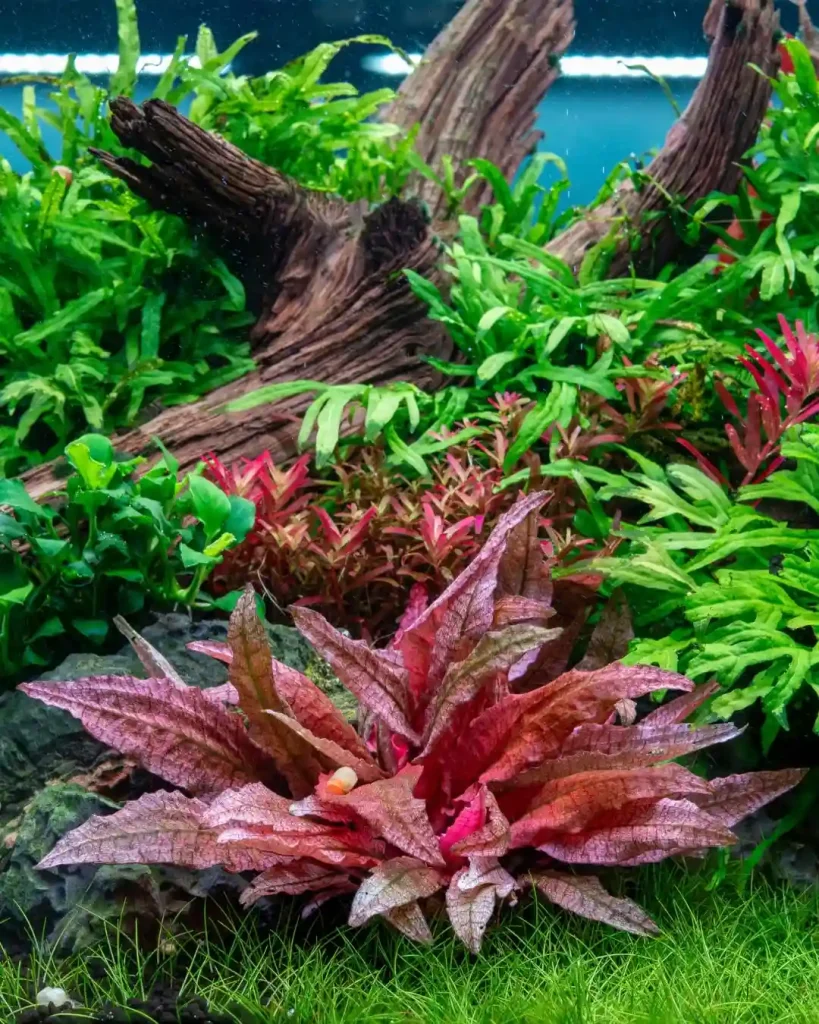
Cryptocoryne plants are excellent midground options. They stay compact and provide thick leaf coverage without taking over the tank.
They adapt well to lower light conditions but may melt slightly when first introduced. Once established, they grow steadily and require little trimming. Their dense leaves create safe zones for shy guppies and young fry.
Placement: Midground
Care level: Easy (after adjustment period)
Best for: Stable, low-light setups
9. Dwarf Sagittaria
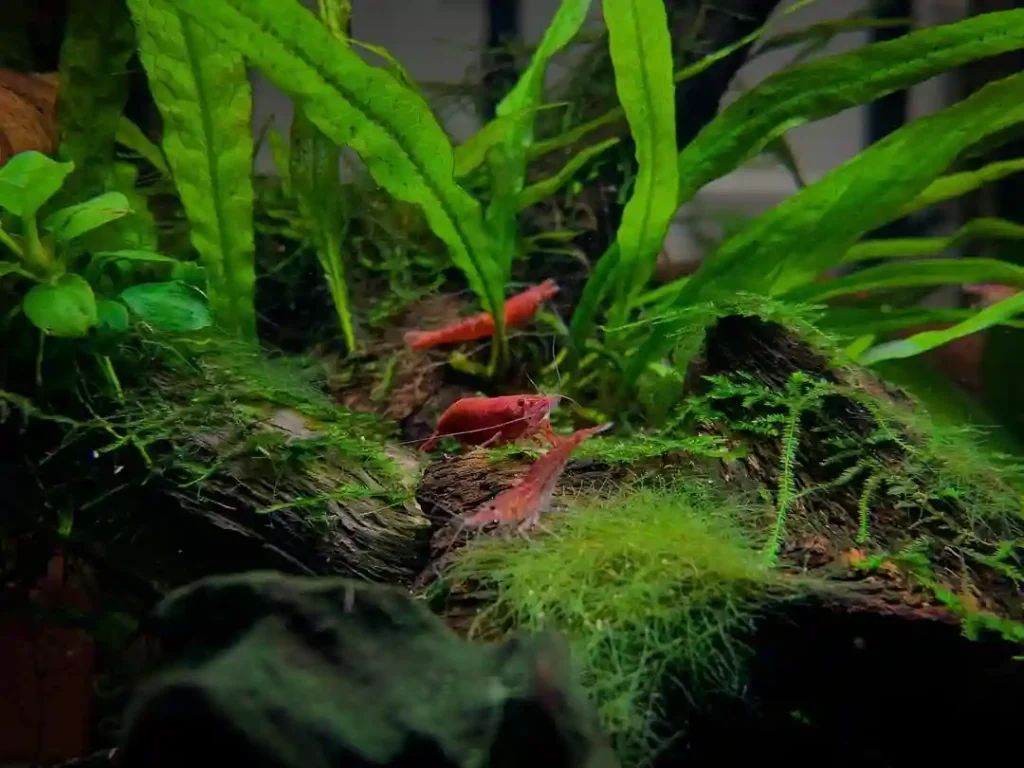
Dwarf Sagittaria works well if you want a short grassy look in the front of your tank. It spreads slowly and creates a natural carpet effect.
While guppies mostly swim in mid and upper levels, a low plant layer gives fry places to explore and hide. It also makes the tank look fuller without overcrowding it.
Placement: Foreground
Care level: Moderate
Best for: Small to medium planted tanks
10. Water Wisteria
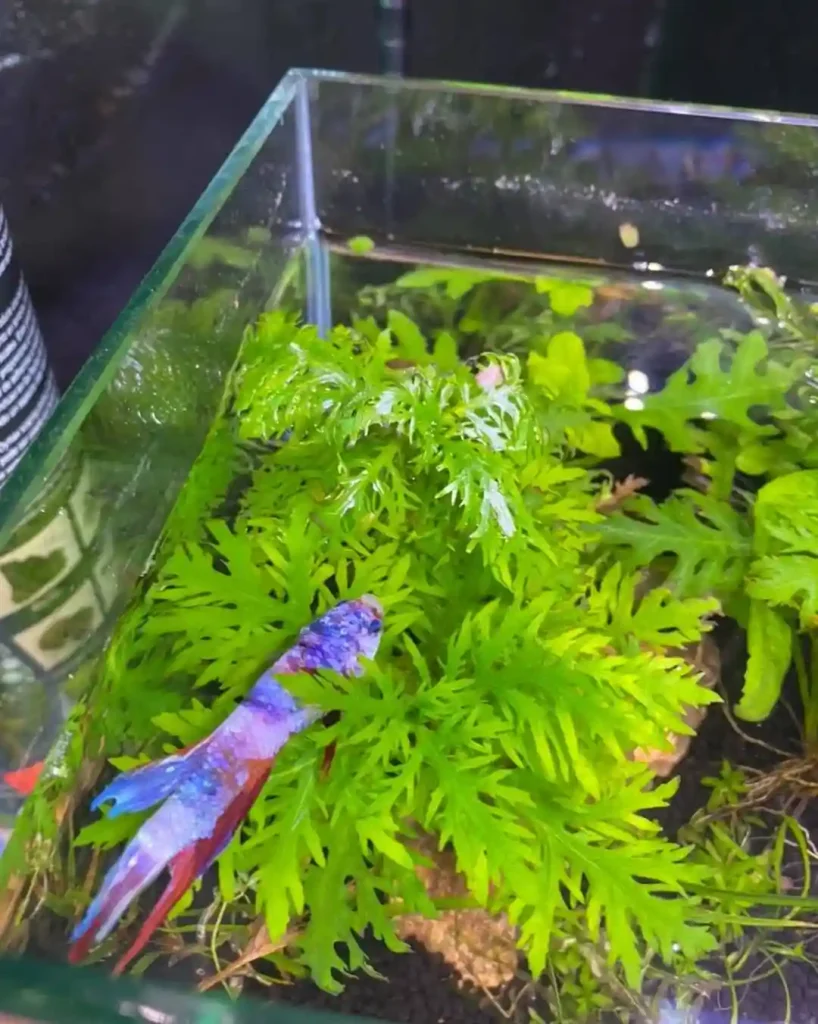
Water Wisteria grows quickly and helps maintain clean water. Its lace-like leaves create dense cover that guppies love.
You can plant it in the substrate or let it float for extra surface coverage. It’s especially useful in tanks where guppies share space with other peaceful fish because it breaks line of sight and reduces stress.
Placement: Midground or floating
Care level: Easy
Best for: Fast growth and water quality support
11. Amazon Frogbit
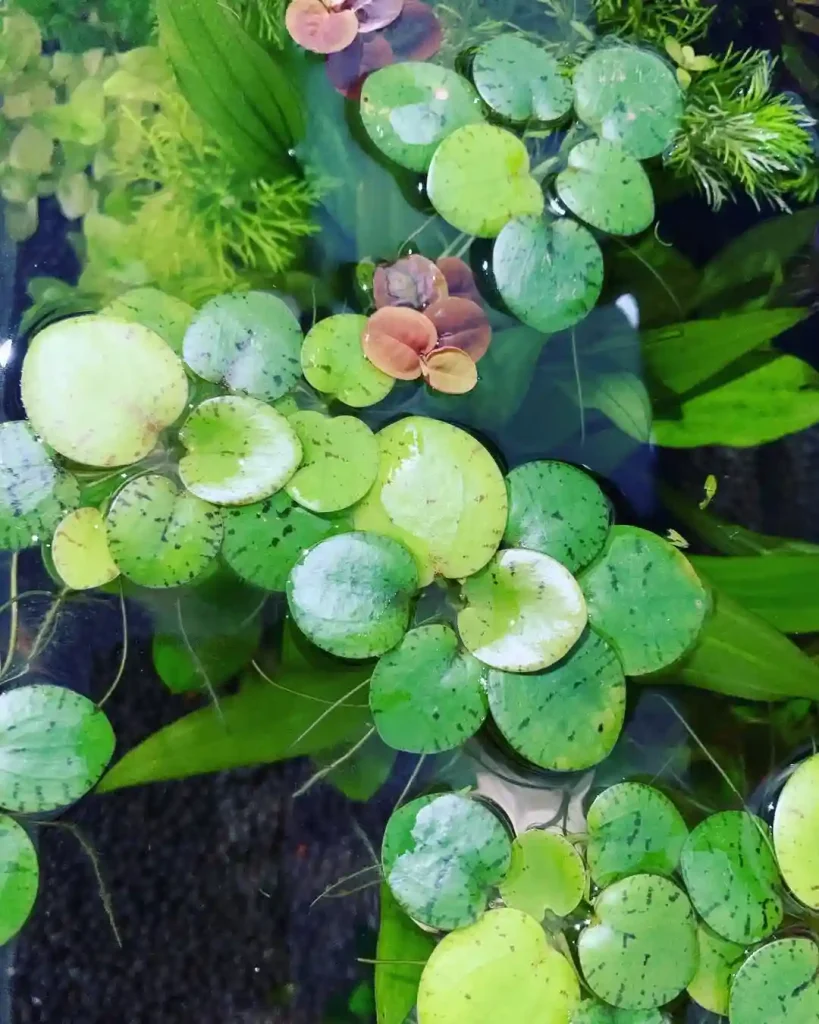
Amazon Frogbit is a floating plant that creates soft shade across the surface of the tank. Guppies naturally swim near the top, so having floating roots hanging down makes them feel secure.
The long roots also provide excellent hiding spots for fry. If you’re keeping multiple types of guppies together, surface cover helps reduce chasing and minor aggression. Just make sure you don’t let it completely block light from reaching plants below.
Placement: Floating (surface)
Care level: Easy
Best for: Surface cover and fry protection
12. Red Root Floaters
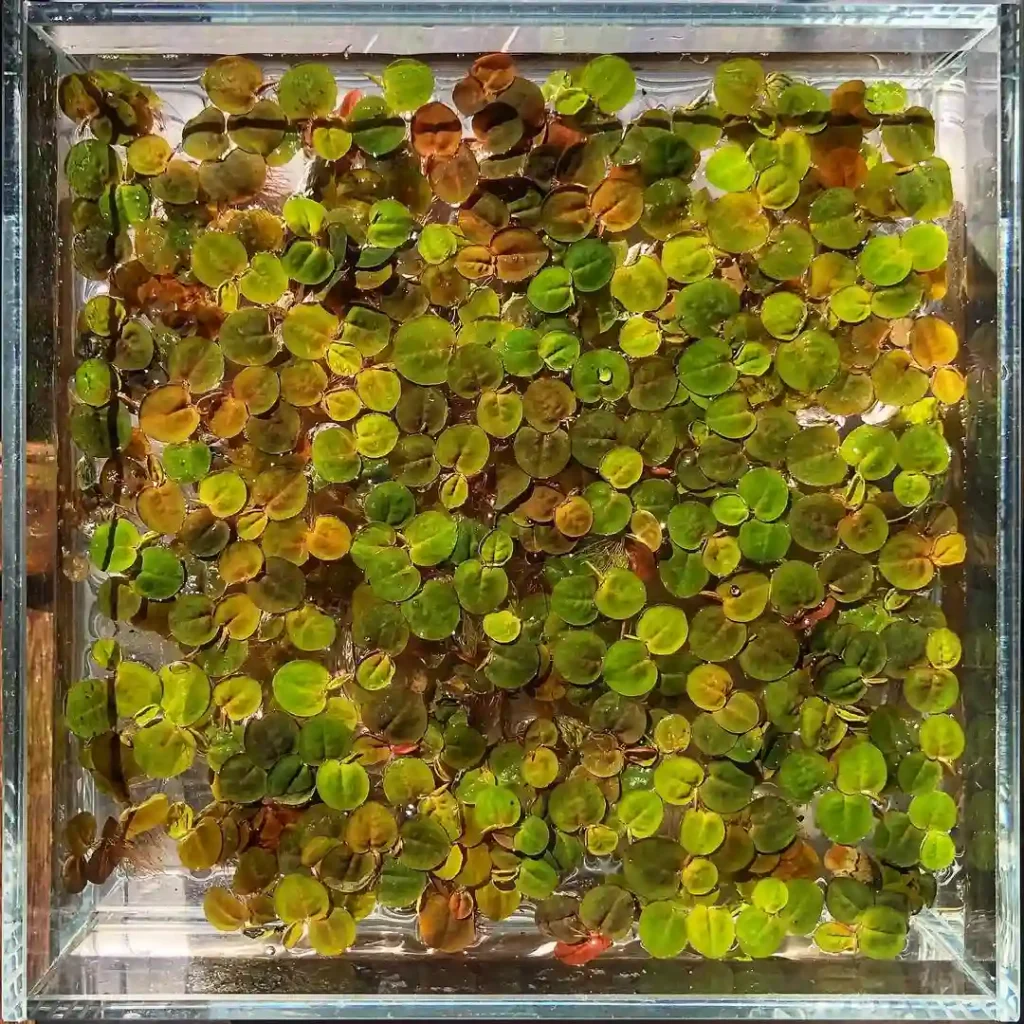
Red Root Floaters add both function and visual contrast. Under strong lighting, their leaves can develop a reddish tone, which makes colorful guppies stand out even more.
Like other floating plants, they absorb excess nutrients and help control nitrates. Their dangling roots give baby guppies quick shelter after birth. Keep surface movement gentle so they don’t cluster in one corner.
Placement: Floating
Care level: Easy to moderate
Best for: Color contrast and nutrient control
13. Java Fern
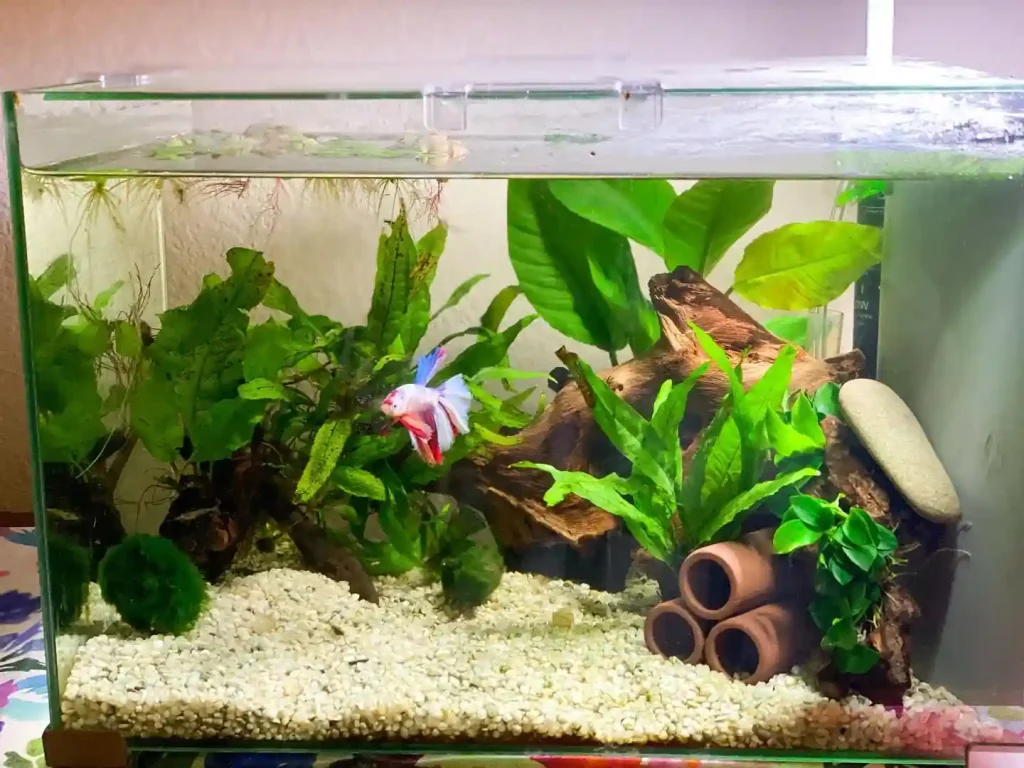
Java Fern is one of the toughest aquarium plants available. It grows slowly and does not require special lighting or CO2.
Attach it to driftwood or rocks rather than burying it in substrate. Its long leaves create a natural background that works well in both small and medium tanks. If you’re building a display tank featuring different types of guppies, Java Fern provides structure without overcrowding the space.
Placement: Midground or background
Care level: Very easy
Best for: Beginner planted setups
14. Bacopa (Moneywort Bacopa)
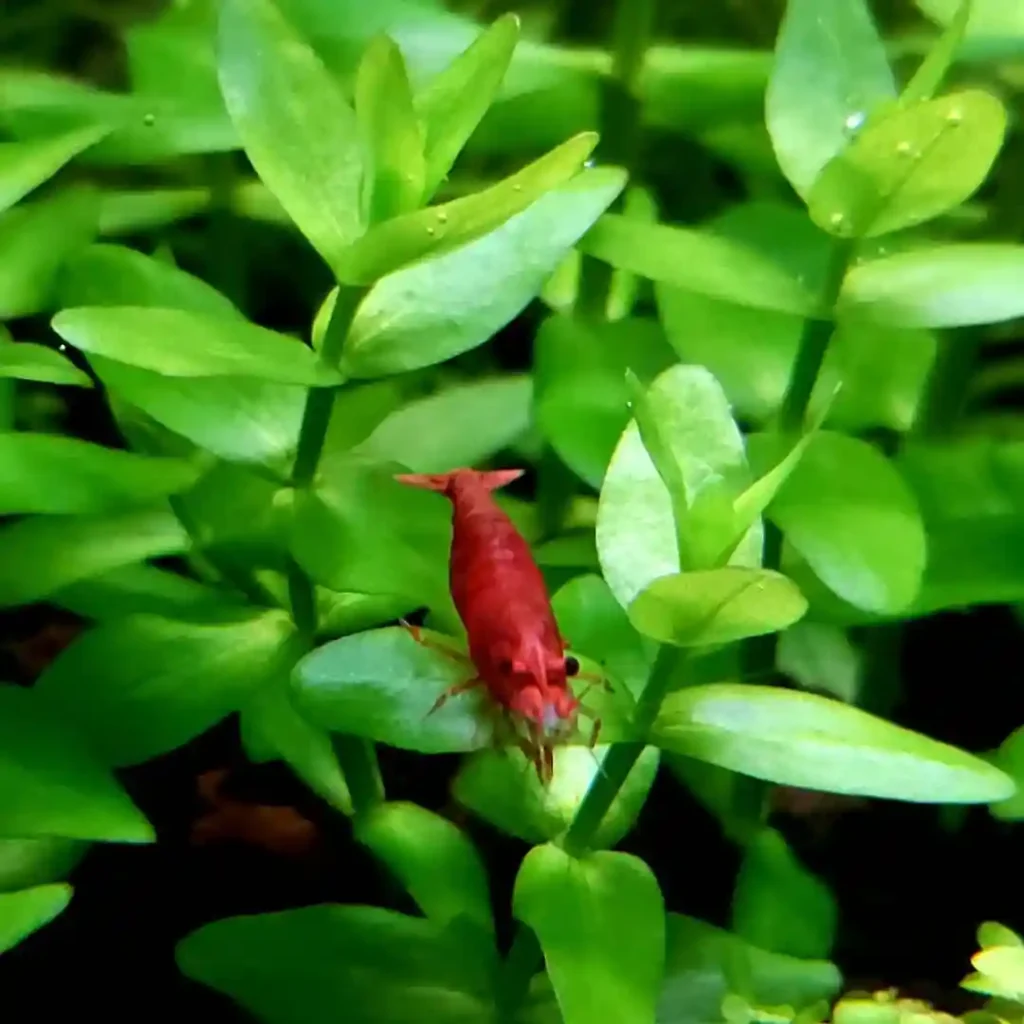
Bacopa is a stem plant that grows upright and adds vertical structure. It’s easy to trim and replant, which makes it good for beginners experimenting with layout.
Guppies enjoy swimming between the stems, and the moderate density helps reduce stress in community tanks. Bacopa works well when paired with background plants like Vallisneria and midground plants like Crypts.
Placement: Midground to background
Care level: Easy
Best for: Balanced planted layouts
15. Moneywort (Creeping Jenny – Aquarium Variety)
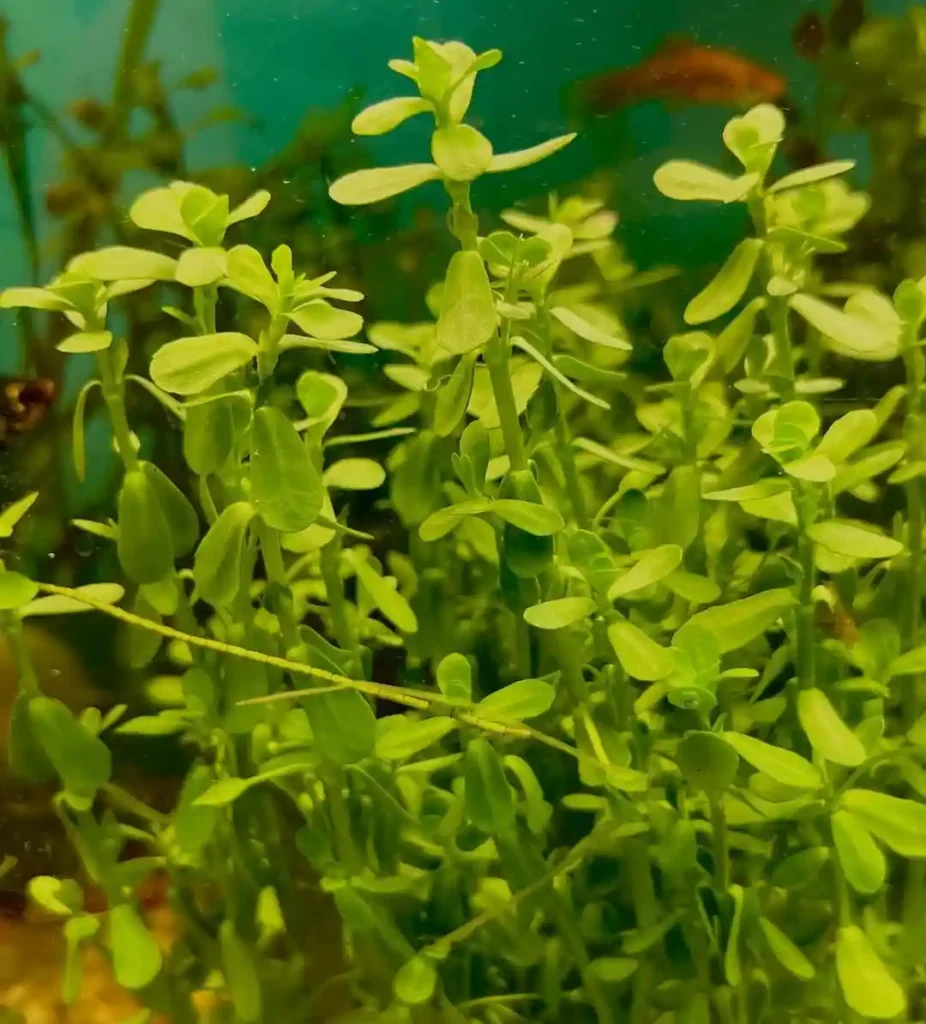
Moneywort has bright green round leaves that give a fresh, lively look to a guppy tank. It grows steadily and can be shaped through trimming.
Its dense stem clusters provide moderate fry cover while still allowing adult guppies plenty of swimming space. In smaller tanks, trimming keeps it from blocking light.
Placement: Midground
Care level: Easy
Best for: Compact planted tanks
Best Plants for Guppy Fry (Breeding Tanks)
If you plan to breed guppies, plant selection becomes even more important. Guppies give birth to live fry, and without dense cover, adults may eat them.
The best plants for fry survival include:
- Java Moss
- Guppy Grass
- Hornwort
- Water Sprite
- Floating plants like Frogbit
These plants create thick hiding zones immediately after birth. Breeders often report much higher survival rates in planted tanks compared to bare setups.
Floating vs Rooted Plants for Guppies
Floating plants:
- Provide shade
- Offer surface cover
- Increase fry protection
- Absorb nutrients quickly
Rooted plants:
- Add structure
- Create natural territories
- Improve tank appearance
- Anchor the aquascape
For beginners, combining both works best. Use rooted plants in the background and midground, then add a controlled amount of floating plants at the surface.
How Many Plants Do Guppies Need?
There isn’t an exact number, but aim for moderate density.
For a 10-gallon tank:
- 3–5 rooted plants
- 1 floating plant type
For a 20-gallon tank:
- 6–10 mixed plants
- Surface coverage of about 30–40%
Avoid overcrowding the tank. Guppies are active swimmers and need open space in the center.
Plants to Avoid in Guppy Tanks
- Sharp plastic plants that can tear fins
- Very high-maintenance CO2-dependent plants (for beginners)
- Outdoor pond plants that aren’t fully aquatic
Choose hardy, freshwater aquarium plants to keep maintenance simple.
