
Pygmy Cory Care Guide

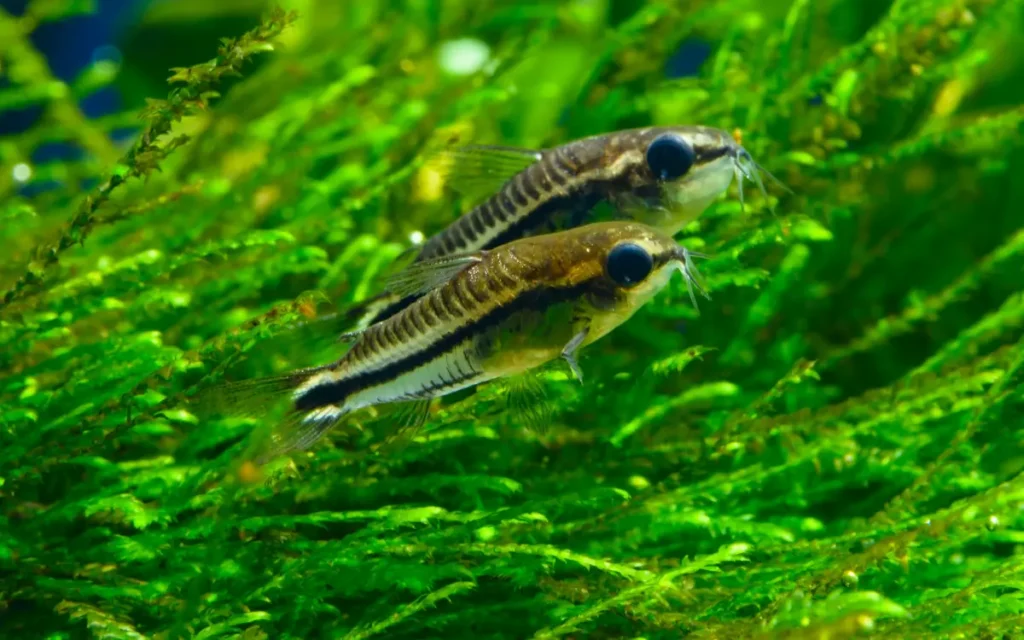
Pygmy cory is one of the smallest and most unique freshwater fish you can keep. Unlike most corydoras that stay on the bottom, these tiny fish swim actively in the middle of the tank in groups, which makes them far more interesting to watch.
They are peaceful, beginner-friendly, and ideal for nano aquariums. But here’s the honest part—most problems with pygmy corys don’t come from care, they come from poor tank mate choices. If you get compatibility right, they are incredibly easy to keep.
Species Overview
| Attribute | Details |
| Scientific Name | Corydoras pygmaeus |
| Common Name | Pygmy Cory, Pygmy Corydoras |
| Size | 0.75 – 1 inch |
| Lifespan | 2 – 3 years |
| Care Level | Easy |
| Temperament | Peaceful |
| Tank Level | Bottom and midwater |
| Diet | Omnivore |
| Minimum Tank | 10 gallons |
Tank Size and Setup
A lot of people assume small fish need tiny tanks, but that thinking doesn’t work here. Pygmy corys are active swimmers, so they need space more than anything.
A 10-gallon tank is the minimum, but if you want natural behavior, a 15 to 20-gallon tank works much better. The extra space allows them to school properly and reduces stress.
Substrate matters more than most beginners realize. Always go with soft sand. Rough gravel can damage their barbels, which leads to infections over time. This is one of the most common mistakes.
A planted tank setup works best. Plants like Java moss, Anubias, and Cryptocoryne give them resting spots and make them feel secure. You don’t need anything complicated, just enough cover to break line of sight.
Driftwood and a few hiding spots help, but avoid overcrowding the tank. They still need open swimming space in the middle.
Water Parameters
Pygmy corys are not difficult when it comes to water conditions, but they are sensitive to poor water quality.
Keep the temperature between 72 and 79°F, with a pH between 6.0 and 7.5. Stability is more important than chasing perfect numbers.
Ammonia and nitrite must always be zero. Nitrate should be kept low with regular water changes. If the water quality drops, these fish show stress quickly.
Behavior and Schooling
This is where pygmy corys stand out.
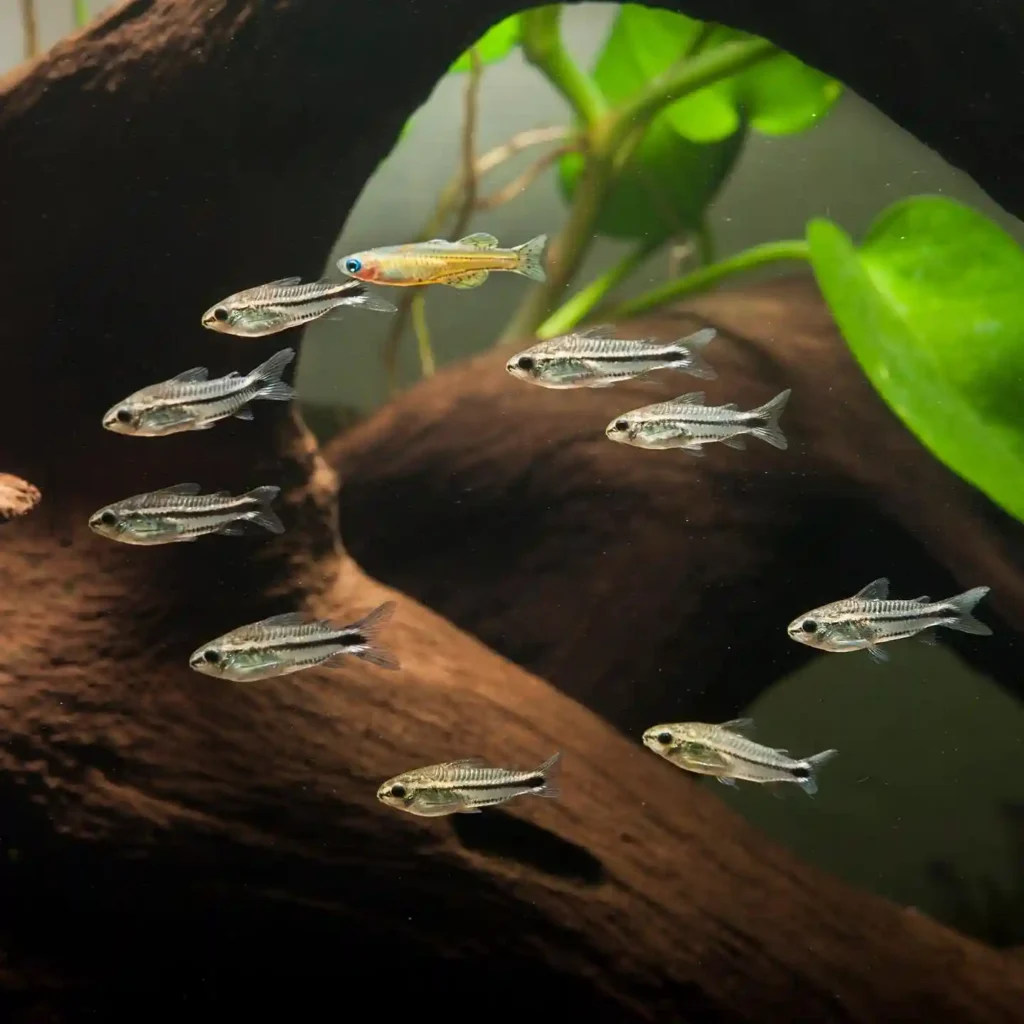
Instead of sticking to the bottom like most catfish, they swim in the middle of the tank in tight groups. At times, they rest on plant leaves or glass, which looks unusual but completely normal for them.
They are shy by nature, so keeping them in a proper group is important. A minimum of 6 is required, but 10 or more is where you start seeing natural schooling behavior.
If you keep only a few, they hide more and stay inactive. This is why many people think their fish are unhealthy when the real issue is group size.
Tank Mates and Compatibility
Choosing the right tank mates is the most important part of keeping pygmy corys successfully. They are small and gentle, so anything aggressive or too large will cause problems.
Pygmy Cory with Betta
This setup can work, but it depends entirely on the betta. Some bettas ignore other fish, while others attack anything that moves.
If the betta is calm and the tank has plenty of plants and space, they can live together without issues. But if the betta shows aggression, this combination fails quickly. Always observe behavior during the first few days.
Pygmy Cory with Shrimp
This is one of the safest combinations you can try. Pygmy corys do not hunt shrimp and will not bother even baby shrimp in most cases.
They work especially well in planted nano tanks where shrimp and fish share space naturally. If you’re building a peaceful aquarium, this pairing is hard to beat.
Pygmy Cory with Panda Cory
You can mix them, but it’s not the best idea long term. Panda corys are larger and behave differently, spending more time on the bottom.
Pygmy corys prefer midwater movement, so both species end up doing their own thing. They don’t harm each other, but they also don’t interact much. Keeping each species in its own group works better.
Pygmy Cory with Pea Puffer
This is a bad combination. Pea puffers are known for fin nipping and aggressive behavior, even though they are small.
They will stress pygmy corys constantly, and over time this leads to health issues. Avoid this pairing completely.
Pygmy Cory with Guppies
This is a solid and reliable combination. Both species are peaceful and share similar water conditions.
Guppies stay active in the upper part of the tank, while pygmy corys move through the middle and bottom. This creates a balanced and active aquarium without conflict.
Pygmy Cory with Cherry Shrimp
Same as other shrimp setups, this pairing works very well. Pygmy corys ignore shrimp and focus on their own feeding behavior.
This is ideal for small planted tanks where you want both fish and invertebrates.
Pygmy Cory with Female Betta
Female bettas are usually less aggressive than males, but they can still be territorial. In a larger tank with plants, this setup has a better chance of working.
Still, don’t assume it will always be peaceful. It depends on the individual fish.
Pygmy Cory with Angelfish
This is not recommended. Angelfish grow large enough to see pygmy corys as food.
Even if they coexist for a while, the risk is always there. It’s not worth trying long term.
Diet and Feeding
Pygmy corys are easy to feed, but they do need the right type of food.
They prefer sinking foods like micro pellets or crushed flakes. You can also give them live or frozen foods like baby brine shrimp or daphnia for better health and color.
One mistake people make is assuming they will eat leftovers from other fish. That doesn’t work. If food doesn’t reach the bottom or midwater where they are swimming, they can slowly starve.
Feeding small amounts once or twice daily works best.
Common Mistakes
Most problems with pygmy corys come from simple mistakes.
Keeping them in small groups is the biggest one. Without a proper school, they stay stressed and inactive.
Using rough gravel is another issue that leads to barbel damage.
Pairing them with aggressive fish like puffers or large species creates constant stress.
And finally, not feeding sinking food leads to long-term health problems.
FAQs
Do pygmy corys need to be in groups?
Yes, always keep at least 6, but 10 or more is better for natural behavior.
Can pygmy cory live in a small tank?
They can live in a 10-gallon tank, but larger tanks help them stay active and less stressed.
Are pygmy cory good with shrimp?
Yes, they are completely safe and one of the best fish for shrimp tanks.
Can pygmy cory live with guppies?
Yes, this is one of the easiest and most peaceful combinations.
Final Thoughts
Pygmy corys are easy to care for, but they are not a fish you can just drop into any tank. Their small size makes them vulnerable, so tank mates and setup matter a lot more than people expect.
If you keep them in a proper group, use soft substrate, and choose peaceful tank mates, they become one of the most active and enjoyable fish you can keep in a small aquarium.
