
11 Types of Tang Fish (With Colors, Care & Tank Tips)

Tangs, also known as surgeonfish, are some of the most popular saltwater fish in marine aquariums. They are admired for their vibrant colors, active swimming behavior, and algae-grazing abilities, making them both beautiful and beneficial for reef tanks. Native to tropical oceans, these fish vary in size, temperament, and care requirements.
While some species are beginner-friendly, others demand expert care due to their sensitivity to water conditions and aggression towards tank mates. This guide explores different types of tangs, their key characteristics, and what makes them unique in a home aquarium.
1.Yellow Tang (Zebrasoma flavescens)
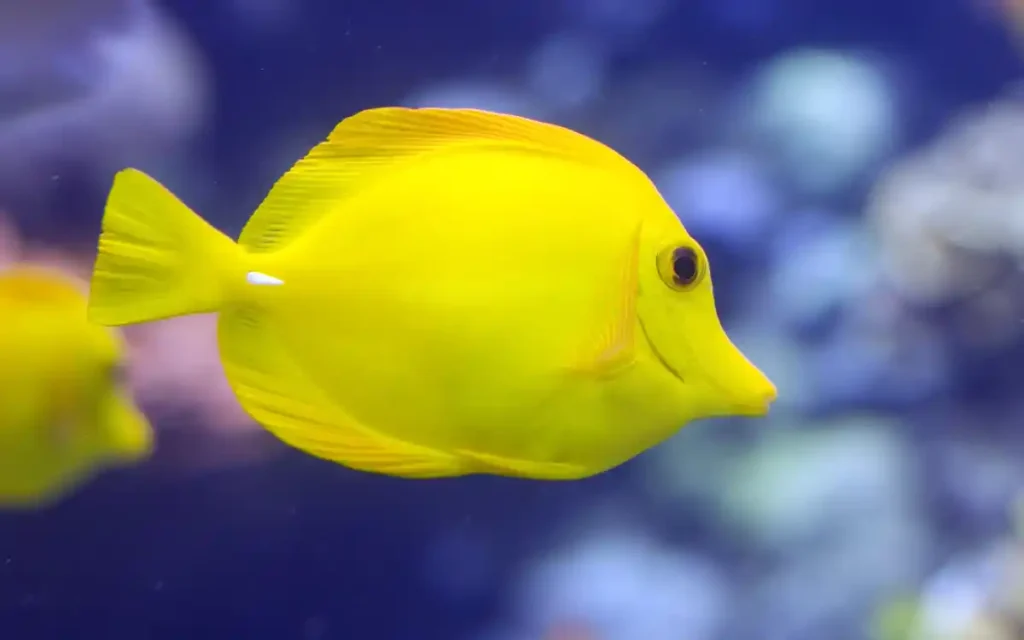
The Yellow Tang is a popular saltwater fish known for its bright yellow body and active swimming behavior. It thrives in reef aquariums, helping control algae growth. Native to the Pacific Ocean, particularly around Hawaii, this hardy fish is a favorite among marine aquarists. Though generally peaceful, it can be territorial with other tangs, especially in smaller tanks.
- Size: Up to 8 inches
- Tank: 80+ gallons
- Diet: Herbivore (algae, seaweed)
- Temperament: Peaceful but territorial with similar species
- Care Level: Beginner-friendly
2.Blue Tang (Paracanthurus hepatus)
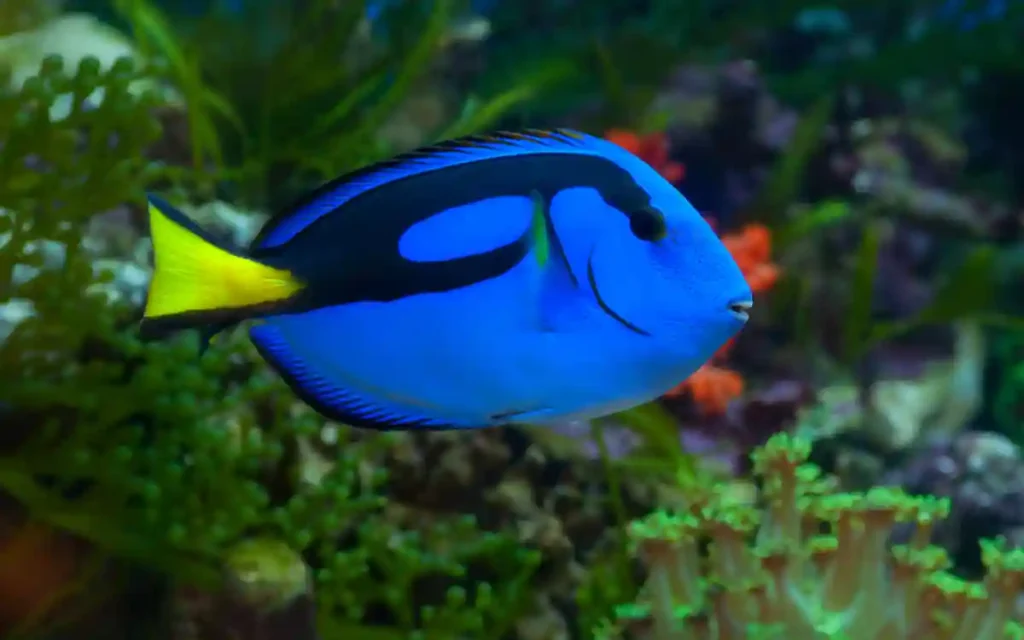
The Blue Tang, also known as the Regal Tang or Palette Surgeonfish, is famous for its deep blue body and bright yellow tail. Native to the Indo-Pacific, it is an active swimmer that thrives in large reef tanks. While beautiful, it is prone to stress-related diseases like marine ich, requiring stable water conditions and a spacious environment.
- Size: Up to 12 inches
- Tank: 100+ gallons
- Diet: Herbivore (algae, seaweed)
- Temperament: Generally peaceful but may show aggression towards similar species
- Care Level: Moderate
3.Powder Blue Tang (Acanthurus leucosternon)
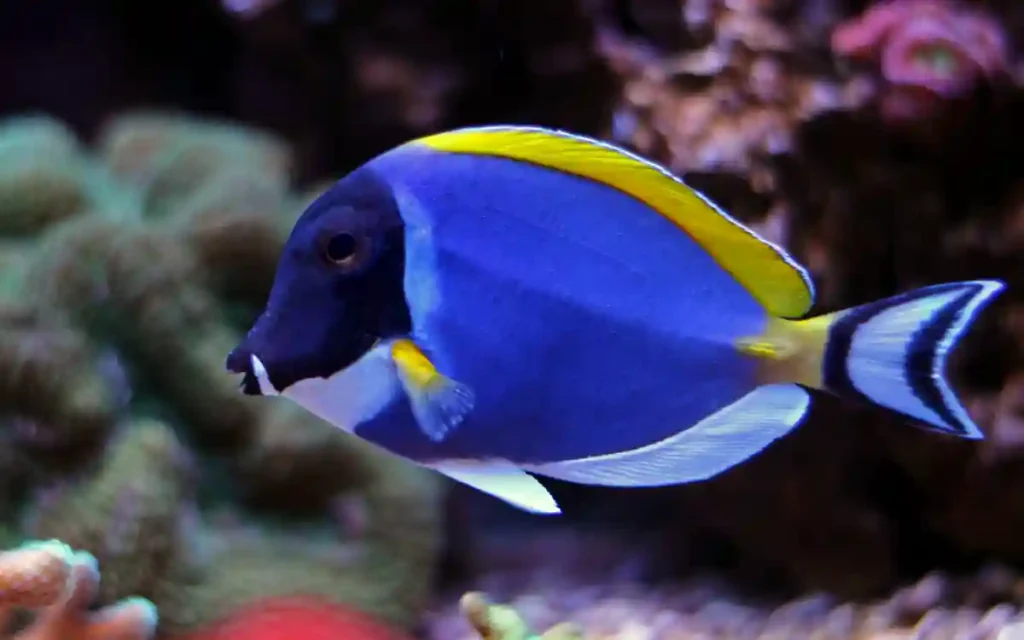
With its sky-blue body, yellow dorsal fin, and white face, the Powder Blue Tang is one of the most striking saltwater fish. It is native to the Indian Ocean and requires excellent water quality and plenty of swimming space. This species is highly active but also sensitive to changes, making it best suited for experienced aquarists.
- Size: Up to 9 inches
- Tank: 125+ gallons
- Diet: Herbivore (algae, seaweed)
- Temperament: Territorial, aggressive towards other tangs
- Care Level: Difficult
4.Sailfin Tang (Zebrasoma veliferum)
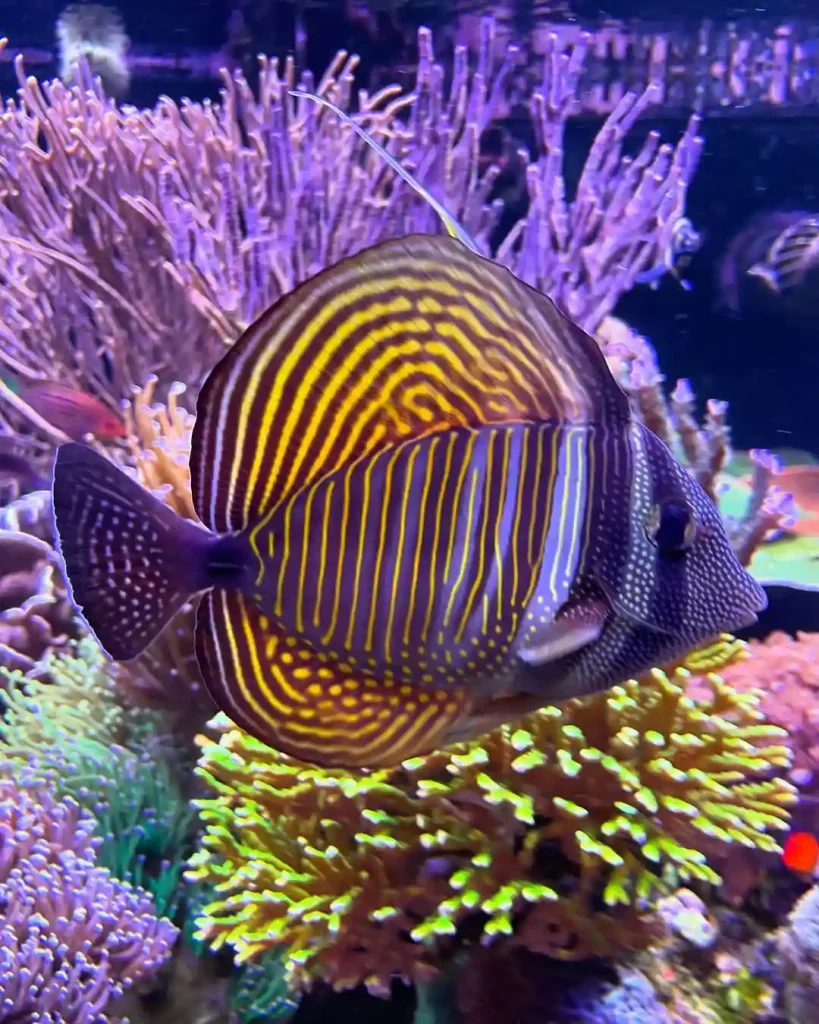
Recognized for its large, sail-like dorsal fin and vertical stripes, the Sailfin Tang is a hardy and eye-catching addition to marine tanks. It is found in the Indo-Pacific and Red Sea and requires a large aquarium with ample space to swim. It is generally peaceful but may become territorial if kept with other tangs.
- Size: Up to 15 inches
- Tank: 180+ gallons
- Diet: Herbivore (algae, seaweed)
- Temperament: Mostly peaceful but territorial with similar fish
- Care Level: Moderate
5.Kole Tang (Ctenochaetus strigosus)
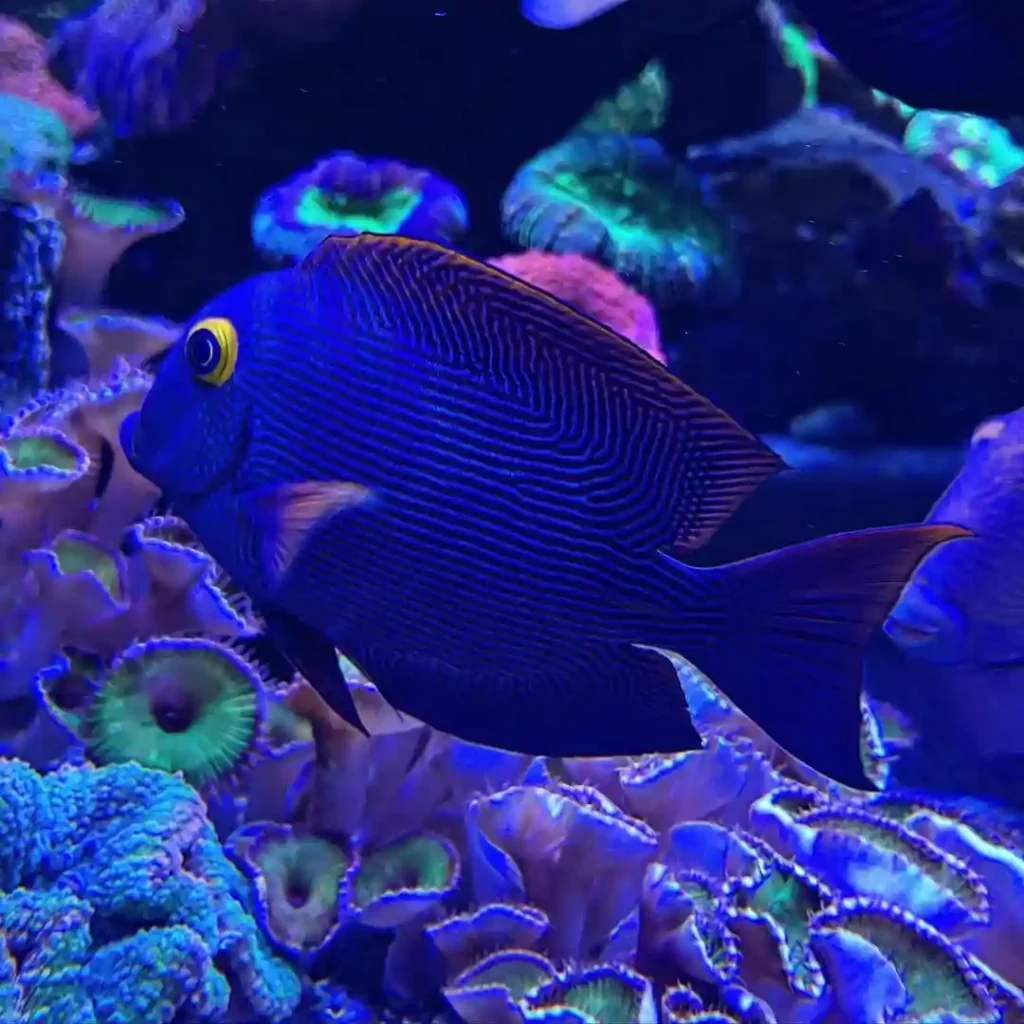
The Kole Tang, also called the Yellow-eyed Tang, is a smaller species known for its brownish body and blue-ringed eyes. Native to Hawaii and the Central Pacific, it is an excellent algae grazer and a great choice for reef tanks. It is generally peaceful but may show aggression towards other tangs.
- Size: Up to 7 inches
- Tank: 70+ gallons
- Diet: Herbivore (algae, detritus)
- Temperament: Peaceful but territorial with similar species
- Care Level: Easy
6.Achilles Tang (Acanthurus achilles)
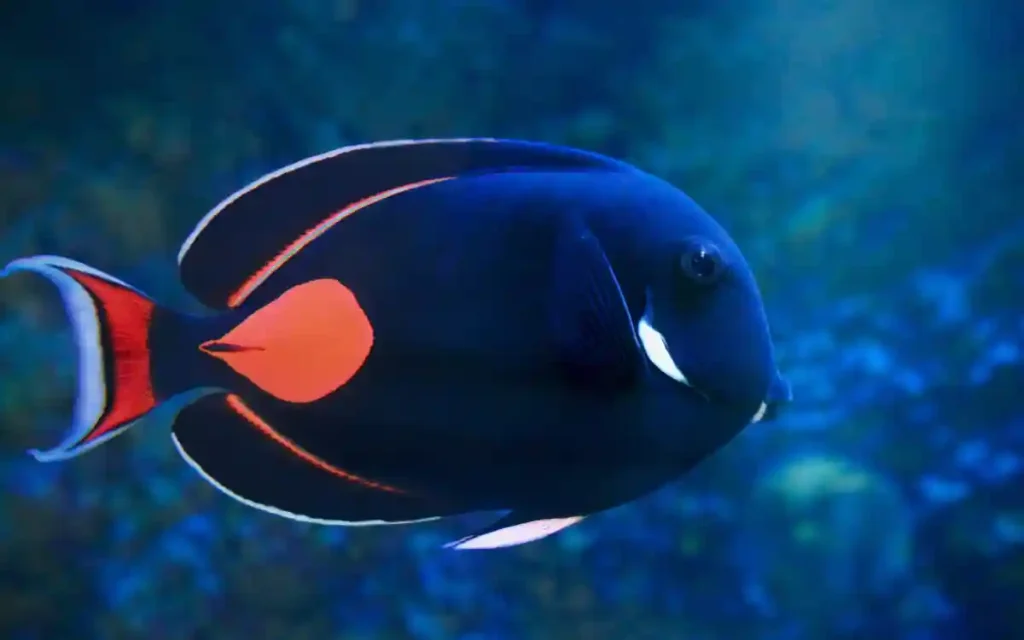
The Achilles Tang is a striking black fish with a vibrant orange teardrop marking near its tail. Native to the Pacific Ocean, it is highly active and requires strong water movement to thrive. This species is sensitive to water quality and prone to diseases, making it suitable for expert aquarists.
- Size: Up to 10 inches
- Tank: 180+ gallons
- Diet: Herbivore (algae, seaweed)
- Temperament: Aggressive towards other tangs
- Care Level: Expert-only
7.Convict Tang (Acanthurus triostegus)
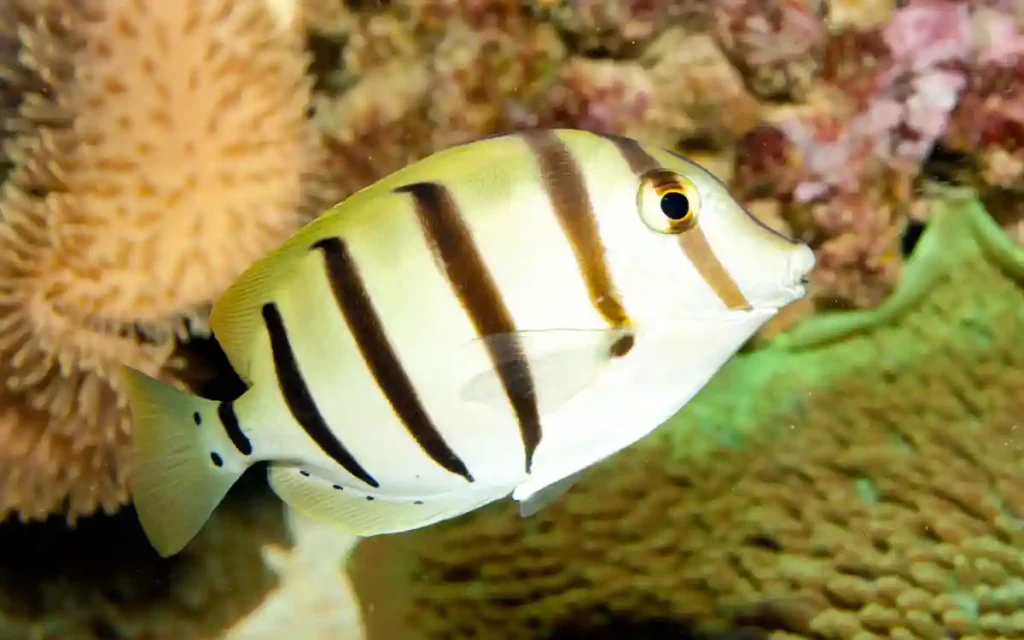
Named for its black vertical stripes resembling a convict’s uniform, this tang is one of the more peaceful species. Found across the Indo-Pacific, it adapts well to captivity and is often kept in groups. It is an active algae grazer and helps maintain tank cleanliness.
- Size: Up to 10 inches
- Tank: 125+ gallons
- Diet: Herbivore (algae, seaweed)
- Temperament: Peaceful, can be kept in groups
- Care Level: Easy
8.Purple Tang (Zebrasoma xanthurum)
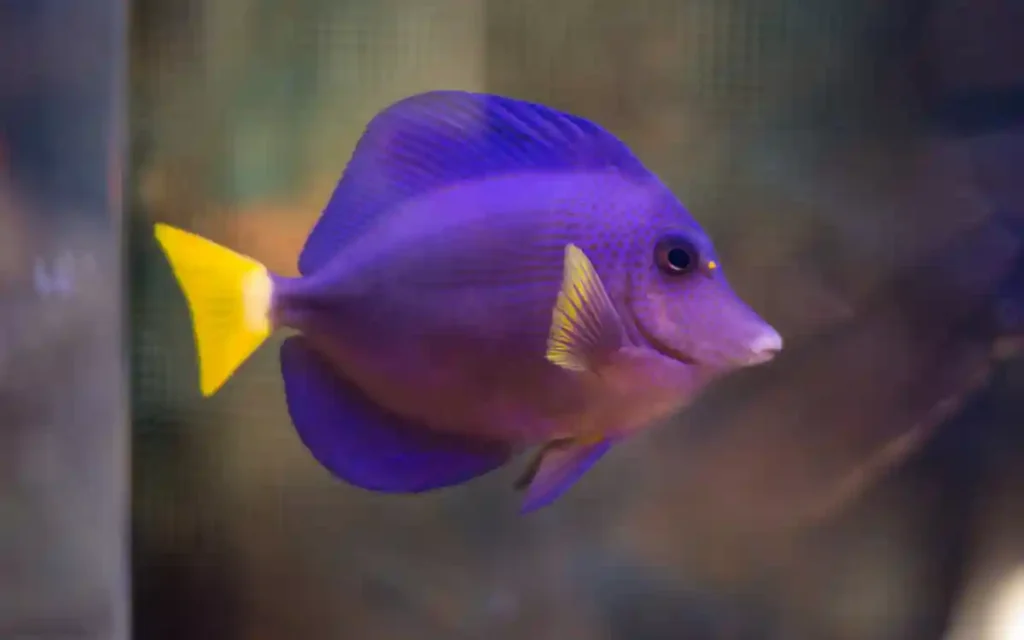
With its deep purple body and yellow tail, the Purple Tang is one of the most beautiful surgeonfish. It is native to the Red Sea and Arabian Gulf. This species is hardy but can be aggressive towards similar-looking fish. It requires a well-maintained tank with plenty of hiding spaces.
- Size: Up to 10 inches
- Tank: 120+ gallons
- Diet: Herbivore (algae, seaweed)
- Temperament: Territorial, aggressive towards other tangs
- Care Level: Moderate
Read also: 20 Types of Butterflyfish: A Complete Guide
9.Fowleri Tang (Acanthurus fowleri)
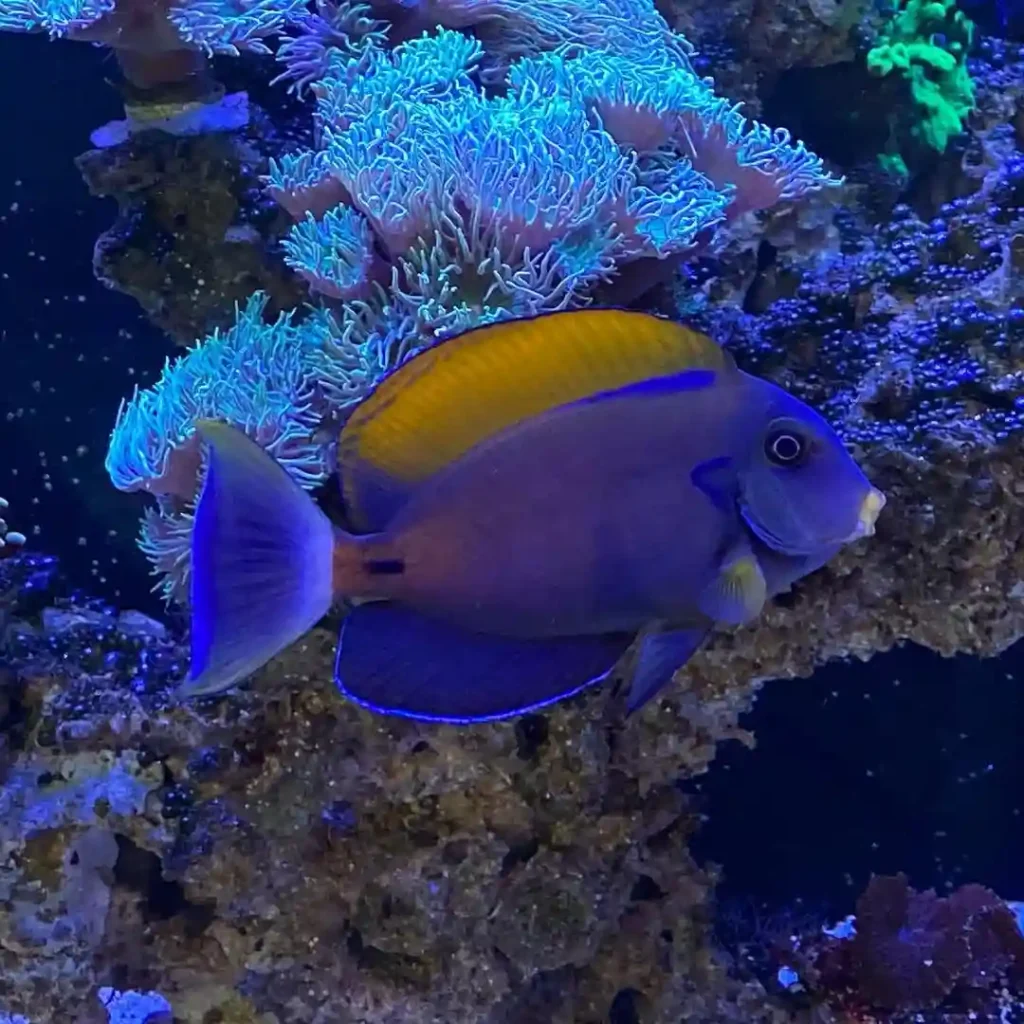
A rare tang with a bluish-grey body and a distinctive elongated shape, the Fowleri Tang is a beautiful but less commonly kept species. Native to the Indo-Pacific, it needs a large aquarium with ample swimming room. It is generally peaceful but can be territorial.
- Size: Up to 15 inches
- Tank: 200+ gallons
- Diet: Herbivore (algae, seaweed)
- Temperament: Semi-aggressive
- Care Level: Difficult
Read also: 20 Types of Butterflyfish: A Complete Guide
10.Clown Tang (Acanthurus lineatus)
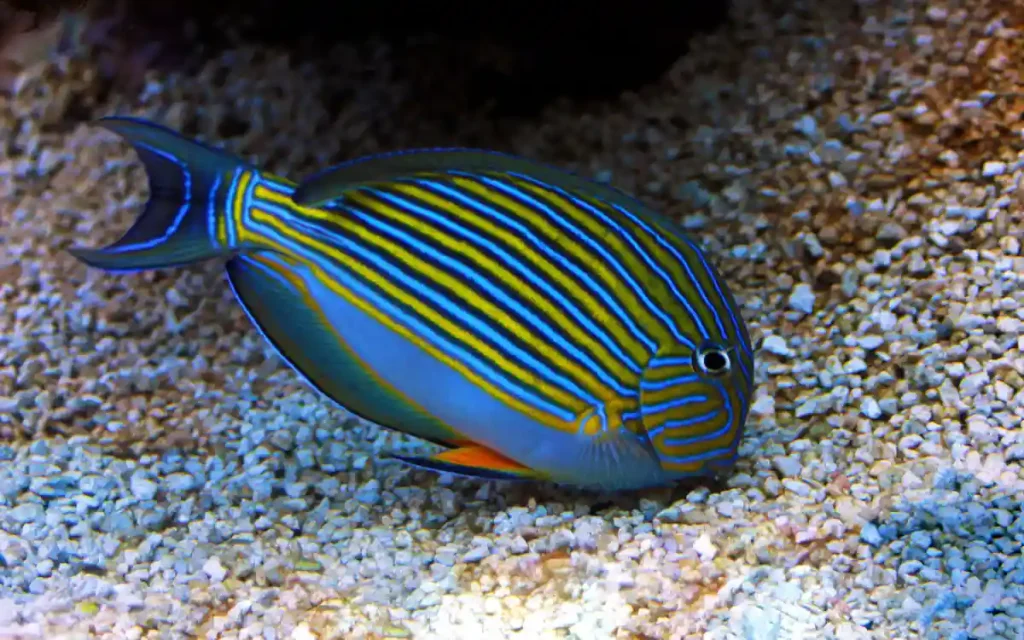
Known for its bold blue and yellow stripes, the Clown Tang is a striking but aggressive species. Found in the Indo-Pacific, it requires a large, open swimming area. It is best suited for experienced aquarists due to its territorial nature and sensitivity to water conditions.
- Size: Up to 16 inches
- Tank: 200+ gallons
- Diet: Herbivore (algae, seaweed)
- Temperament: Very aggressive
- Care Level: Expert-only
11.Tomini Tang (Ctenochaetus tominiensis)
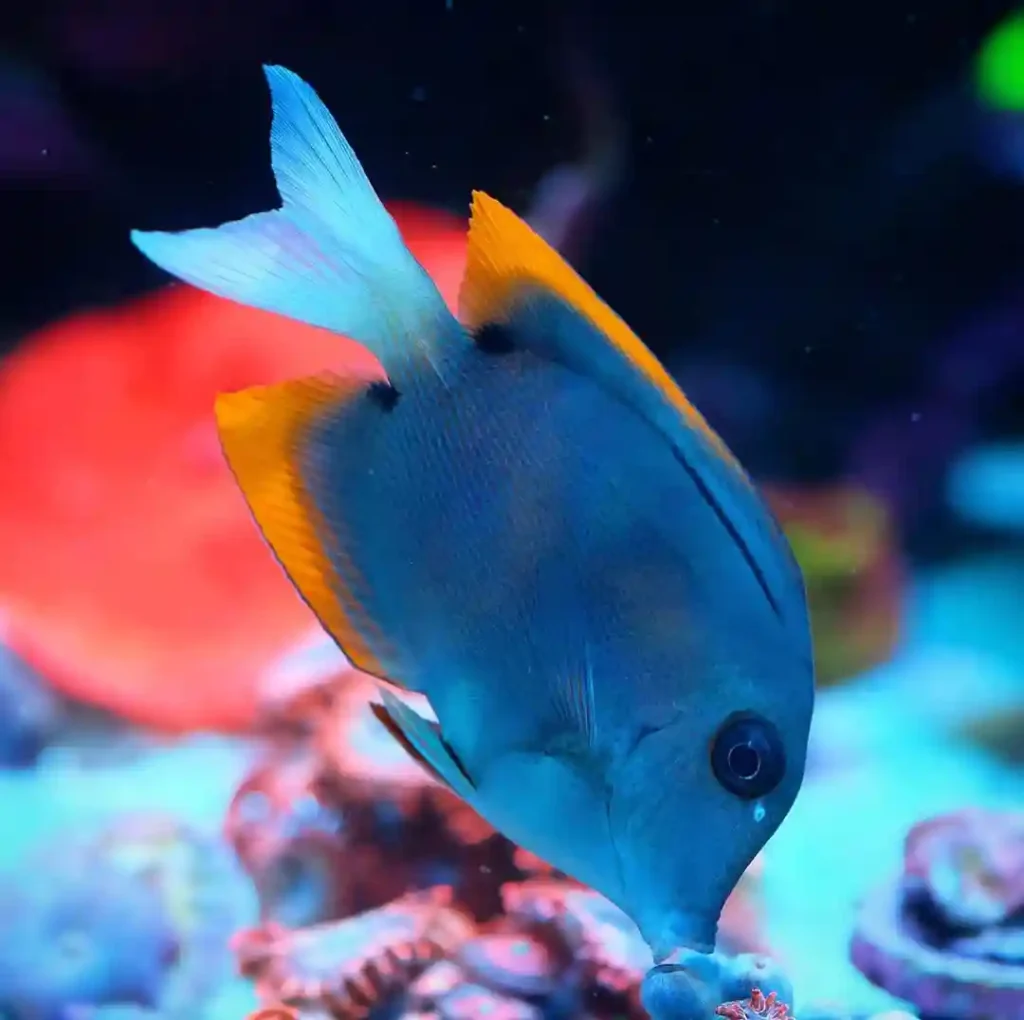
The Tomini Tang is a smaller species, making it an excellent choice for mid-sized reef tanks. With its brownish body and bright yellow fins, it is both attractive and useful in controlling algae. It is one of the easiest tangs to care for and gets along well with other tank mates.
- Size: Up to 6 inches
- Tank: 70+ gallons
- Diet: Herbivore (algae, detritus)
- Temperament: Peaceful, good for community tanks
- Care Level: Easy
FAQs
Do tangs change color?
Yes, many tangs can change color depending on their mood, stress levels, or time of day.
Can tangs be kept together?
Some tangs can coexist if introduced properly and given enough space, but many species are territorial.
What is the lifespan of a tang?
Most tangs live between 10-20 years in captivity with proper care.
Do tangs need live rock in their tank?
Yes, live rock provides grazing surfaces for algae, which is a primary food source for tangs.
Why do tangs get white spots?
White spots often indicate marine ich, a common parasitic disease in saltwater fish.
