
Guppy Breeding Guide: How to Breed Guppies & Raise Fry

Guppies are one of the easiest fish to breed in a home aquarium. They reproduce naturally, give birth to live fry, and can breed every 3–4 weeks in stable conditions. With the right tank setup, proper feeding, and a balanced male-to-female ratio, guppies will breed without special effort.
This guide explains how to breed guppies, identify pregnancy, protect fry, and manage population growth.
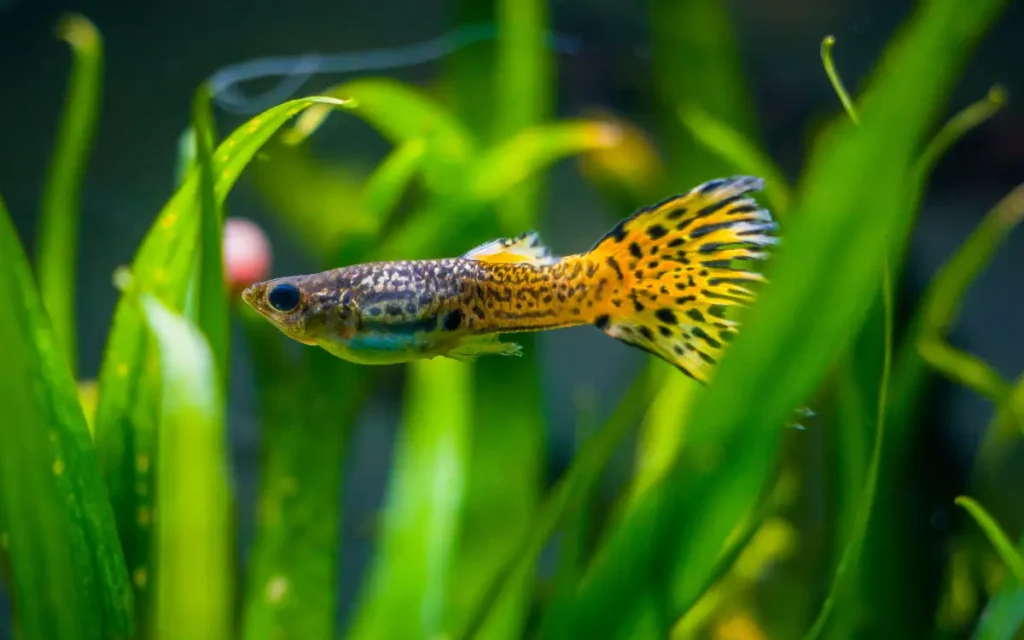
How to Breed Guppies
To breed guppies successfully:
- keep 1 male for every 2–3 females
- maintain water temperature at 78–80°F
- provide plants or hiding spots
- feed high-quality food regularly
- separate fry after birth
Guppies breed easily, but survival depends on tank conditions and care.
Male vs Female Guppies (Breeding Basics)
Breeding requires both male and female guppies.
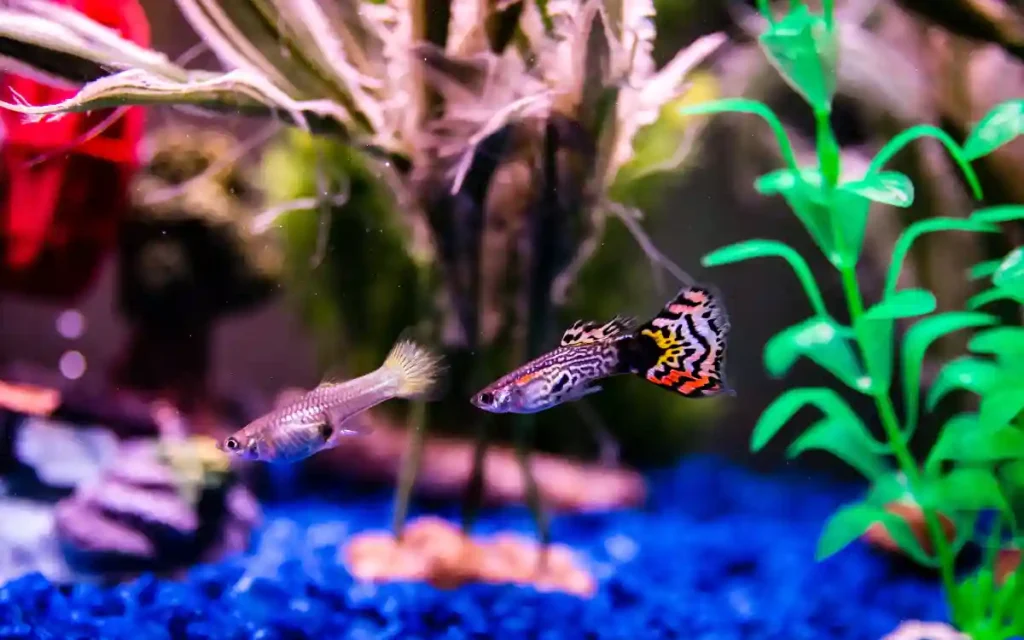
- males are smaller, brighter, and more colorful
- females are larger with a round belly
Males constantly chase females, so keeping more females reduces stress.
Ideal Tank Setup for Guppy Breeding
A proper setup improves breeding success and fry survival.
Use:
- 10–20 gallon tank
- heater set to 78–80°F
- sponge or gentle filter
- dense plants for hiding
Live plants are important because they protect fry and improve water quality.
Best plant options here: Plants for guppy
You can breed guppies in a community tank, but a separate breeding tank gives better control.
Guppy Pregnancy (Gestation Period)
Guppies are livebearers, meaning females carry babies inside their body.
- gestation period: 21–30 days
- belly becomes larger over time
- gravid spot (dark area near tail) becomes visible
Signs a guppy is about to give birth:
- hiding in corners
- reduced activity
- squared belly shape
Guppy Birth (What to Expect)
A female guppy gives birth to live fry, not eggs.
- 20–50 fry per birth (sometimes more)
- fry can swim immediately
- no parental care after birth
Adult guppies may eat the fry, so protection is important.
How to Protect Guppy Fry
Fry survival depends on hiding spaces and separation.
To protect fry:
- add dense plants like Java moss
- use a breeding box
- move fry to a separate tank
Without protection, many fry will be eaten by adult fish.
What to Feed Guppy Fry
Guppy fry need small, high-protein food to grow quickly.
Feed:
- crushed flakes
- baby brine shrimp
- powdered fry food
Feed 3–4 times per day in small amounts.
Clean water is important because fry are sensitive to poor conditions.
Learn more about Guppy Fry Care Guide
How Often Do Guppies Breed
Guppies breed frequently.
- every 3–4 weeks
- females can store sperm
- one mating can result in multiple births
This can quickly lead to overcrowding if not controlled.
How to raise a guppy fry learn more.
How to Control Guppy Population
To avoid overcrowding:
- separate males and females
- remove fry regularly
- limit breeding pairs
Overpopulation leads to stress and poor water quality.
Learn proper stocking here: Guppy Tank Size Guide
Common Guppy Breeding Mistakes
Avoid these mistakes:
- too many males causing stress
- no hiding spots for fry
- poor water quality
- overfeeding
Stable conditions are the key to healthy breeding.
Can Guppies Breed in a Community Tank?
Yes, guppies can breed in a community tank, but fry survival is low.
Other fish may eat fry, so:
- add plants for hiding
- avoid aggressive tank mates
See compatibility guide: Guppy tank mates
If keeping shrimp: Guppies with shrimp
FAQs
How long are guppies pregnant?
Guppies are pregnant for about 21–30 days.
Do guppies lay eggs?
No, guppies give birth to live fry.
How many babies do guppies have?
Usually 20–50 fry per birth.
Will guppies eat their babies?
Yes, adult guppies often eat fry if not separated.
Can guppies breed without a male?
Females can store sperm and give birth multiple times after mating.
