
Orange Laser Cory Care Guide (Corydoras sp. “Orange Laser”)

Orange Laser Cory is one of the most eye-catching corydoras you can keep. The bright orange stripe along its body stands out beautifully, especially in planted tanks.
But don’t assume it’s as forgiving as common corys like bronze or peppered. This species is more sensitive to water quality and stress. If the setup isn’t right, they won’t thrive.
If you maintain stable conditions, though, they are peaceful, active, and a great centerpiece for a calm community tank.
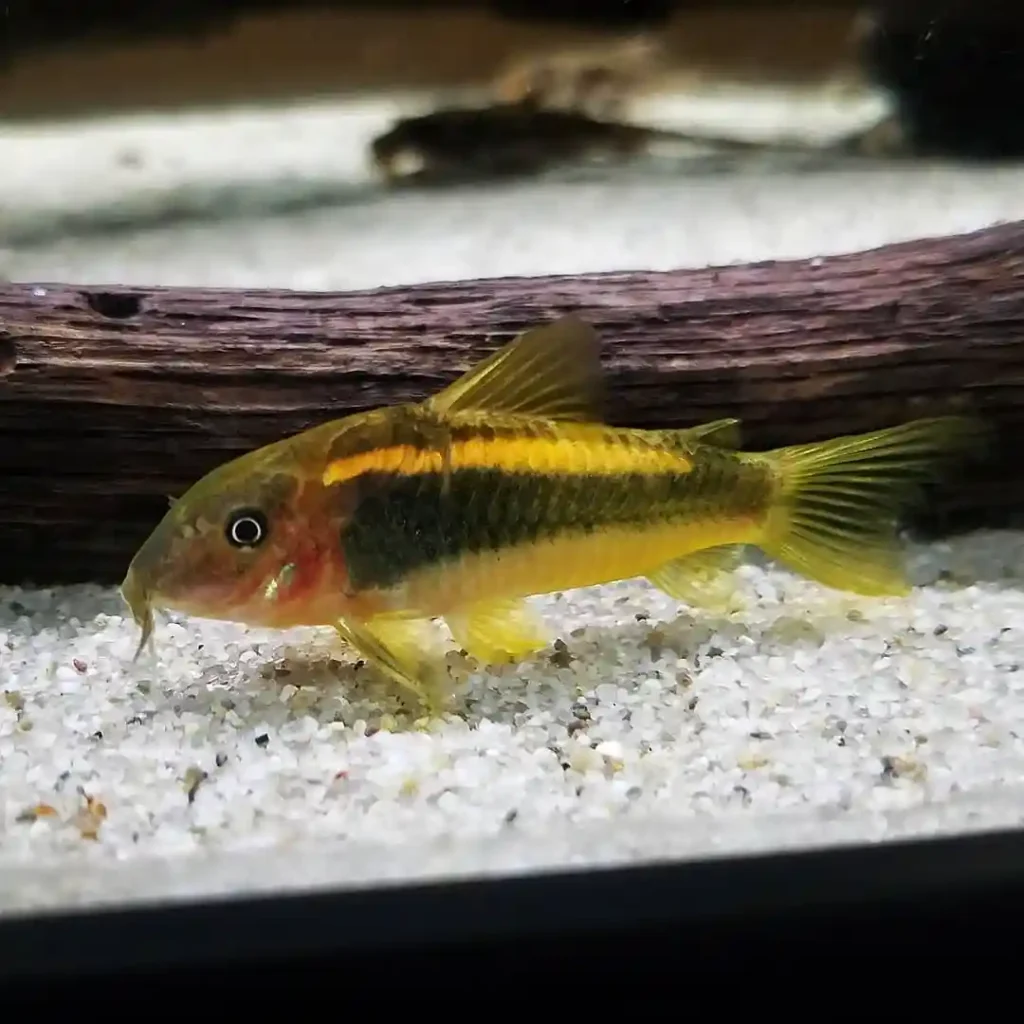
Species Overview
| Attribute | Details |
| Scientific Name | Corydoras sp. “Orange Laser” |
| Common Name | Orange Laser Cory |
| Size | 2 – 2.5 inches |
| Lifespan | 4 – 6 years |
| Care Level | Moderate |
| Temperament | Peaceful |
| Tank Level | Bottom |
| Diet | Omnivore |
| Minimum Tank | 20 gallons |
Tank Size and Setup
Orange laser corys need a stable, well-planned tank. A 20-gallon setup is the minimum, but a larger tank helps maintain better water quality and reduces stress.
Soft sand substrate is essential. Like all corydoras, their barbels are sensitive and can get damaged on rough gravel.
A planted tank works best. Plants like Anubias, Java fern, and Cryptocoryne provide cover and make them feel secure.
Add driftwood and shaded areas, but leave enough open space along the bottom for movement.
Avoid overcrowding. These fish are more sensitive than common cory species.
Water Parameters
Orange laser corys require stable and clean water.
Keep temperature between 72 and 78°F. pH should stay between 6.0 and 7.2.
Ammonia and nitrite must always be zero. Nitrate should be kept low with regular water changes.
They do not handle sudden changes well, so stability is more important than exact numbers.
Behavior and Schooling
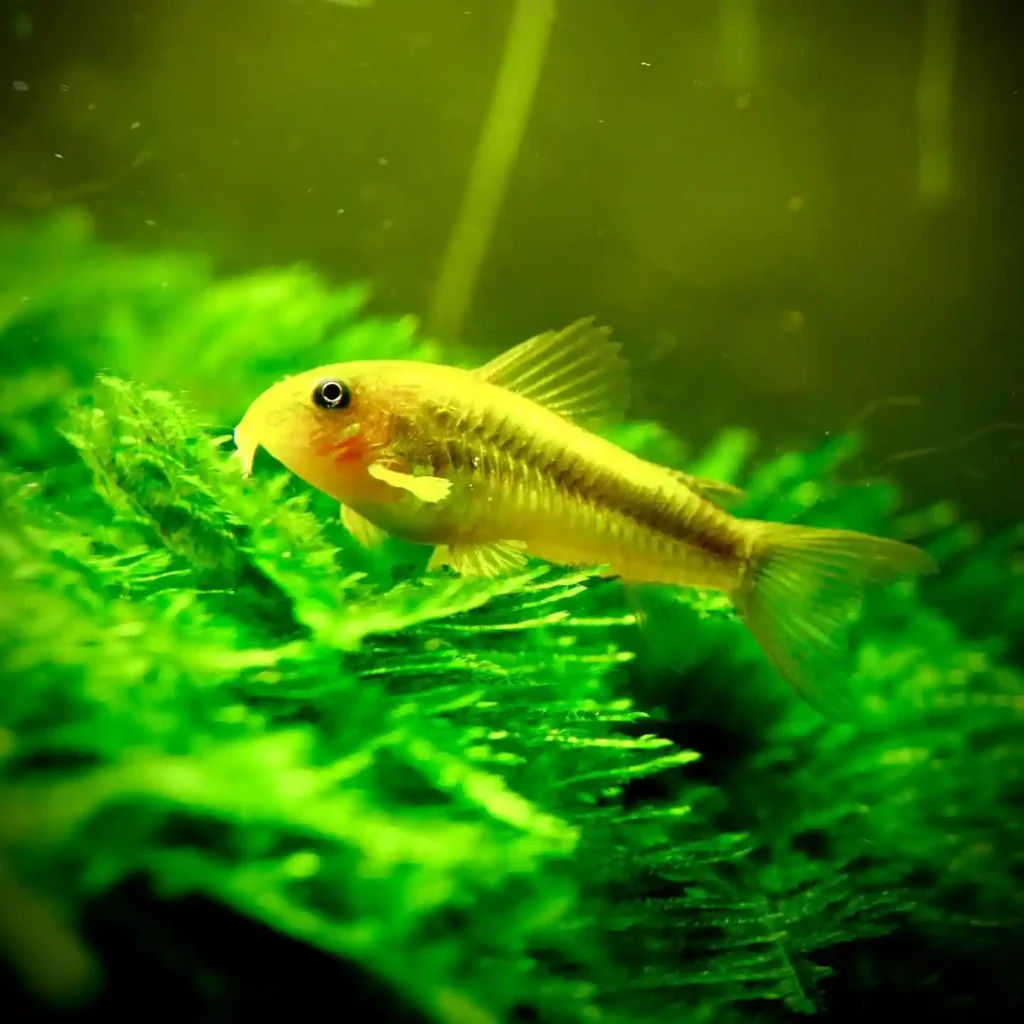
Orange laser corys are peaceful and social.
Keep them in groups of at least 6, but larger groups make them more active and confident.
They spend most of their time at the bottom, searching for food and interacting with each other.
They may occasionally swim to the surface to gulp air, which is normal.
If kept in small groups, they become shy and hide more often.
Tank Mates and Compatibility
Orange laser corys should be kept with calm, non-aggressive fish.
They work well with small tetras, rasboras, guppies, and other peaceful community fish.
They are also safe with shrimp and will not attack them.
Avoid aggressive fish, large species, or anything that may outcompete them for food. Because they are slightly more sensitive, stress from tank mates can affect them faster.
Diet and Feeding
Orange laser corys are omnivores and easy to feed, but they need proper feeding.
Their main diet should be sinking pellets or wafers. You can also add frozen or live foods like bloodworms, brine shrimp, and daphnia.
They do not survive on leftover food alone. This is a common mistake.
Feed once or twice daily, ensuring food reaches the bottom.
Breeding Orange Laser Cory
Breeding is possible but not as common as with basic cory species.
Clean water and slight temperature changes can trigger spawning. Females become rounder when carrying eggs.
They lay eggs on glass, plants, or decor. Eggs hatch within a few days.
Fry require very fine food like baby brine shrimp and stable water conditions.
Common Mistakes
Poor water quality is the biggest issue and leads to stress quickly.
Using rough substrate causes barbel damage.
Keeping them in small groups makes them shy and inactive.
Adding aggressive tank mates causes stress and health problems.
Are Orange Laser Cory Good for Beginners
Not the best choice for beginners.
They are not difficult, but they require stable water conditions and careful tank setup. Beginners who are still learning water management may struggle.
If you already have some experience, they are a great addition.
FAQs
Are orange laser cory rare?
Yes, they are less common than standard cory species.
Can orange laser cory live with shrimp?
Yes, they are completely safe.
How many orange laser cory should be kept together?
At least 6, but more is better.
Do orange laser cory need sand?
Yes, sand is strongly recommended.
Final Thoughts
Orange laser cory is a beautiful and rewarding fish if you’re willing to meet its needs.
It’s not as forgiving as common cory species, but with clean water, proper group size, and peaceful tank mates, it thrives and becomes a standout in any planted aquarium.
