
Black Skirt Tetra Care Guide

Black Skirt Tetra (Gymnocorymbus ternetzi), also known as the Black Widow Tetra, is one of the easiest freshwater fish you can keep in a community aquarium. It’s hardy, active, and adapts well to different water conditions, which makes it a solid choice for beginners. These fish are known for their flowing black fins and schooling behavior, so they always look better when kept in groups.
If you give them the right setup a 20-gallon tank, stable water, and at least 6 fish they stay active and healthy for years. The only thing to watch is their tendency to nip fins, especially if they’re stressed or kept in small numbers. In this guide, you’ll learn exactly how to care for Black Skirt Tetras, including tank setup, feeding, tank mates, and common mistakes to avoid.
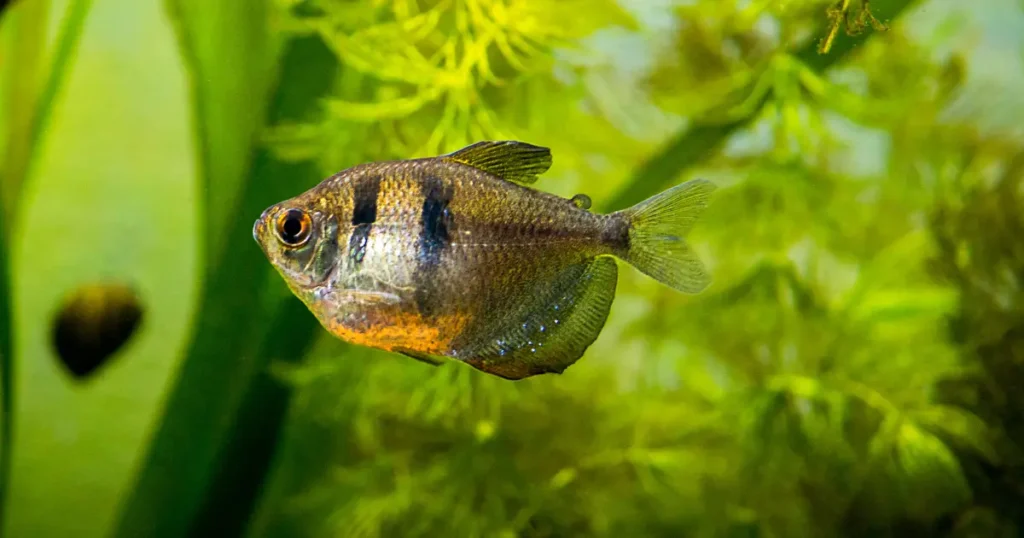
Black Skirt Tetra Care Overview
| Category | Details |
| Scientific Name | Gymnocorymbus ternetzi |
| Common Names | Black Skirt Tetra, Black Widow Tetra |
| Size | 2 – 2.5 inches |
| Lifespan | 3 – 5 years |
| Tank Size | 20 gallons (minimum) |
| Temperature | 70–82°F |
| pH | 6.0 – 7.5 |
| Temperament | Semi-peaceful |
| Care Level | Easy |
| Diet | Omnivore |
Appearance
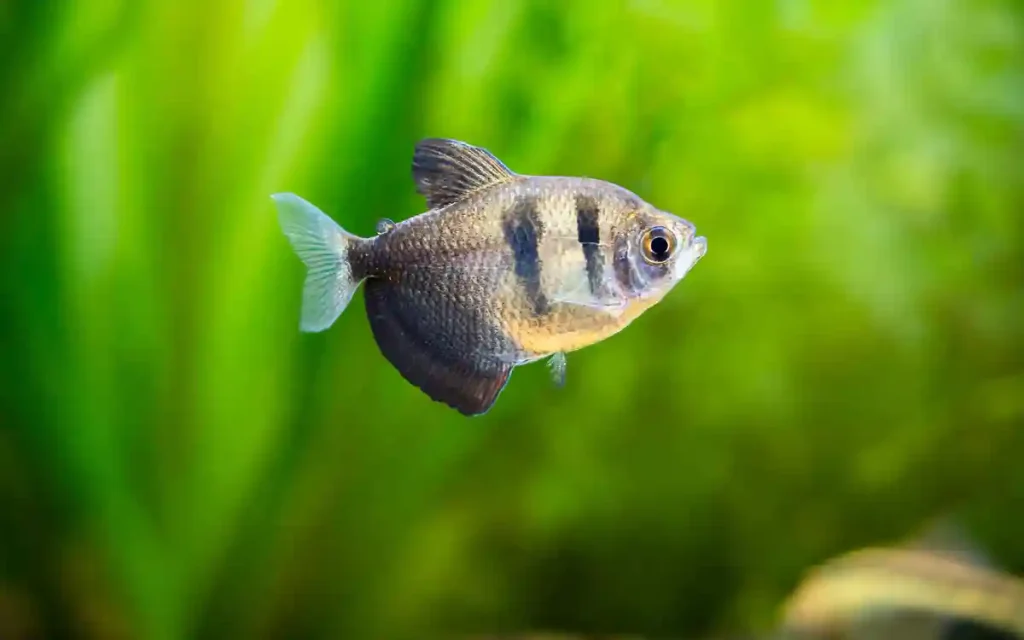
Black Skirt Tetras are easy to recognize once you know what to look for. Their body has a silver base with two dark vertical bands, followed by a flowing black “skirt” fin that gives them their name. This long anal fin is the most noticeable feature and looks even better when the fish are healthy and active.
Young fish usually have deeper black coloring, while older ones may fade slightly over time. You’ll also find long-fin varieties in the aquarium trade, which have more extended, elegant fins compared to the standard type. When kept in a group, their synchronized swimming adds a lot of movement to the tank.
Want beginner-friendly fish read this neon tetra
Tank Size and Setup
Minimum Tank Size
A 20-gallon tank is the minimum for Black Skirt Tetras, but bigger is always better. Since they are schooling fish, keeping them in groups of at least 6 is important. In smaller tanks, they tend to become more aggressive and may start nipping fins.
If you can, go for a 30-gallon tank. It gives them more swimming space and helps reduce stress.
Ideal Tank Setup
Black Skirt Tetras do best in a tank that balances open swimming space with some cover.
- Use live plants or artificial plants along the sides and back
- Keep the middle area open for swimming
- Dark substrate helps bring out their color
- Add driftwood or decorations for a natural feel
You can explore more plant ideas in your aquarium setup guide to improve their environment.
Water Parameters
Keeping stable water conditions matters more than chasing exact numbers.
- Temperature: 70–82°F
- pH: 6.0 – 7.5
- Water hardness: Soft to moderately hard
Regular water changes (20–30% weekly) help keep them healthy and active.
Behavior
Black Skirt Tetras are active, mid-level swimmers that spend most of their time moving around the tank in groups. They are generally peaceful but can show semi-aggressive behavior in certain situations.
Are They Aggressive?
They are not truly aggressive, but they are known for fin nipping.
This usually happens when:
- The group size is too small
- The tank is overcrowded
- They are kept with slow or long-fin fish
When kept in a proper group, this behavior reduces a lot.
How Many Black Skirt Tetras Should Be Kept Together?
This is one of the most important parts of their care.
- Minimum: 6 fish
- Ideal: 8–10 fish
Keeping them in larger groups spreads out aggression and makes them feel secure. A small group often leads to stress and more fin nipping.
They are schooling fish, so the more you keep (within tank limits), the better they behave.
Best Tank Mates
Choosing the right tank mates makes a big difference with this species.
Good Tank Mates
- Corydoras catfish
- Rasboras
- Zebra Danios
- Other similar-sized tetras
These fish are fast enough to avoid fin nipping and share similar water conditions.
Tank Mates to Avoid
- Betta fish
- Angelfish
- Guppies with long fins
Slow-moving or long-fin fish are easy targets for nipping behavior.
Diet and Feeding
Black Skirt Tetras are not picky eaters and will accept a wide range of foods.
Best Foods
- High-quality flakes or micro pellets
- Frozen foods like bloodworms or brine shrimp
- Occasional live food for variety
A varied diet helps improve their color and overall health.
Feeding Schedule
Feed them 1–2 times a day in small amounts.
Only give what they can eat in 2–3 minutes to avoid leftover food and water quality issues.
Lifespan and Growth
With proper care, Black Skirt Tetras usually live between 3 to 5 years.
Good water quality, proper diet, and keeping them in groups all contribute to a longer lifespan.
Breeding Black Skirt Tetras
Breeding Black Skirt Tetras is possible at home, but it’s not as easy as livebearers like guppies. They are egg scatterers, which means they lay eggs randomly rather than caring for them.
To improve success:
- Use a separate breeding tank (10–15 gallons)
- Keep water slightly softer and warmer
- Add fine plants or spawning mops
Once spawning happens, remove the parents immediately. They will eat the eggs if left in the tank. Eggs usually hatch within 24–36 hours, and fry become free-swimming in a few days.
Feed fry with infusoria or powdered food at first, then move to baby brine shrimp as they grow.
Read also: Ember Tetra Care Guide
Common Problems
This is where most beginners struggle, so getting this right makes a big difference.
Fin Nipping Issues
This is the most common problem with Black Skirt Tetras.
It usually happens when:
- They are kept in small groups
- The tank is too crowded
- They are paired with slow or long-fin fish
Solution:
- Increase group size to at least 6–8
- Avoid delicate tank mates
- Provide enough space
Fading Color
If your fish start losing their dark color, it’s usually a sign something is off.
Common causes:
- Poor water quality
- Stress from bad tank mates
- Low-quality diet
Fix:
- Do regular water changes
- Improve diet with protein-rich foods
- Reduce stress in the tank
Common Diseases
Like most freshwater fish, they can be affected by:
- Ich (white spots on body and fins)
- Fin rot
- Fungal infections
Keeping water clean and stable prevents most of these problems.
Pros and Cons
Pros
- Easy to care for
- Hardy and adaptable
- Active and good for community tanks
Cons
- Can nip fins
- Needs to be kept in groups
- Not ideal with slow or long-fin fish
Is Black Skirt Tetra Right for You?
Black Skirt Tetras are a great choice if you want an active and low-maintenance fish for a community aquarium. They work well for beginners as long as you understand their schooling needs and avoid mixing them with delicate species.
If you can provide a proper group size, enough space, and stable water, they are easy to manage and add constant movement to your tank.
FAQs
Are Black Skirt Tetras aggressive?
No, they are not truly aggressive, but they can nip fins, especially when stressed or kept in small groups.
Can Black Skirt Tetras live with bettas?
It’s not recommended. Bettas have long fins, which can trigger nipping behavior.
How many Black Skirt Tetras should be kept together?
At least 6, but 8–10 is better for natural behavior and reduced aggression.
Do Black Skirt Tetras need a heater?
Yes, in most cases. They prefer stable temperatures between 70–82°F, so a heater helps maintain consistency.
How big do Black Skirt Tetras get?
They grow up to around 2 to 2.5 inches when fully mature.
