
5 Peacock Cichlid Tank Mates

Peacock cichlids are some of the most colorful African cichlids you can keep, but choosing tank mates for them needs care. They are usually calmer than many mbuna cichlids, but they are still territorial fish. A peaceful fish in one tank can become stressed in another if the space, stocking, or layout is wrong.
The best peacock cichlid tank mates are fish that can handle hard, alkaline water, are fast or sturdy enough to live with cichlids, and are not small enough to be bullied or eaten. Good options include Haplochromis cichlids, Yellow Lab cichlids, Synodontis catfish, Plecos, and Giant Danios.
This guide explains how each tank mate fits with peacock cichlids, when they work well, and when you should be careful.
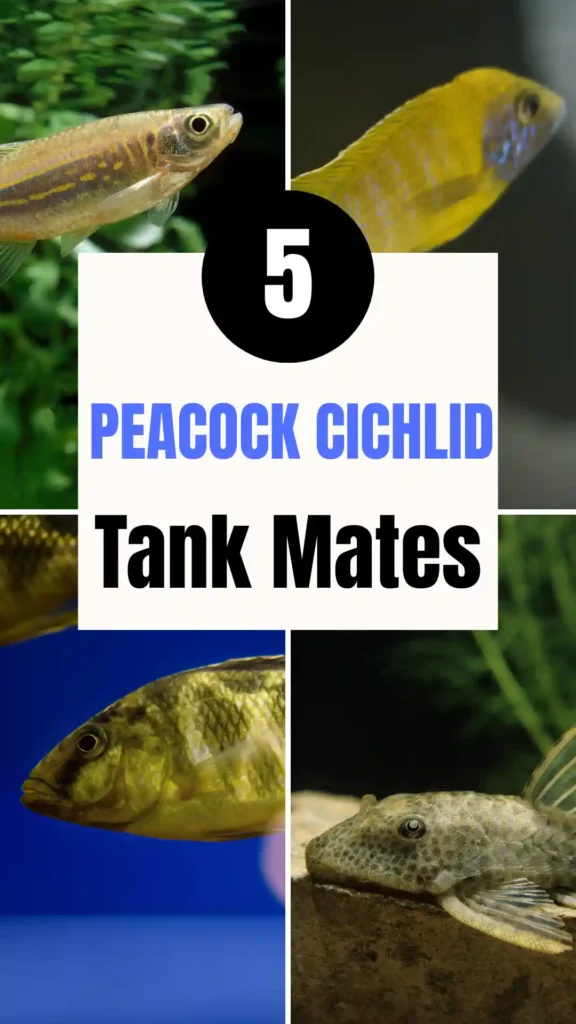
Best Peacock Cichlid Tank Mates at a Glance
| Tank Mate | Compatibility | Best Tank Size | Good For |
| Haplochromis | Very good | 75 gallons or more | Malawi-style cichlid tanks |
| Yellow Lab Cichlids | Good with care | 75 gallons or more | Adding color and activity |
| Synodontis Catfish | Very good | 55 gallons or more | Bottom area of the tank |
| Plecos | Good with care | 55 gallons or more | Algae grazing and bottom space |
| Giant Danios | Possible | 75 gallons or more | Fast top-level movement |
A 55-gallon tank can work for a smaller peacock setup, but a 75-gallon tank is much easier when adding tank mates. More space gives fish room to move away from each other, which helps reduce chasing.
For a broader African cichlid list, you can also read our guide on tank mates for African cichlids.
Before You Add Tank Mates to a Peacock Cichlid Tank
Peacock cichlids come from Lake Malawi, so their tank should be set up around hard, alkaline water. That already removes many common community fish from the list. Fish like neon tetras, guppies, bettas, angelfish, and most soft-water bottom fish are not good matches.
Temperament matters too. Peacocks are not as rough as many mbuna, but adult males can still become pushy. They may chase fish that look similar, guard open areas, or compete for food.
The safest tank mates are close in size, active, and able to live in the same water conditions. You also want fish that use different parts of the tank. For example, Synodontis catfish spend more time near the bottom, while Giant Danios stay closer to the top.
5 Peacock Cichlid Tank Mates
Haplochromis Cichlids
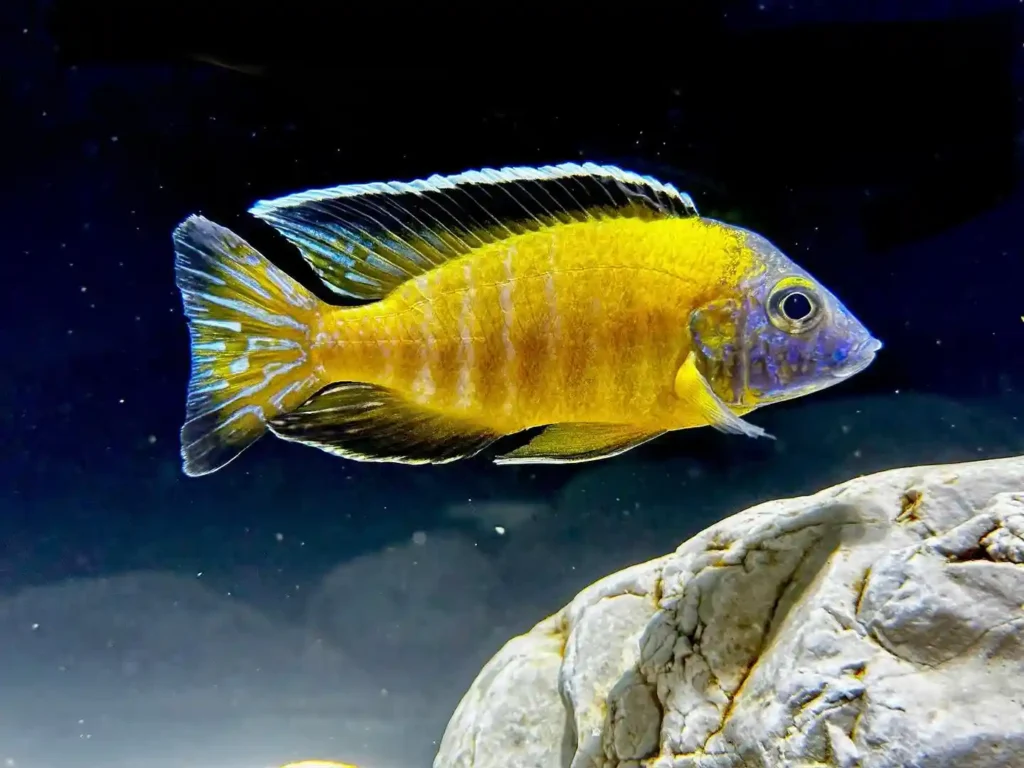
Haplochromis, often called haps, are one of the best matches for peacock cichlids. They come from similar African cichlid environments and usually fit well in a Malawi-style aquarium.
Many haps are open-water swimmers, which works nicely with peacocks. They do not need the same heavy rock piles that mbuna prefer, so the tank can have a cleaner layout with open swimming space and some rockwork for breaks in sight.
Good hap choices are usually calmer species that do not grow too large. Avoid very aggressive haps or species that become much bigger than your peacocks. A large fish may seem fine when young, but it can dominate the tank later.
Peacocks and haps look best in a larger display tank. A 75-gallon aquarium or bigger is a better choice because both groups need swimming room. This type of setup also gives you more freedom to manage aggression.
A good peacock and hap tank should have open sand, strong filtration, and rock areas placed in separate sections. Do not fill the full tank with caves. Peacocks and haps need room to swim, not a tight maze.
If you want a colorful African cichlid tank without the heavy fighting that often comes with mbuna, peacocks and peaceful haps are one of the best routes.
Yellow Lab Cichlids
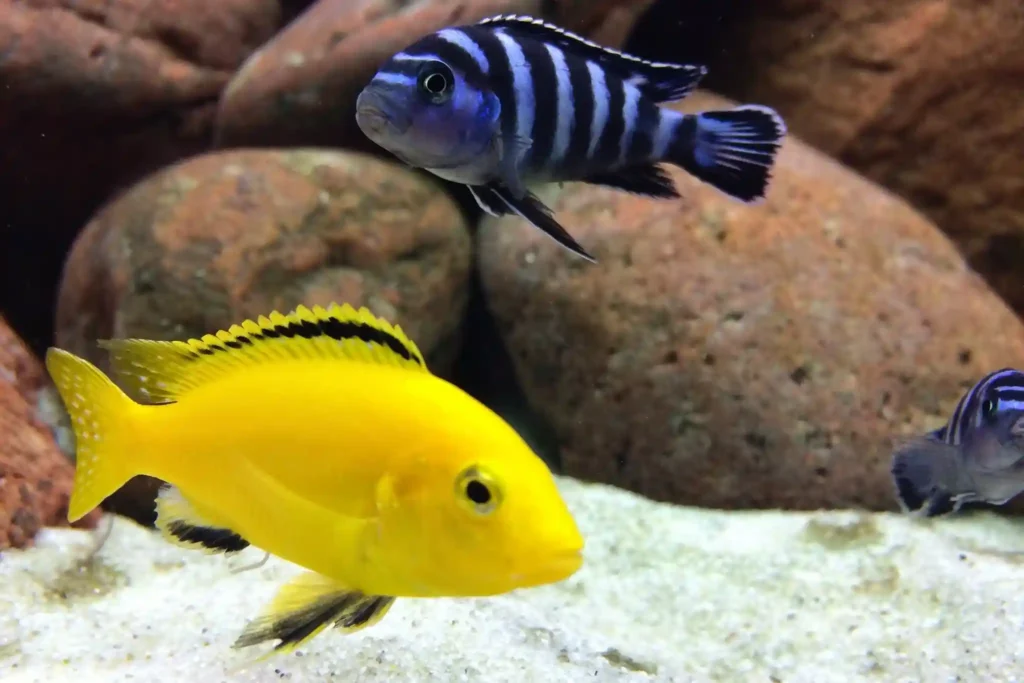
Yellow Lab cichlids are one of the few mbuna that can sometimes work with peacock cichlids. They are bright yellow, active, and hardy, which makes them popular in African cichlid tanks.
The reason Yellow Labs are often chosen is simple: they are usually less aggressive than many other mbuna. They still have mbuna behavior, though. They like rocks, they can guard areas, and they may chase weaker fish if the tank is too small.
I would not add Yellow Labs to a small peacock tank. They are much better in a 75-gallon tank or larger where there is enough space for both open swimming and rock cover.
The tank layout matters a lot here. Add a few rock piles or hiding spots, but keep open space in the middle and front. If the full tank becomes a rock wall, the setup starts to suit mbuna more than peacocks.
Yellow Labs also eat differently from many peacocks. They do best with a diet that includes plenty of plant-based foods. Too much rich, meaty food can cause problems in mbuna-style fish. In a mixed tank, choose a good African cichlid pellet and avoid overfeeding protein-heavy foods.
This is a good tank mate only when planned carefully. If your peacocks are calm and the tank is large, Yellow Labs can add color and movement. If your tank is already crowded or aggressive, skip them.
Synodontis Catfish

Synodontis catfish are one of the safest non-cichlid choices for a peacock cichlid tank. They are tough, active, and built well for life with African cichlids.
They usually spend time near the bottom, under rocks, or around shaded areas. That helps because they are not always swimming in the same zone as the peacocks. They also have a stronger body than delicate bottom fish like Corydoras.
Synodontis catfish are especially useful in a peacock tank because they add activity to the lower area without looking like another rival cichlid. Peacocks may still check them out, but they usually do not compete with them in the same way they would with another colorful male cichlid.
Pick the species carefully. Some Synodontis stay at a manageable size, while others grow larger than beginners expect. Before buying one, check its adult size, behavior, and whether it should be kept alone or in a group.
Give them proper hiding spots. A few caves, rock gaps, or shaded areas make a big difference. They should also get sinking food, not just leftovers. Waiting for scraps is not a real feeding plan.
Synodontis catfish are a strong choice if you want a bottom-dwelling fish that fits the African cichlid tank better than most common community catfish.
Plecos
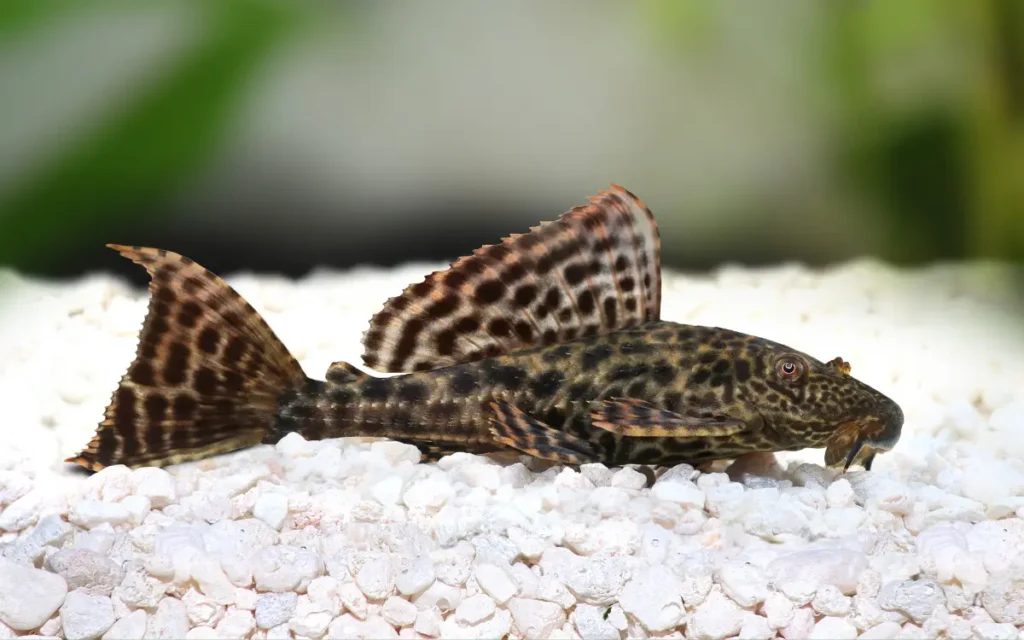
Plecos can live with peacock cichlids, but you need to choose the right type. The best choice for most keepers is a Bristlenose Pleco because it stays much smaller than a Common Pleco.
Common Plecos are often sold small, but they can become far too large for many home aquariums. A Bristlenose Pleco is easier to manage and usually fits better in a 55 to 75-gallon peacock tank.
Plecos are useful because they stay close to wood, rocks, glass, and the bottom area. They are also armored, so they are not as delicate as many other bottom fish.
Still, do not buy a Pleco only because you want a “cleaner fish.” Plecos make waste too, and they need real food. Algae in the tank is not enough. Feed sinking wafers, vegetables, and a proper varied diet.
Tank layout is also important. A Pleco should have a cave or covered space where it can rest. Without hiding areas, it may become stressed, especially in a busy cichlid tank.
One more thing: some Plecos prefer softer water than African cichlids. Bristlenose Plecos are hardy and often adapt well, but you should keep the tank stable. Do not chase perfect numbers every week. Stable water is safer than constant changes.
Plecos are a good choice when you want a sturdy bottom fish, but they are not magic tank cleaners. Treat them like a real tank member, and they can do well with peacocks.
Giant Danios
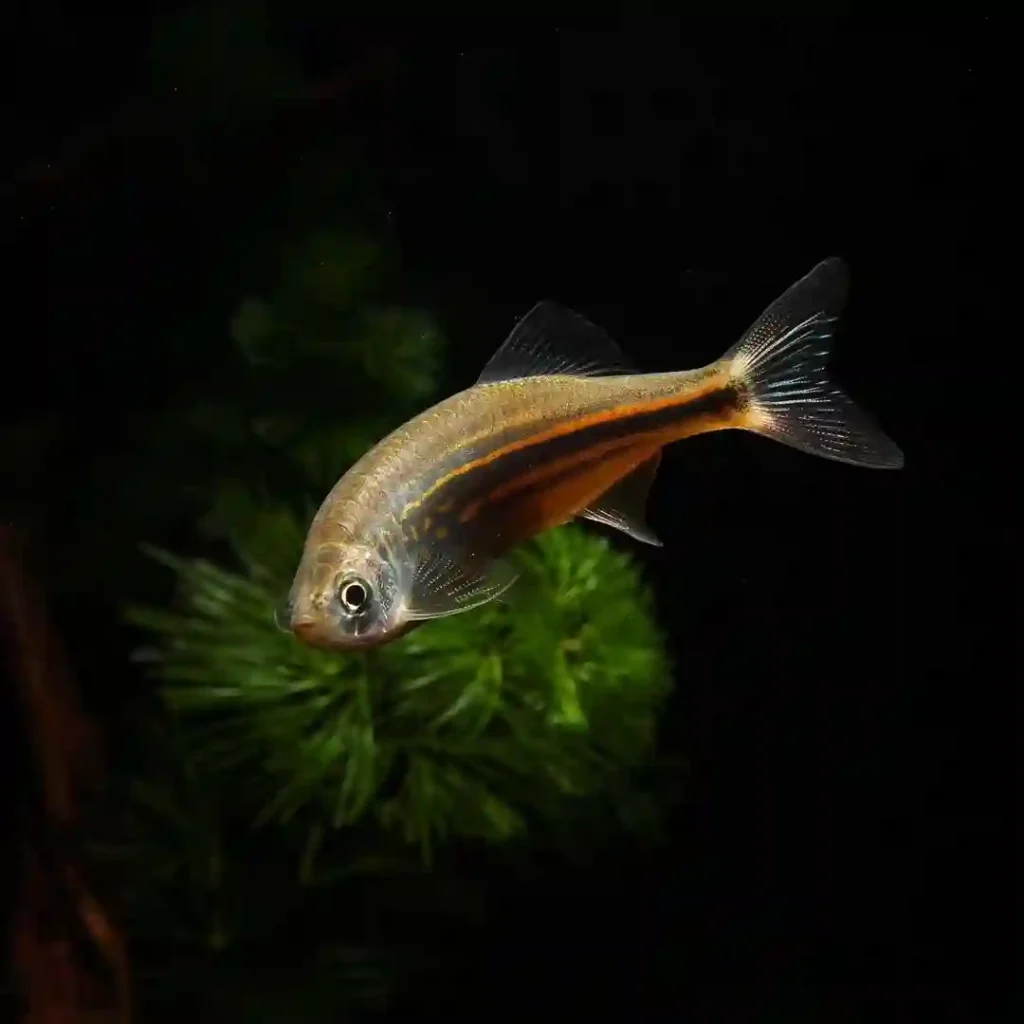
Giant Danios are not a classic African cichlid tank mate, but they can work in some peacock cichlid tanks. They are fast, active, and usually stay near the upper part of the aquarium.
Their speed is the main reason they can survive with peacocks. Slow fish often become targets. Giant Danios move quickly and are less likely to sit in one place waiting to be chased.
They also help make the upper part of the tank feel more active. Peacock cichlids often use the middle and lower areas, so Giant Danios can add movement near the top.
That said, this is not the first tank mate I would choose for a strict Lake Malawi setup. If you want a natural African cichlid tank, haps, peacocks, Synodontis, and carefully chosen African cichlids make more sense.
Giant Danios also need a group. Do not keep one or two. A small group can become nervous and may bother each other. A larger group spreads their energy better and looks more natural.
Use them only in a spacious tank with a secure lid. They are strong swimmers and can jump. A 75-gallon tank or larger is better because they need long swimming space.
Giant Danios are a possible choice, not a perfect one. They are best for keepers who want a busy, active display tank and are not trying to keep a pure Malawi-only aquarium.
Fish You Should Avoid With Peacock Cichlids
Some fish look peaceful in the store but are poor choices for peacock cichlids. Small community fish are the biggest mistake. Neon tetras, guppies, small rasboras, and similar fish are too small and do not belong in a Malawi cichlid setup.
Avoid slow fish with long fins too. Bettas, fancy guppies, angelfish, and long-finned gouramis can become stressed or damaged in a cichlid tank.
Many mbuna should also be avoided. Some are too aggressive and will outcompete peacocks for space and food. Yellow Labs are one of the safer mbuna options, but that does not mean all mbuna are safe.
Corydoras and Kuhli Loaches are peaceful, but they are not good matches either. They prefer different water conditions and are too gentle for most African cichlid tanks.
How to Make a Peacock Cichlid Community Tank Work
A good peacock cichlid community tank starts with space. A larger tank gives fish room to move away from each other. It also gives you more room for rockwork, open sand, and different swimming zones.
Use sand as the main substrate. Peacocks like to search around the bottom, and sand looks natural in this type of tank. Avoid sharp gravel that can damage fish while they search for food.
Add rocks in separate areas instead of building one huge pile. This creates visual breaks. When fish cannot see each other all the time, chasing often drops.
Filtration should be strong. African cichlids eat well and create a fair amount of waste. A weak filter can lead to dirty water, stress, and more aggression.
Feeding also affects behavior. If food is limited or only lands in one small area, fish will fight harder. Spread food across the tank so weaker fish get a chance to eat.
For tank size planning, you can also read our guide on aquarium fish by tank size.
Simple Peacock Cichlid Stocking Ideas
For a 55-gallon tank, keep the setup simple. A small peacock group with one Synodontis catfish or one Bristlenose Pleco is safer than trying to mix too many species.
For a 75-gallon tank, you have better options. You can keep peacocks with peaceful haps, a Synodontis catfish, and maybe a Bristlenose Pleco.
A Yellow Lab group is possible in a larger tank, but do not mix them into a tank that is already tense. Add them only when the layout and stocking make sense.
Giant Danios should be kept in a group and only in a tank with enough swimming space. They are active fish, so they do not belong in cramped setups.
Best Choice for Beginners
If you are new to peacock cichlids, I would start with haps or Synodontis catfish. They fit the tank better and create fewer problems than random community fish.
Yellow Labs can work, but they need more care because they are still mbuna. Plecos are good if you choose a Bristlenose Pleco and feed it properly. Giant Danios are more of a backup option for active display tanks, not the most natural match.
The safest peacock cichlid tank is not the one with the most fish. It is the one where every fish has enough space, the same water needs, and a fair chance to eat without being chased all day.
FAQ
Can peacock cichlids live with haps?
Yes, peacock cichlids can live with many peaceful haps in a large Malawi-style tank. Choose haps that are not too aggressive and do not grow much larger than your peacocks.
Can Yellow Labs live with peacock cichlids?
Yes, Yellow Labs can live with peacock cichlids in some tanks, but they need space. A 75-gallon tank or larger is better because Yellow Labs are still mbuna and can become territorial.
Can peacock cichlids live with Plecos?
Yes, Bristlenose Plecos can live with peacock cichlids in many tanks. Avoid Common Plecos unless you have a very large aquarium.
Are Giant Danios good tank mates for peacock cichlids?
Giant Danios can work because they are fast and active, but they are not a natural Malawi tank mate. Keep them only in a larger tank and in a proper group.
What is the safest tank mate for peacock cichlids?
Synodontis catfish are one of the safest non-cichlid tank mates. Peaceful haps are also a strong choice if you want a full African cichlid display tank.
