
Giant Danio Care Guide

If you want a fast, hardy fish that brings constant movement to a large aquarium, the Giant Danio is one of the best choices. It grows up to 6 inches, thrives in strong current, and is often used as a dither fish to make shy species like cichlids more active.
But this is not a small community fish. It needs space, flow, and the right tank mates to perform at its best.
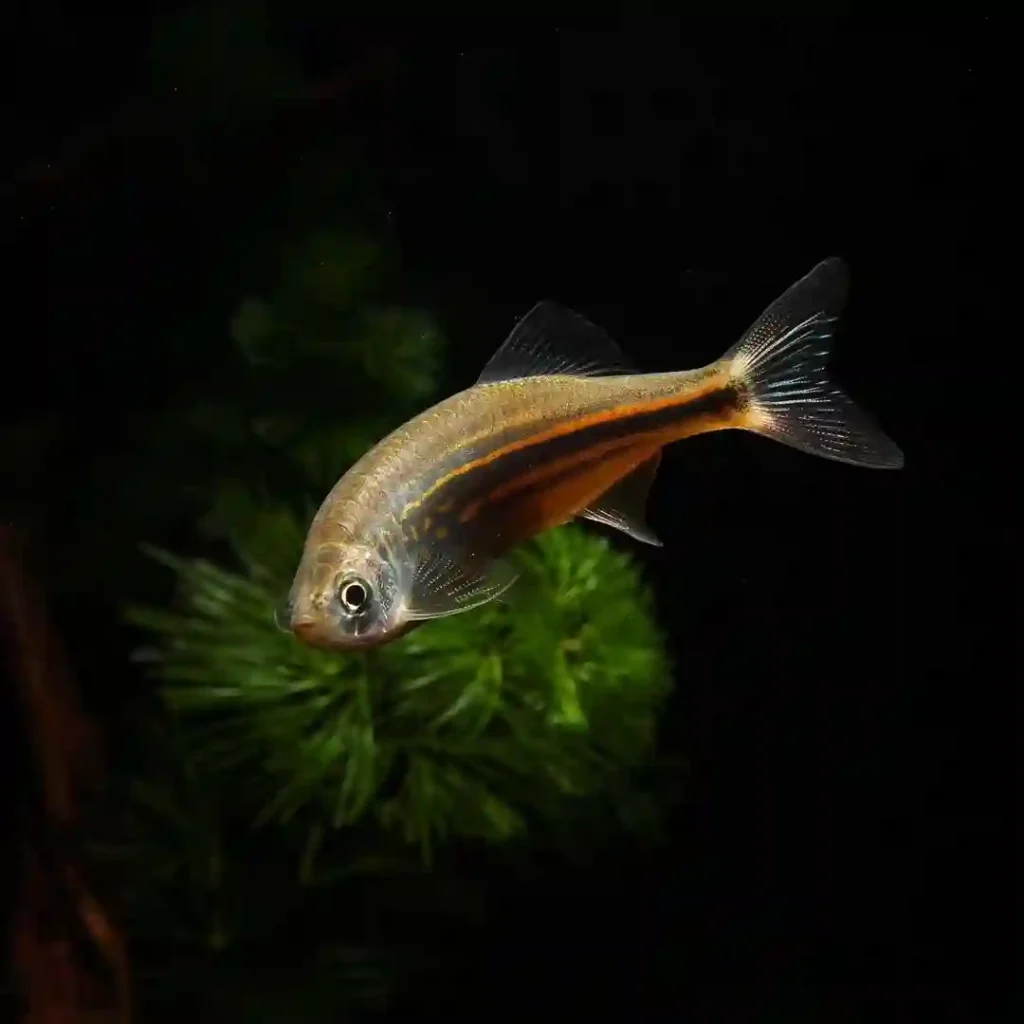
Species Overview & Temperament
The Giant Danio is one of the largest and most energetic members of the danio group. Native to India and surrounding regions, it naturally lives in fast-moving streams.
Quick facts:
- Size: 4 – 6 inches
- Lifespan: 5 – 7 years
- Temperament: Peaceful but very active
- Role: Dither fish
They are not aggressive, but their speed and constant movement can stress slow or delicate fish.
Tank Size & Dimensions (Swimming Space Matters)
This is where most people get it wrong.
- Minimum tank: 30 gallons (small group)
- Ideal tank: 55 gallons or larger
- Tank length: at least 4 feet
They are constant swimmers, so length matters more than height.
Important: They are strong jumpers. A tight-fitting lid is required.
There are also different types of danio.
Water Parameters & Current
Giant Danios come from fast-flowing waters, so they prefer strong oxygenation and current.
- Temperature: 22–24°C
- pH: 6.0 – 8.0
- Hardness: 5 – 19 dGH
Flow Requirement
- Strong current is beneficial
- Use a powerhead or strong filter
This makes them more active and improves their overall health.
Aquascaping for High-Speed Swimmers
The setup should focus on movement and space.
Best layout:
- Open swimming area in the center
- Plants along edges (Vallisneria, Amazon Sword)
- Smooth rocks and gravel substrate
Avoid clutter. Too much decoration blocks their swimming path.
Diet & Feeding Habits
Giant Danios are aggressive feeders.
Diet:
- Floating flakes or pellets
- Freeze-dried or frozen foods
- Occasional live food
They feed at the surface and will eat quickly.
Important tip: Because they are fast, they may outcompete slower fish. Make sure bottom feeders still get food.
Ideal Tank Mates (Dither Fish Strategy)
Giant Danios are often used with larger fish.
Good tank mates:
- Medium cichlids (Firemouth, Blue Acara)
- Angelfish (in large tanks)
- Rainbowfish
- Larger barbs
Why they work as dither fish:
- Constant movement signals safety
- Encourages shy fish to come out
Avoid:
- Very small fish (can be stressed or eaten)
- Slow fish with long fins
Breeding the Giant Danio
They are egg scatterers like other danios.
- Spawn in groups
- Scatter eggs over substrate or plants
- Parents may eat eggs
Breeding is possible but not commonly done in home aquariums.
Giant Danio vs Zebra Danio
This comparison helps beginners understand scale difference.
- Zebra Danio → small, 2 inches
- Giant Danio → large, up to 6 inches
Key differences:
- Size (huge difference)
- Tank requirement
- Energy level
Many beginners confuse them—this section helps reduce that mistake.
Common Problems & Mistakes
- Keeping them in small tanks
- Not enough swimming space
- Weak filtration or low oxygen
- Mixing with small or slow fish
Fixing these improves behavior immediately.
Frequently Asked Questions
Are Giant Danios aggressive? No, but they are very active and can stress slower fish.
How many Giant Danios should be kept together? At least 6–8 for proper schooling.
Do they need strong current? Yes, they thrive in high-flow environments.
Can they live with cichlids? Yes, especially medium-sized peaceful cichlids.
Final Thoughts
Giant Danio is not a beginner “small tank” fish—it’s a powerful, active species designed for larger aquariums. If you give them space, flow, and the right tank mates, they become one of the most useful and dynamic fish you can keep.
