
Zebra Loach Care Guide

The Zebra Loach is a peaceful, active bottom-dwelling fish known for its bold striped body and playful group behavior. It is a great choice for community aquariums, but only when kept in the right setup.
This is not a fish you should keep alone. Zebra Loaches do best in groups of at least five, with soft substrate, hiding spots, clean water, and peaceful tank mates. When these needs are met, they become active, curious, and fun to watch.
Their scientific name is Botia striata, and they are native to southern India. They are also sometimes called Candy Stripe Loach, Striped Loach, or Zebra Botia.
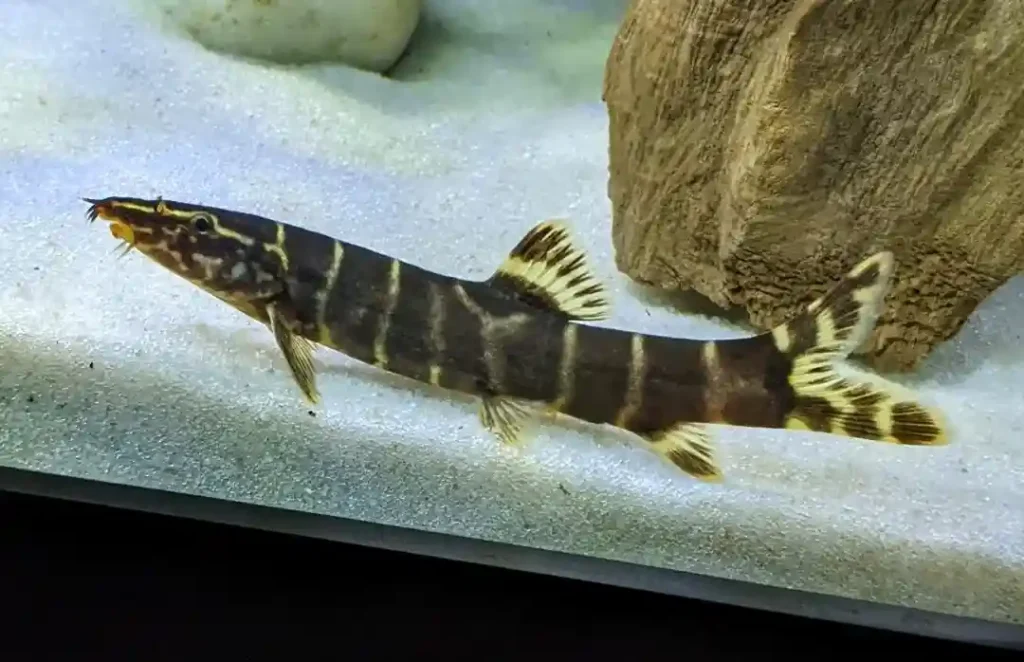
Zebra Loach Overview
| Category | Details |
| Scientific Name | Botia striata |
| Common Names | Zebra Loach, Candy Stripe Loach, Striped Loach |
| Adult Size | 3 to 4 inches |
| Lifespan | 8 to 10+ years |
| Minimum Tank Size | 30 gallons |
| Temperament | Peaceful, active, social |
| Care Level | Easy to moderate |
| Diet | Omnivore |
| Tank Level | Bottom |
| Best Group Size | 5 or more |
| Temperature | 73 to 79°F |
| pH | 6.0 to 7.5 |
Appearance
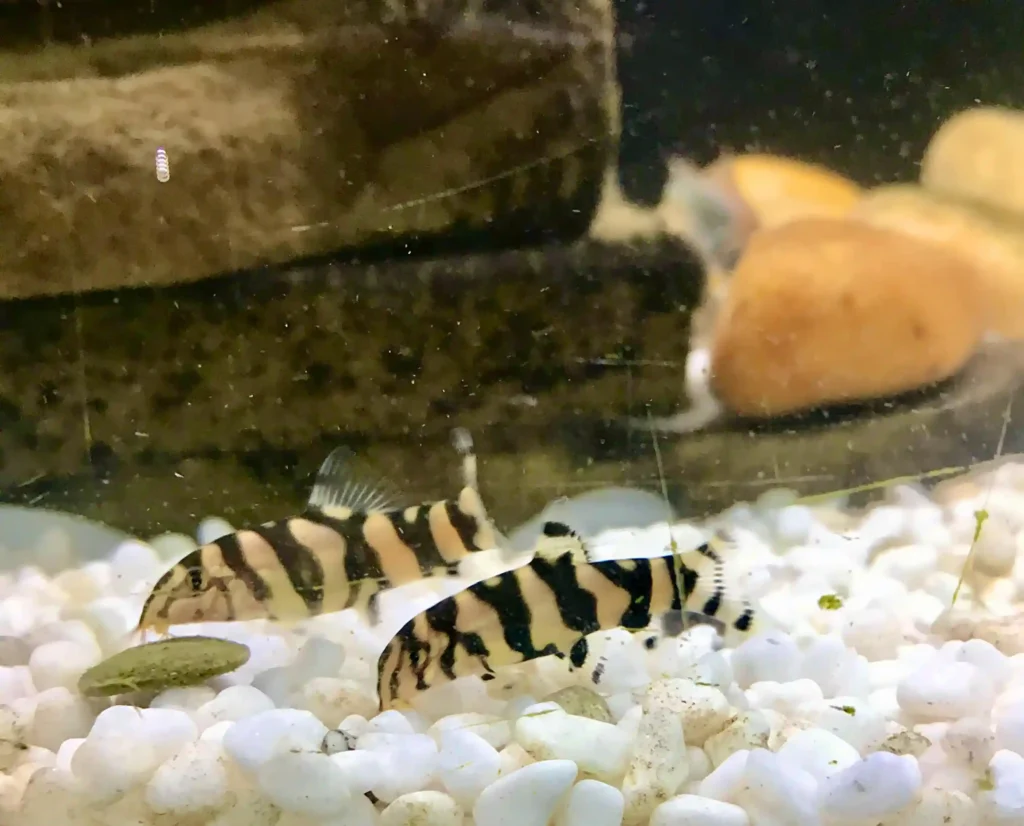
Zebra Loaches have a long loach-shaped body with dark vertical stripes across a lighter yellow, tan, or brown base color. Their stripes can vary from fish to fish, which makes each one look slightly different.
They also have small barbels around the mouth. These help them search through the substrate for food, but they are sensitive. That is why rough gravel is a bad idea for this species.
Natural Habitat
Zebra Loaches come from rivers and streams in India. Their natural habitat includes soft riverbeds, rocks, driftwood, leaf litter, and shaded areas.
They are not strong-current fish like Hillstream Loaches, but they still need clean, well-oxygenated water. A mature aquarium is much better than a brand-new tank because sudden water changes and poor water quality can stress them.
Tank Size
A 30-gallon tank is the best minimum for Zebra Loaches.
Some older care sheets mention 20 gallons, but I would not recommend that as the ideal setup. The reason is simple: Zebra Loaches should be kept in groups, and a group needs floor space.
For a group of 5, use at least 30 gallons. If you want a larger group or more community fish, a 40-gallon breeder or longer tank is much better.
Water Parameters
| Parameter | Best Range |
| Temperature | 73 to 79°F |
| pH | 6.0 to 7.5 |
| Hardness | Soft to medium |
| Water Flow | Low to moderate |
| Water Quality | Clean and stable |
Zebra Loaches are fairly hardy, but they do not like unstable water. Weekly partial water changes help keep nitrate and organic waste under control.
Avoid adding them to a tank that was set up recently. A mature tank with stable water is safer.
Tank Setup
The best Zebra Loach tank should feel safe at the bottom. These fish spend much of their time exploring, resting, and searching for food near the substrate.
Use soft sand or smooth fine gravel. Sharp gravel can damage their barbels and lead to irritation or infection.
Add plenty of hiding places using driftwood, caves, smooth rocks, and plants. They are social, but they still need private resting spots.
Good tank setup ideas include:
| Tank Item | Best Choice |
| Substrate | Sand or smooth fine gravel |
| Decor | Driftwood, caves, smooth stones |
| Plants | Java fern, Anubias, Cryptocoryne |
| Lighting | Low to moderate |
| Lid | Tight-fitting lid |
| Filtration | Strong enough to keep water clean |
A tight lid is also important because loaches can squeeze through small gaps.
Diet and Feeding
Zebra Loaches are omnivores. They eat a mix of meaty foods, sinking foods, plant matter, and small invertebrates.
A good daily diet can include sinking pellets, algae wafers, frozen bloodworms, brine shrimp, daphnia, and blanched vegetables like zucchini or spinach.
They are also known for eating pest snails. This can be helpful if you have too many snails, but do not buy Zebra Loaches only as “snail cleaners.” They still need a proper diet.
Feed them once or twice a day, and make sure food reaches the bottom. In busy community tanks, faster fish may eat everything before the loaches get enough.
Behavior and Temperament
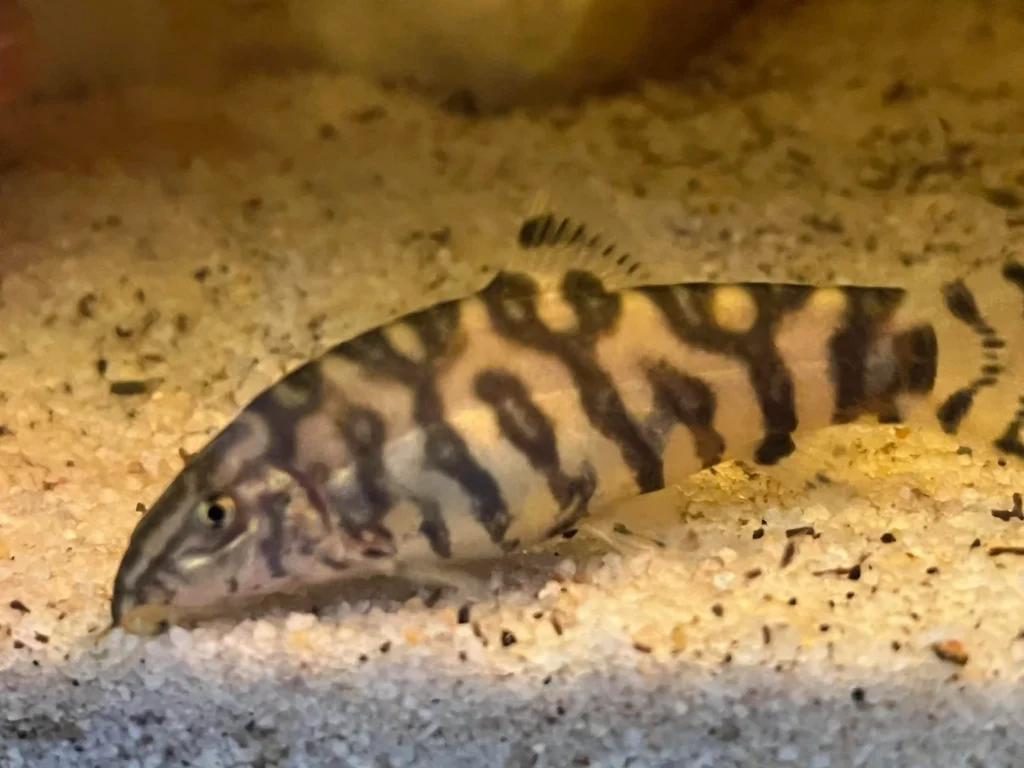
Zebra Loaches are peaceful, but they are not boring. They are active bottom fish that often move around in groups, explore caves, and search for food.
They can be shy when kept alone or in very small numbers. That is why a group of 5 or more is strongly recommended.
In a proper group, they feel safer and show better natural behavior.
Best Tank Mates
Zebra Loaches work well with peaceful community fish that enjoy similar water conditions.
Good tank mates include:
| Good Tank Mates | Why They Work |
| Harlequin Rasboras | Peaceful mid-level fish |
| Zebra Danios | Active and hardy |
| Cherry Barbs | Peaceful and colorful |
| Tetras | Good community choice |
| Gouramis | Usually peaceful if not aggressive |
| Other peaceful loaches | Similar behavior |
You can internally link here to your loach pillar post and articles like Kuhli Loach, Yo-Yo Loach, Clown Loach, and Hillstream Loach.
Fish to Avoid
Avoid aggressive fish, very shy fish, and long-finned slow swimmers.
Zebra Loaches are peaceful, but they can be active and may bother delicate fish if the tank is too small or the group size is wrong.
Avoid:
| Avoid | Reason |
| Betta fish | Long fins may attract nipping |
| Angelfish | Long fins and different behavior |
| Aggressive cichlids | Stress and injury risk |
| Tiny bottom fish | Food and space competition |
| Very shy fish | Zebra Loaches may be too active |
Common Health Problems
Zebra Loaches are hardy, but stress can make them more likely to get sick. Ich is one of the main problems mentioned in competitor guides, especially after moving or major tank changes.
Watch for white spots, flashing, clamped fins, loss of appetite, and hiding more than usual.
Most problems come from poor water quality, rough substrate, stress, or adding them to a new unstable tank.
Breeding
Zebra Loaches are not easy to breed in home aquariums. Commercial breeding is possible, but home breeding is extremely rare and usually not realistic for most fishkeepers.
If you keep them healthy, focus on long-term care rather than breeding.
Are Zebra Loaches Beginner Friendly?
Yes, but only for beginners who already understand basic aquarium care.
They are not difficult fish, but they do need a group, soft substrate, hiding places, stable water, and a mature tank. A single Zebra Loach in a bare 10-gallon tank is not a good setup.
Common Mistakes
The biggest mistake is keeping only one Zebra Loach. They are social fish and become stressed without a proper group.
Another mistake is using sharp gravel. Their barbels are sensitive, so a soft bottom is much safer.
Many people also buy them only for snail control. They may eat snails, but they still need a balanced diet.
FAQs
How big do Zebra Loaches get?
Zebra Loaches usually grow around 3 to 4 inches long.
How many Zebra Loaches should be kept together?
Keep at least 5 together. A group helps them feel safe and reduces stress.
Do Zebra Loaches eat snails?
Yes, they often eat small pest snails, but they should not be used as the only solution for snail problems.
Are Zebra Loaches aggressive?
No, they are generally peaceful. However, they are active and may bother very shy or long-finned fish.
Can Zebra Loaches live with Corydoras?
It can work in larger tanks, but it is not always ideal because both fish use the bottom area. If the tank is small, they may compete for space and food.
What tank size do Zebra Loaches need?
A 30-gallon tank is the best minimum because they should be kept in groups.
