
Licorice Gourami Care Guide: Tank Setup, Food and Water Conditions

The Licorice Gourami is a tiny blackwater fish that needs more care than its small size suggests. It requires very soft, acidic water, dim lighting, gentle filtration, plenty of cover, and a steady supply of small live foods.
This is not a typical community gourami. Licorice Gouramis are quiet, slow feeders that often struggle in bright tanks with active fish. They are better suited to experienced aquarists who can prepare low-mineral water and maintain stable conditions.
When housed correctly, males develop rich dark coloring with bright blue, green, red, or white markings along their fins. Their courtship behavior and cave-based bubble nests also make them interesting fish for specialist breeding tanks.
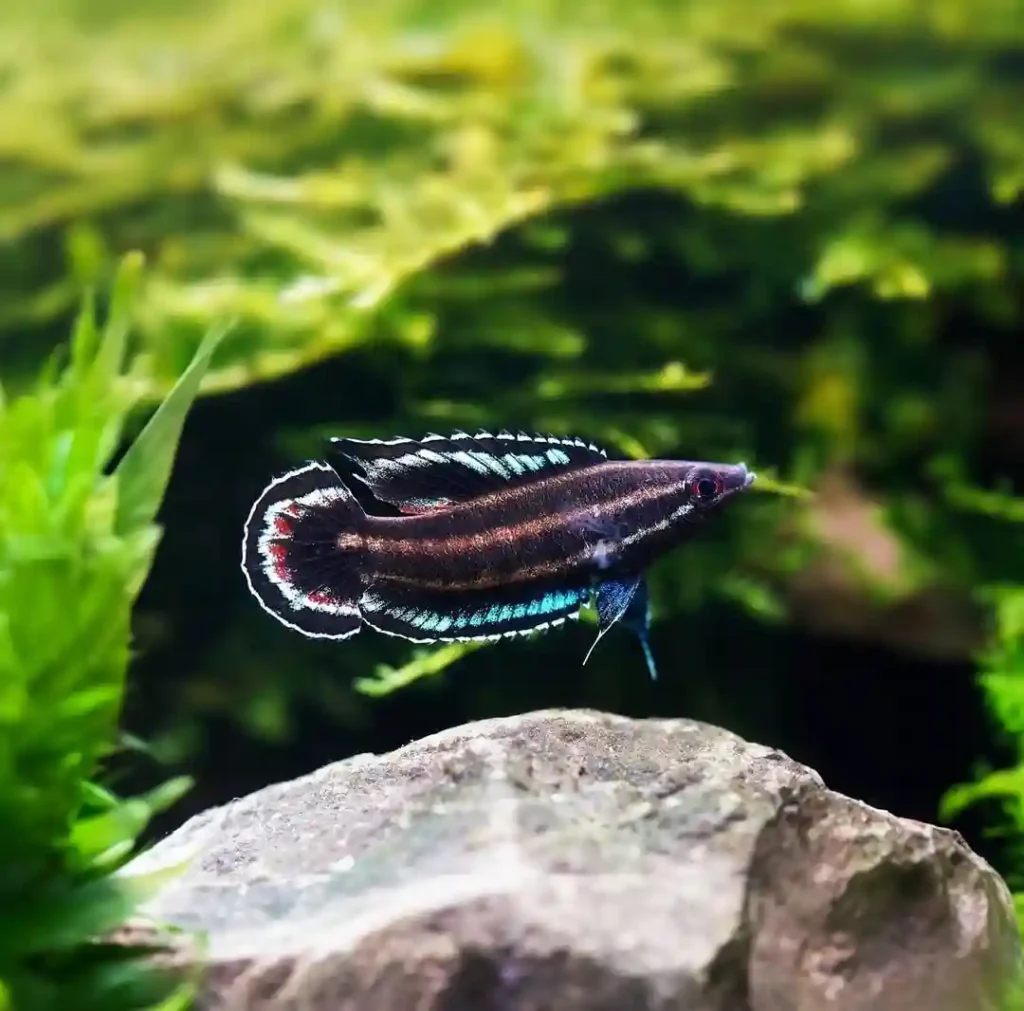
Licorice Gourami Care
| Category | Recommended Care |
| Common name | Licorice Gourami |
| Scientific name | Parosphromenus deissneri |
| Adult size | Around 1.2–1.5 inches |
| Recommended tank | 10 gallons for a pair |
| Temperature | 77–82°F |
| Preferred pH | 4.5–6.0 |
| Water hardness | Extremely soft |
| Temperament | Peaceful, shy and mildly territorial |
| Diet | Small live foods |
| Tank level | Lower and middle areas |
| Best group | One pair or a carefully managed small group |
| Care level | Advanced |
| Breeding type | Cave-based bubble-nester |
A 10-gallon aquarium is not required because the fish needs a large swimming area. The extra water volume simply makes temperature and water chemistry easier to keep stable.
The Name “Licorice Gourami” Can Be Misleading
The aquarium trade sometimes uses “Licorice Gourami” for several fish belonging to the Parosphromenus genus. A fish labelled Parosphromenus deissneri may occasionally be another closely related species.
This happens because females and young fish can look very similar. Stress, pale store lighting, and poor water conditions also hide the fin patterns used to separate one species from another.
Ask the seller for the scientific name and collection location when possible. This is especially important if you plan to breed the fish.
Mixing unidentified Licorice Gouramis may produce hybrids or create confusion about which species you own. For a wider comparison of gourami species, visit our Types of Gourami Fish guide.
Appearance and Adult Size
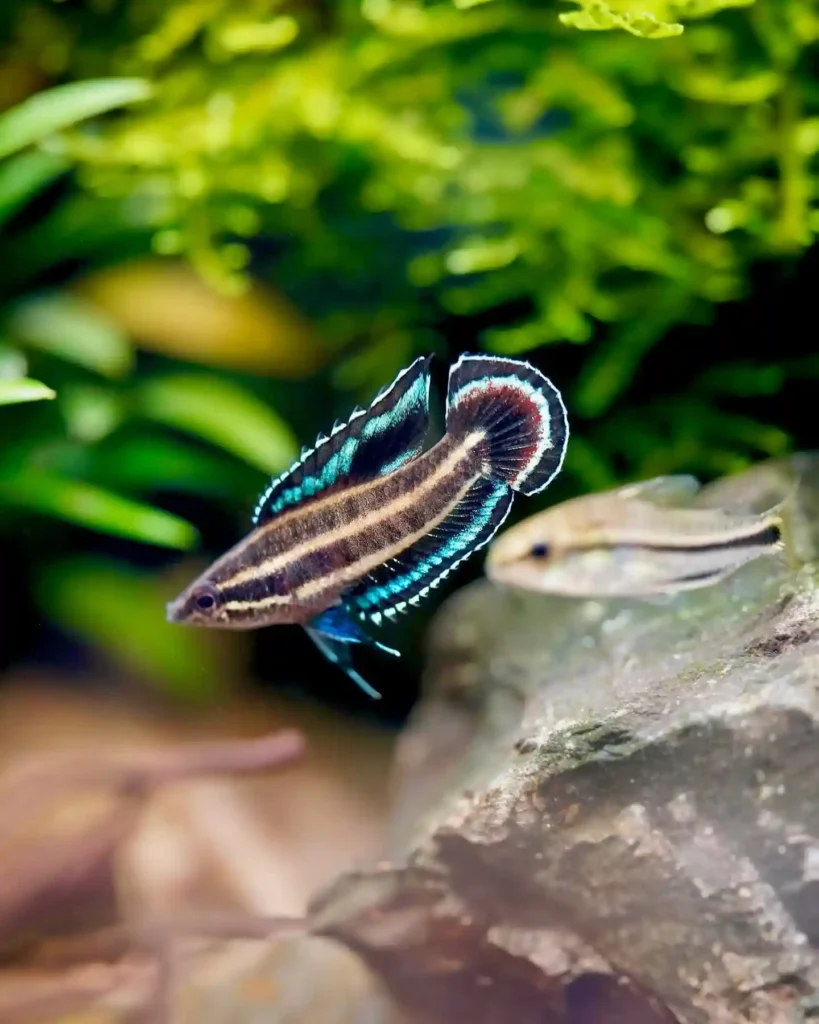
Licorice Gouramis have long, narrow bodies with dark horizontal stripes. Their base color may appear brown, grey, beige, or almost black depending on mood and tank conditions.
Mature males display the strongest colors. Their dorsal, anal, and tail fins may develop bright bands or spots that contrast sharply against the darker body.
Females usually have softer colors and less elaborate fin markings. They may become noticeably pale or yellowish when ready to spawn.
Adults remain very small. Most stay around 1.2 to 1.5 inches, though size varies between species sold under the Licorice Gourami name.
Their small size does not make them a good fish for an unfiltered bowl or newly established nano tank. They need carefully managed water and dependable biological filtration.
A Tank That Feels Safe Rather Than Open
Licorice Gouramis naturally stay close to leaves, roots, branches, and dense vegetation. A bright aquarium with a wide open foreground can leave them exposed and unwilling to feed.
A suitable setup should contain several shaded areas where the fish can move without being seen from every direction.
Use driftwood, dried leaves, moss, small caves, and plants around the sides and back of the aquarium. Leave a few open paths between the cover so you can still watch the fish and check whether they are eating.
A dark aquarium base also helps their colors stand out. Fine dark sand works well, but the substrate must not raise hardness or pH.
A bare-bottom tank is another option for breeding. It makes leftover food, waste, and fry easier to see, though it looks less natural than a planted blackwater setup.
Our freshwater planted tank setup guide can help you plan plant placement and shaded swimming areas.
Plants That Tolerate a Licorice Gourami Tank
Very soft, acidic water is not ideal for every aquarium plant. Some plants struggle because the water contains few minerals and the lighting is intentionally low.
Hardy plants attached to wood are usually easier to manage than demanding rooted plants.
Good choices include:
- Java Moss
- Java Fern
- Anubias
- Subwassertang
- Floating Water Sprite
- Salvinia
- Frogbit
Floating plants help soften the light, but they should not cover the entire surface. Gouramis regularly rise to breathe air, so always leave clear surface openings.
Avoid adding fertilizers without checking how they affect conductivity and water chemistry. A heavily fertilized planted aquarium may not suit these low-mineral fish.
You can compare more easy plant options in our aquarium plants section.
Water Chemistry Is the Hardest Part
Most problems with Licorice Gouramis begin with unsuitable water.
These fish need water with very little dissolved mineral content. Ordinary tap water may be too hard even when its pH reading appears acceptable.
Aim for the following conditions:
| Water Parameter | Recommended Range |
| Temperature | 77–82°F |
| pH | 4.5–6.0 |
| GH | 0–3 dGH |
| KH | Close to 0 |
| Conductivity | Preferably below 40 µS/cm |
| Ammonia | 0 ppm |
| Nitrite | 0 ppm |
| Nitrate | Kept very low |
Reverse osmosis water is often the most dependable starting point. Depending on your water source and the fish you buy, it may need careful preparation before use.
Do not add strong acid products directly to hard tap water in an attempt to force the pH downward. The remaining carbonate hardness can cause the pH to rise again, creating unstable conditions.
Leaves and driftwood can release tannins and natural acids, but they cannot remove large amounts of dissolved minerals. Brown water is not automatically soft water.
A conductivity meter is useful for this species. It gives a clearer picture of dissolved minerals than testing pH alone.
Keep the Water Stable, Not Constantly Adjusted
Licorice Gouramis handle stable conditions better than repeated attempts to reach a perfect number.
Prepare replacement water before every water change. Match its temperature, pH, hardness, and conductivity as closely as possible to the aquarium.
Small water changes are often easier to control than one large, sudden change. The correct schedule depends on feeding, stocking, filtration, and waste buildup.
Live foods can create extra waste when too much is added. Check the tank after feeding and remove anything that dies or remains uneaten.
Ammonia and nitrite must stay at zero. Nitrate should remain low, but avoiding sudden chemistry changes is also important.
Gentle Filtration Without Stagnant Water
A small air-driven sponge filter is usually the safest choice.
It provides biological filtration without pushing these slow fish around the aquarium. The sponge also prevents adults, fry, and live foods from being pulled into an exposed intake.
Turn down the airflow if the fish are constantly fighting the current or avoiding one side of the tank.
Gentle flow does not mean no maintenance. The aquarium still needs to be cycled before the fish arrive, and the filter must remain clean enough to move water.
Do not replace all filter media at once. That can remove much of the beneficial bacteria and cause a sudden waste spike.
Use a Lid and Leave Surface Access
Licorice Gouramis have a labyrinth organ that allows them to breathe air from the surface.
Leave open spaces between floating plants so the fish can rise without forcing their way through thick roots.
A tight-fitting lid reduces the chance of jumping. It also holds warm, humid air above the water, which is better than a cold draft passing across the surface.
Keep the water level slightly below the top of the aquarium. This creates a protected air space while making it harder for startled fish to escape.
Feeding Licorice Gouramis
Food is the second major challenge after water chemistry.
Many Licorice Gouramis do not recognize flakes or pellets as food. Some may taste prepared foods without eating enough to maintain healthy body weight.
Be ready to provide small live foods from the beginning.
Suitable foods include:
- Microworms
- Grindal worms
- Newly hatched brine shrimp
- Small daphnia
- Moina
- Copepods
- Mosquito larvae
- Small bloodworms
Use food that matches the fish’s mouth size. Large bloodworms and oversized brine shrimp may be difficult for smaller individuals to handle.
Feed small portions once or twice daily. The fish should have time to approach the food without larger tank mates rushing in first.
Maintaining two or more live-food cultures is safer than depending on one. A culture can suddenly crash, leaving you without suitable food.
How to Tell Whether the Fish Is Eating Enough
Licorice Gouramis often feed quietly, so it is easy to assume they are eating when they are not.
Watch the fish during each feeding. A healthy individual should notice moving food, approach carefully, and swallow several items.
Look at the body from the side. A pinched or sunken belly can mean the fish is not getting enough food.
A fish that hides all day may still be feeding after the room becomes quiet. Check the aquarium under dim light before deciding it has stopped eating completely.
Poor appetite can also come from hard water, bright lighting, strong flow, stress, or unsuitable tank mates.
Temperament Between Males and Females
Licorice Gouramis are peaceful compared with many larger gouramis, but males still establish small territories.
A male may claim a cave, leaf, or shaded corner and display toward nearby fish. Most conflict involves fin spreading, color changes, and short chases rather than constant fighting.
Problems become more likely when several males share a small tank with too few hiding areas.
A pair is the easiest arrangement for a 10-gallon aquarium. A group needs more floor space, several caves, and enough cover for weaker fish to remain out of sight.
Watch for one fish that stays pale, hides continuously, or misses meals. These signs may mean it is being pressured even when you do not see obvious attacks.
Licorice Gourami Tank Mates
A species-only aquarium is the safest choice.
Licorice Gouramis need unusual water conditions and eat more slowly than most community fish. Active companions can take all the food before the gouramis leave their hiding places.
Experienced keepers may pair them with tiny blackwater fish that need the same soft, acidic conditions. Even then, a community setup can make feeding and breeding harder.
Avoid:
- Guppies and other hard-water livebearers
- Active barbs
- Large tetras
- Cichlids
- Goldfish
- Larger gouramis
- Fin-nipping fish
- Fast surface feeders
Shrimp are not guaranteed to be safe. Adult shrimp may survive, but small shrimp and newborns can be eaten.
A community tank may look more active, but it usually makes Licorice Gourami care more difficult. These fish are best appreciated in a quiet aquarium built around their needs.
Male and Female Differences
Sexing young Licorice Gouramis can be difficult.
Mature males usually develop darker bodies and brighter fin markings. Their colors become strongest when displaying or defending a spawning site.
Females tend to have plainer fins and lighter body markings. A female ready to breed may change to a softer yellow or beige color.
Do not rely on one feature alone. Fin pattern, body color, behavior, and the fish’s confirmed species should all be considered.
The differences can also disappear when the fish are stressed. Newly purchased gouramis may need several weeks in suitable water before their normal appearance returns.
Breeding Inside a Small Cave
Licorice Gouramis are bubble-nesters, but they do not usually build a large floating nest at the open surface.
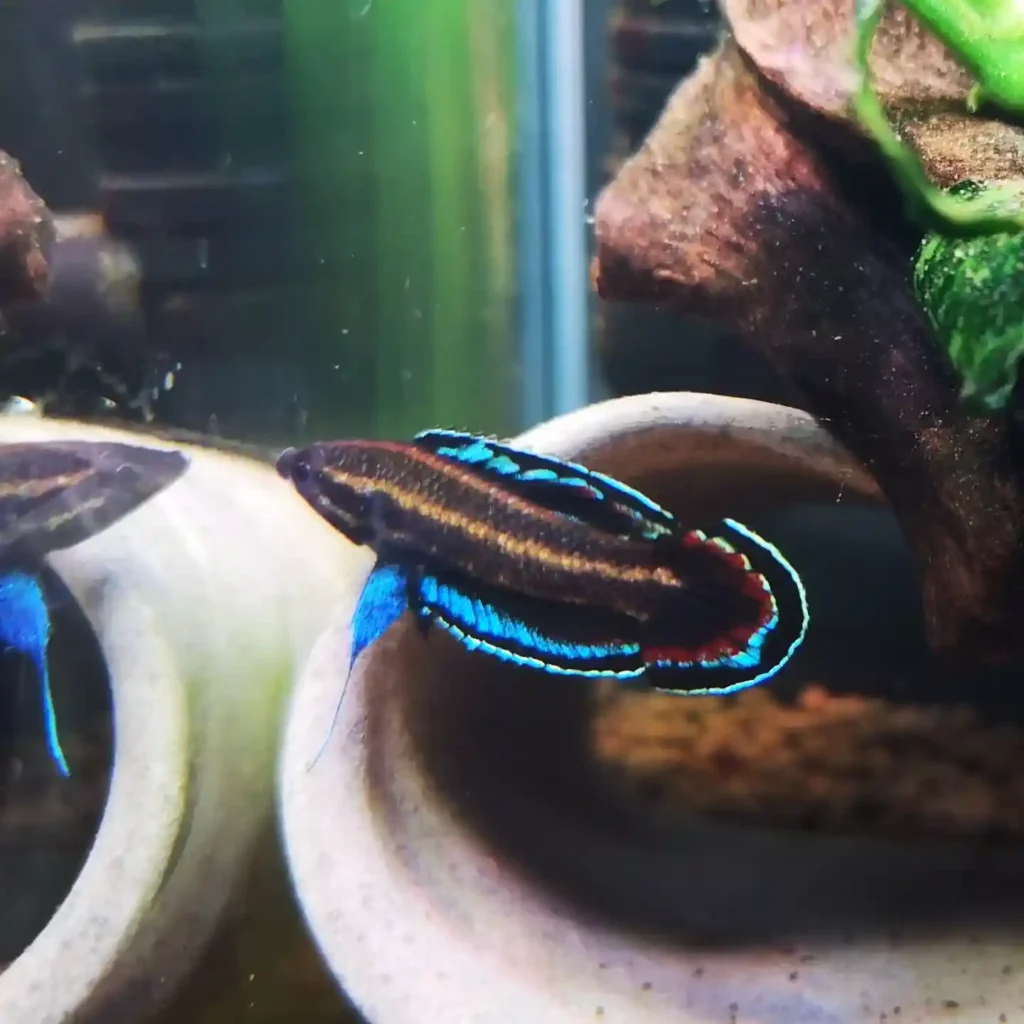
The male chooses a small cave or sheltered overhang and attaches a small bubble nest to its ceiling. He then displays near the entrance to attract a female.
After spawning, the eggs are placed into the nest. The male stays near the cave and provides most of the guarding.
Add several possible spawning locations rather than one. Small ceramic caves, narrow tubes, and pieces of inert material positioned under wood can work.
The entrance should be large enough for the fish but small enough to feel protected.
Successful breeding depends heavily on soft water and a varied live-food diet. Eggs may fail to develop when the water contains too many dissolved minerals.
Raising the Fry
Newly free-swimming fry are extremely small. They need food that can fit into their mouths and remain available in the tank.
Possible first foods include tiny microorganisms and very small live cultures. Microworms and newly hatched brine shrimp can be introduced as the fry grow.
A large fry tank can make feeding harder because the food becomes spread too thinly. A smaller, carefully maintained setup keeps the fry closer to their food.
Avoid heavy feeding that clouds the water. Add small amounts more frequently and watch for waste.
Hydra can become a problem in fry tanks that receive frequent live foods. Keep tank surfaces clean and avoid adding far more food than the fry can consume.
Warning Signs That Should Not Be Ignored
Licorice Gouramis naturally hide, but hiding combined with weight loss or poor feeding is not normal.
Check the aquarium when you notice:
- A sunken belly
- Clamped fins
- Faded or patchy coloring
- Fast breathing
- Staying near the surface
- Loss of balance
- White growths or damaged skin
- Repeated scratching
- Refusing several meals
Test temperature, pH, conductivity, ammonia, and nitrite before adding medication.
Medication can behave differently in very soft, acidic water. Moving a sick fish into ordinary tap water can also cause extra stress.
Quarantine new fish in water that matches their future aquarium. A standard hard-water quarantine tank is not suitable simply because it is already available.
Mistakes That Cause Most Failures
The biggest mistake is treating the Licorice Gourami like a miniature Dwarf Gourami.
It does not suit an ordinary community tank, and dried leaves alone will not correct hard tap water.
Other common problems include:
- Buying the fish before preparing live food
- Adding it to a newly cycled aquarium
- Using strong filtration
- Keeping it under bright lighting
- Housing it with fast feeders
- Making sudden water changes
- Mixing unidentified Parosphromenus species
- Choosing a tiny tank that is difficult to keep stable
Prepare the aquarium and food cultures before buying the fish. Correcting everything after it has stopped eating is much harder.
Is the Licorice Gourami Good for Beginners?
No. This is not a good first gourami.
Beginners may struggle with reverse osmosis water, conductivity, live-food cultures, low-pH filtration, and the fish’s quiet feeding behavior.
A Honey Gourami is a more forgiving choice for a peaceful planted aquarium. Pearl Gouramis are another option when a larger tank is available.
The Licorice Gourami is better for someone who already understands cycling, water preparation, and species-only aquarium care.
Frequently Asked Questions
How big does a Licorice Gourami get?
Most remain around 1.2 to 1.5 inches long. Their small adult size is one reason they can be kept in compact aquariums, though water stability still matters.
Can a Licorice Gourami live in a 5-gallon tank?
An experienced keeper may maintain one pair in a carefully prepared tank of around 5 to 8 gallons. A 10-gallon aquarium is safer for most home keepers because the larger water volume changes more slowly.
Do Licorice Gouramis need blackwater?
They need very soft, acidic water with shade and cover. Leaves, wood, and tannins can help create a natural-looking setup, but the water’s mineral content matters more than its color.
Will Licorice Gouramis eat flakes?
Some individuals may accept small prepared foods, but many refuse them or eat too little. Keepers should be ready to supply live foods as the main diet.
Can Licorice Gouramis live alone?
A single fish can be kept alone, but a compatible pair allows you to observe more natural display and breeding behavior.
How many Licorice Gouramis can live in a 10-gallon tank?
One pair is the simplest choice. A small group can create territorial and feeding problems unless the tank has several caves and dense cover.
Can they live with shrimp?
Adult shrimp may survive, but baby shrimp can be eaten. Shrimp can also compete for food and enter spawning areas.
Why is my Licorice Gourami losing color?
Stress, hard water, bright lighting, recent transport, poor diet, illness, or aggressive tank mates can all reduce color. Check the water and feeding before assuming the fish naturally has pale coloring.
Why is my Licorice Gourami always hiding?
Some hiding is normal. Constant hiding may mean the aquarium is too bright, too open, too busy, or unsuitable for the fish.
Do they need a heater?
Yes, unless the room remains within their preferred tropical temperature range throughout the year. A small adjustable heater is safer than depending on changing room temperatures.
